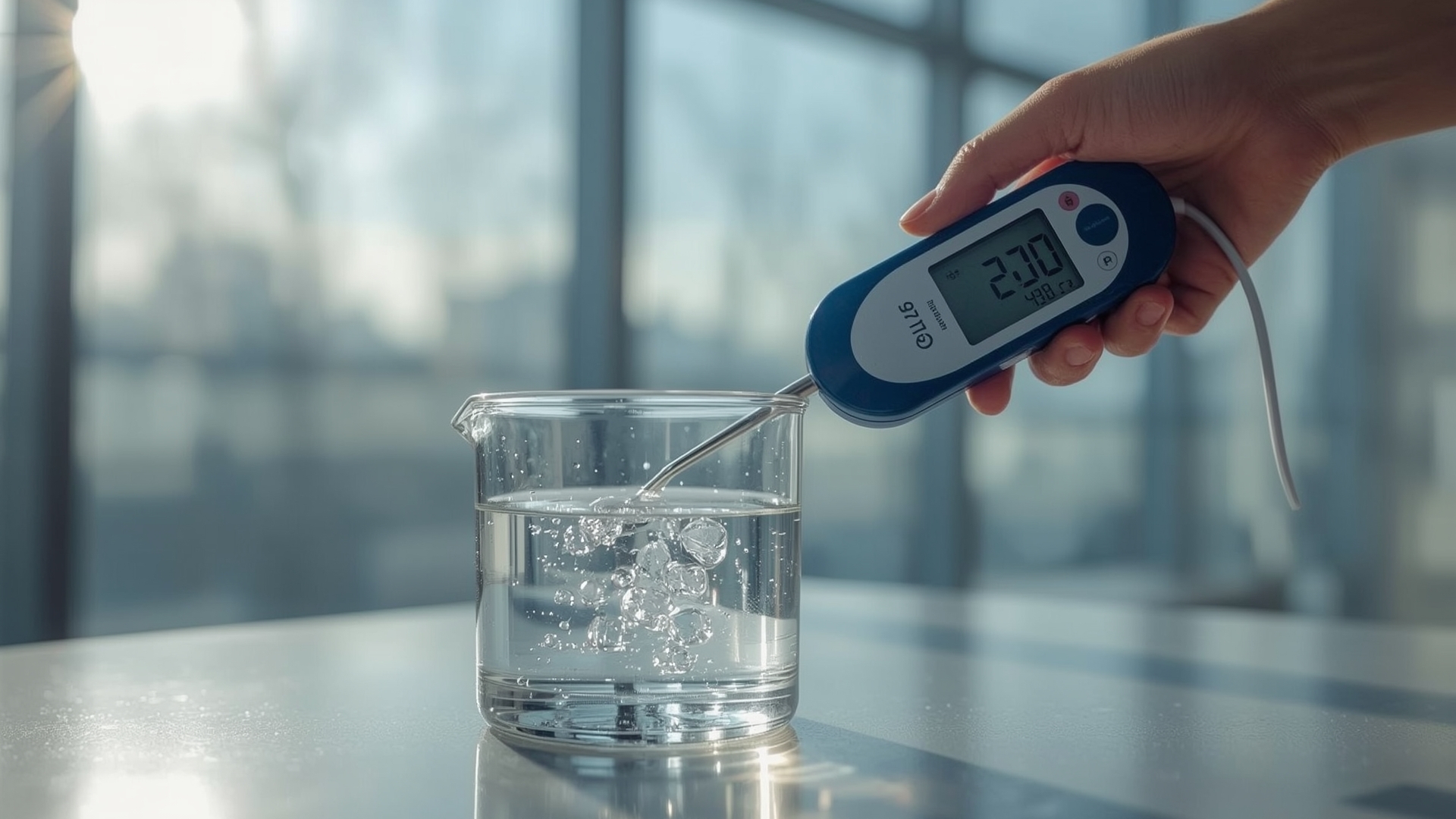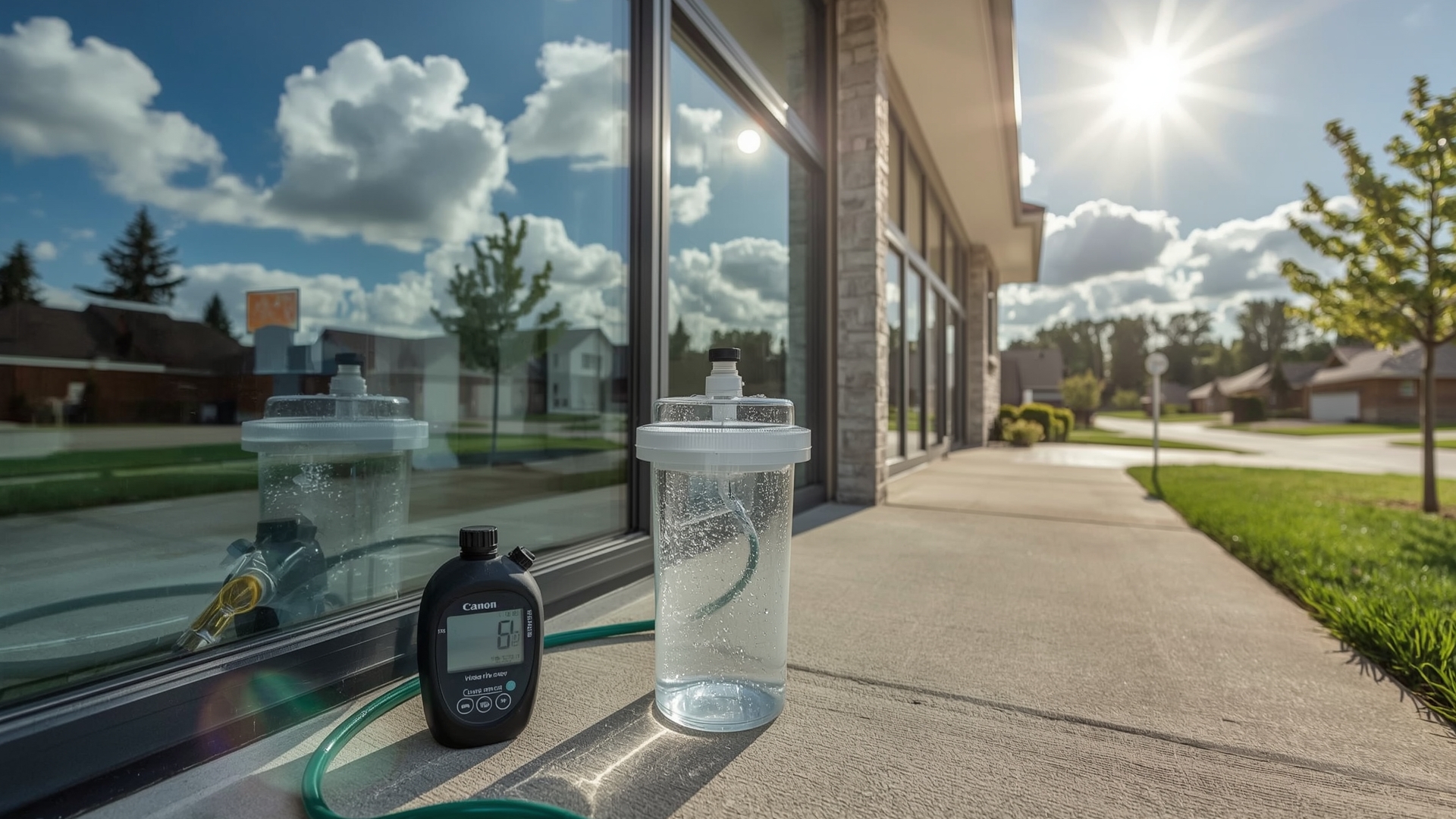
Tap water leaves streaks on windows because it contains dissolved minerals like calcium, magnesium, and silica. A deionized water filter removes those minerals completely, so your windows dry spot-free with no wiping required. This guide walks you through every step of setting up a DI filter system at home for window rinsing.
Key Takeaways
- Deionized (DI) water has no dissolved minerals, so it evaporates cleanly without leaving spots or streaks.
- A TDS meter tells you the mineral content of your water. You want a reading of 0–10 ppm (parts per million) for spot-free results.
- Inline, canister, and multi-stage DI filters are the three main options for home use, each at different price points.
- Resin cartridges need replacement when your TDS meter reads above 10 ppm at the filter’s output.
- Garden hose adapters make it easy to connect a DI filter directly to your outdoor tap for window rinsing.
- Cost per gallon drops significantly when you recharge or replace resin instead of buying a whole new unit.
What Is a Deionized Water Filter and How Does It Work?
Quick Answer: A deionized water filter uses ion exchange resin to pull dissolved minerals out of tap water. The resin swaps mineral ions for hydrogen and hydroxyl ions, producing pure water with a TDS reading near zero ppm.
Regular tap water carries dissolved salts and minerals. When that water lands on a window and dries, the minerals stay behind as white spots or haze.
A DI filter solves this by running water through a resin bed. The resin is made of tiny plastic beads coated with charged sites. Positively charged mineral ions (like calcium and magnesium) bond to negatively charged resin sites. Negatively charged ions (like bicarbonates) bond to positively charged sites. What comes out the other end is nearly pure water.
This is different from a standard carbon filter, which removes chlorine and sediment but leaves most minerals intact. It is also different from a reverse osmosis (RO) system, which forces water through a membrane under pressure. DI filtration works by chemistry, not pressure, and it targets dissolved ionic compounds with very high efficiency.
What Is TDS and Why Does It Matter for Windows?
TDS stands for total dissolved solids. It measures the concentration of dissolved minerals and salts in water, expressed in parts per million (ppm). The lower the TDS, the purer the water.
For window cleaning, you want output water at 0–10 ppm. Water above 20 ppm will still leave some spotting. Water from a well or a hard-water municipal supply can range from 200 to over 800 ppm before filtration.
What Are the Main Types of DI Filters for Home Window Cleaning?
Quick Answer: The three main types are inline DI filters, canister DI filters, and multi-stage systems. Inline filters are the most affordable and easiest to connect to a garden hose. Multi-stage systems handle harder water and last longer between replacements.
Inline DI Filters
An inline DI filter is a compact cylinder, usually 10 to 20 inches long, that connects directly in-line between your garden hose and a rinse wand or soft brush. They typically hold 1 to 2 liters of mixed-bed resin.
These are the most popular option for homeowners cleaning their own windows. They are inexpensive, lightweight, and easy to swap out. The trade-off is lower capacity. On very hard water, a small inline filter may be exhausted in just a few hundred gallons.
Canister DI Filters
Canister filters use a larger housing (commonly 10-inch or 20-inch standard filter canisters) filled with mixed-bed DI resin. The canister unscrews so you can replace just the resin, not the entire housing.
This makes them more economical over time. You buy resin in bulk, refill the canister, and keep using the same housing for years. A 20-inch canister holds roughly 2 to 4 liters of resin, giving you significantly more output per fill than an inline unit.
Multi-Stage DI Systems
A multi-stage system combines a sediment pre-filter and/or a carbon block filter with one or two DI resin stages. The pre-filter removes physical particles and chlorine before water hits the resin. This protects the resin and extends its usable life.
Multi-stage setups are the best choice if your tap water has high TDS (above 300 ppm) or contains a lot of sediment. They cost more upfront but deliver better performance and lower long-term resin costs.
DI Filter Comparison Table
| Filter Type | Resin Capacity | Approx. Cost | Resin Replacement | Best For | Output TDS |
|---|---|---|---|---|---|
| Inline DI Filter | 1–2 liters | $20–$60 | Replace whole unit or refillable | Soft to moderate water (under 200 ppm) | 0–5 ppm |
| Canister DI Filter | 2–4 liters | $40–$120 | Refill canister with bulk resin | Moderate to hard water (150–400 ppm) | 0–5 ppm |
| Multi-Stage System | 4–12 liters (total stages) | $80–$300 | Pre-filters + DI resin stages | Hard water (over 300 ppm) | 0–3 ppm |
How Do You Connect a DI Filter to a Garden Hose for Window Rinsing?
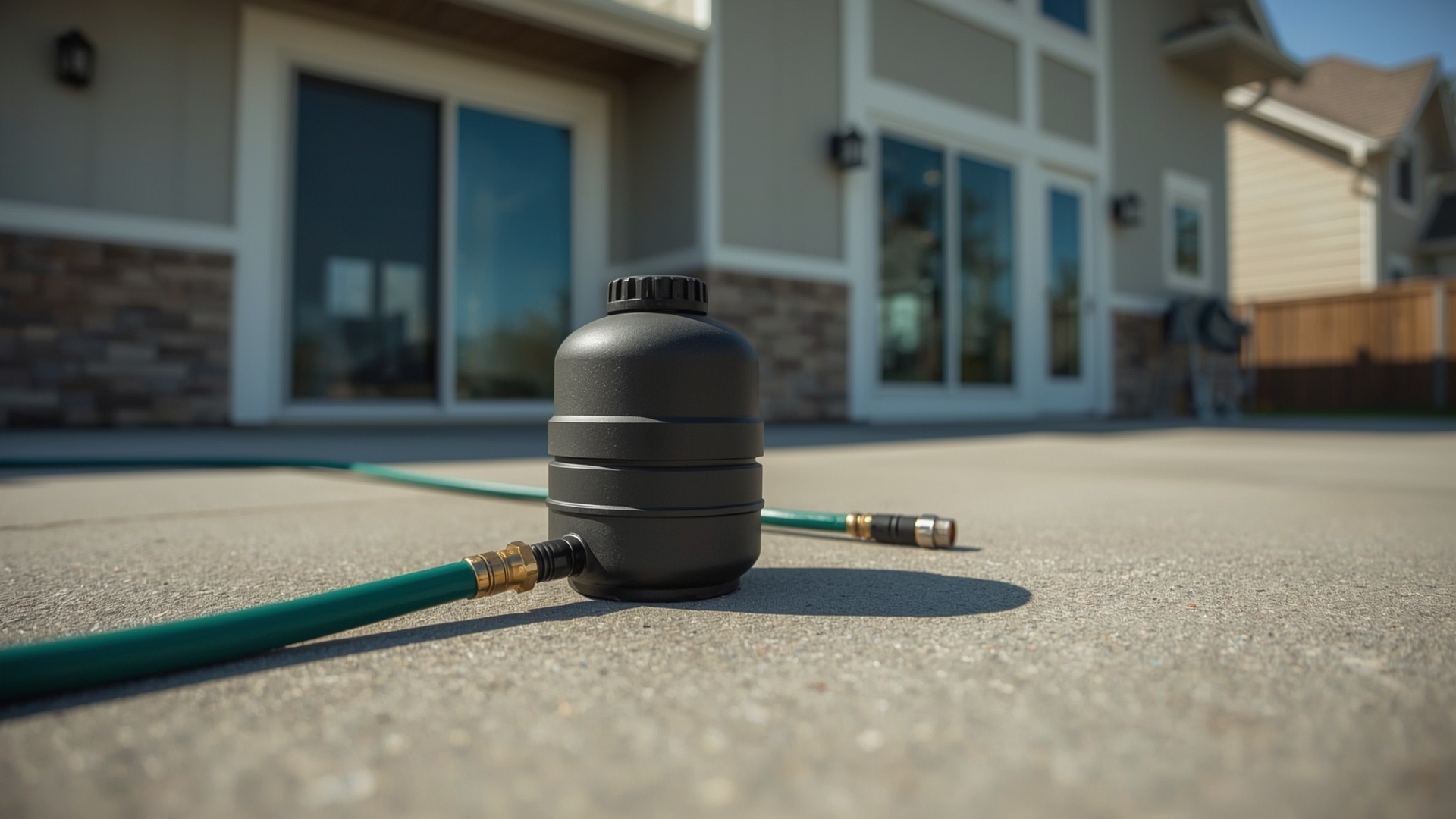
Quick Answer: Most DI filters use standard 3/4-inch garden hose thread fittings. You connect the filter inline between your outdoor tap and a rinse wand. A flow restrictor or ball valve helps control pressure and flow rate during rinsing.
What You Need for the Garden Hose Setup
- DI filter with 3/4-inch garden hose thread (GHT) fittings on input and output
- Standard garden hose, at least 25 feet to reach ground-floor windows comfortably
- Rinse wand or extension pole with a fan-spray nozzle
- Ball valve or inline flow restrictor (reduces pressure to protect the resin)
- TDS meter to monitor output quality
Step-by-Step Connection Process
- Turn off the outdoor tap. Start with no water running so you can make connections without pressure.
- Attach the garden hose to the tap. Thread it on by hand, then snug it down with pliers. Do not overtighten.
- Connect the hose to the filter input. The input side is usually labeled “IN” with an arrow showing flow direction.
- Attach the rinse wand or extension hose to the filter output. This is the “OUT” port.
- Install a ball valve between the tap and filter if you want to control flow without walking back to the tap.
- Turn on the tap slowly. Let water run through the filter for 30 to 60 seconds before checking TDS. New resin sometimes releases fine particles at first.
- Test output TDS. Hold your TDS meter probe in the stream coming from the wand. Wait for the reading to stabilize. Aim for 0–10 ppm before rinsing windows.
Recommended Flow Rate and Pressure
Most residential taps deliver 40 to 80 psi (pounds per square inch) of water pressure. DI resin works best at a slow, steady flow. High pressure pushes water through the resin too fast, reducing contact time and raising output TDS.
A flow rate of 0.5 to 1.5 gallons per minute (GPM) gives the resin enough time to do its job. A flow restrictor set to 1 GPM will extend your resin’s lifespan noticeably compared to running at full tap pressure.
How Do You Use a TDS Meter to Monitor Your DI Filter?
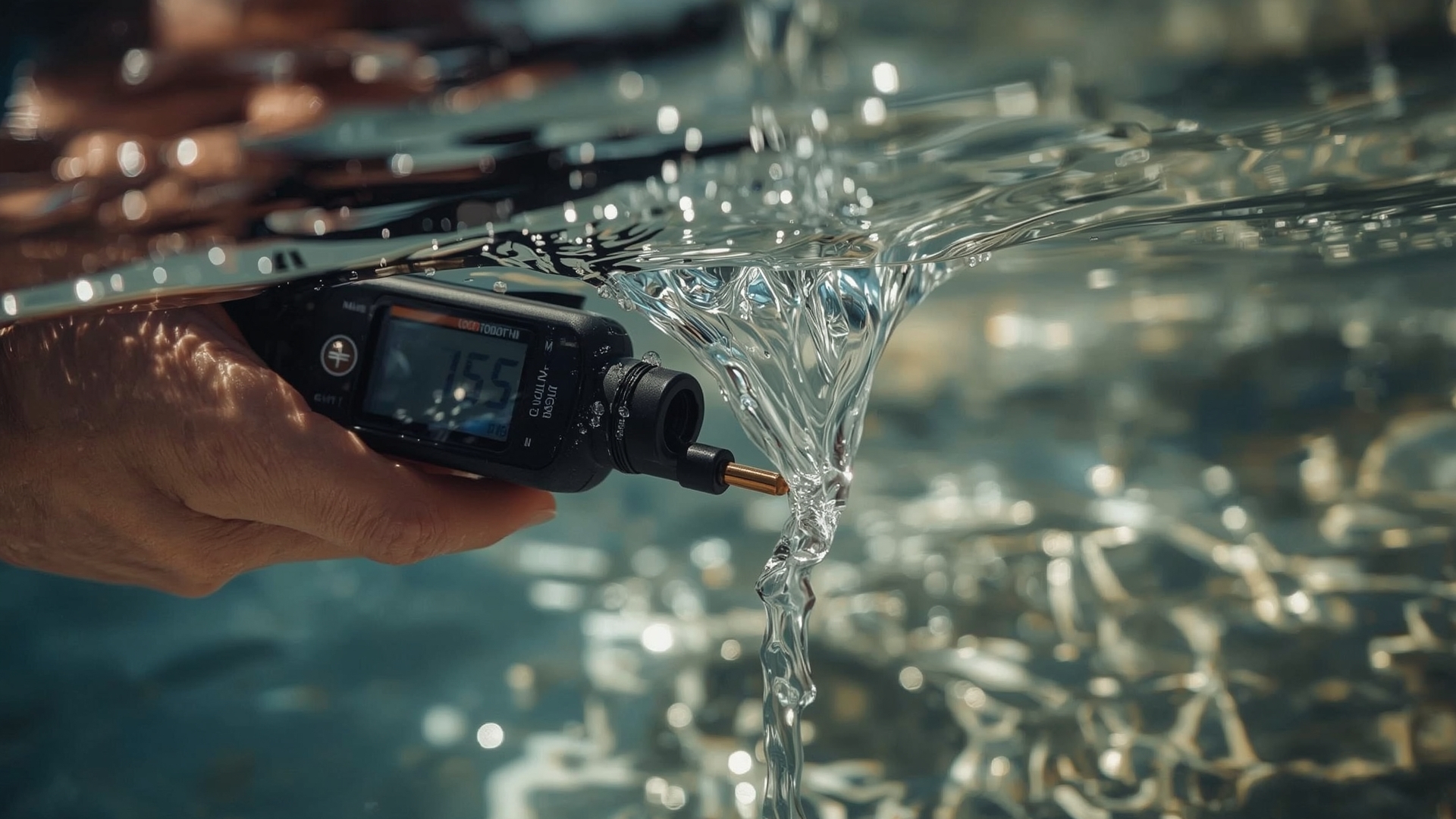
Quick Answer: Dip the TDS meter probe into the water stream coming out of your DI filter. A reading of 0–10 ppm means the resin is working well. When the reading climbs above 10–20 ppm consistently, the resin is exhausted and needs replacement.
Testing Inlet vs. Outlet TDS
Always test both the inlet (tap water before the filter) and the outlet (filtered water coming out). The inlet reading tells you your starting water hardness. The outlet reading tells you how well the resin is performing.
If your inlet TDS is 350 ppm and your outlet drops to 3 ppm, the resin is doing its job correctly. If your outlet starts creeping toward 15, 20, or 30 ppm, the resin is losing capacity and nearing the end of its useful life.
TDS Meter Specifications for Window Cleaning Use
| TDS Meter Feature | Recommended Spec | Why It Matters |
|---|---|---|
| Measurement Range | 0–1000 ppm minimum | Covers most tap water hardness levels |
| Accuracy | ±2% or better | Reliable enough for resin monitoring |
| Display | Digital LCD, 3+ digits | Easy to read outdoors in bright light |
| Housing | Waterproof or water-resistant | Survives direct water contact during testing |
| Price Range | $10–$30 | No need to spend more for home use |
How Long Does DI Resin Last for Home Window Cleaning?
Quick Answer: DI resin lifespan depends on your inlet TDS and total water volume used. With 200 ppm tap water, a 1-liter resin cartridge typically treats 150 to 300 gallons before needing replacement. Higher inlet TDS exhausts resin faster.
Factors That Affect Resin Lifespan
- Inlet TDS: Higher mineral content burns through resin faster. 400 ppm water exhausts resin roughly twice as fast as 200 ppm water.
- Flow rate: Slower flow means better contact time and more efficient resin use.
- Resin volume: More resin in the filter equals more capacity before exhaustion.
- Resin quality: Nuclear-grade or high-capacity mixed-bed resin lasts longer than economy-grade resin.
- Water temperature: Cold water (below 50°F) slows ion exchange slightly, reducing efficiency.
DI Resin Lifespan by Inlet TDS Level
| Inlet TDS (ppm) | Water Hardness Category | Approx. Gallons per Liter of Resin | Typical Output Before Exhaustion |
|---|---|---|---|
| 50–100 ppm | Soft | 400–600 gallons | Excellent lifespan |
| 100–200 ppm | Moderately Soft | 250–400 gallons | Good lifespan |
| 200–400 ppm | Hard | 150–250 gallons | Moderate lifespan |
| 400–600 ppm | Very Hard | 80–150 gallons | Short lifespan — pre-filter recommended |
| 600+ ppm | Extremely Hard | Under 80 gallons | Use RO pre-stage before DI |
When Should You Replace the Resin vs. the Whole Filter?
If you have a refillable canister, replace just the resin. Bulk mixed-bed DI resin costs roughly $15 to $40 per liter, which is far cheaper than buying a new sealed unit every time.
If you have a non-refillable inline filter, you replace the whole unit when output TDS rises above 10–20 ppm. Keep a spare on hand so you are not caught mid-job with exhausted resin.
What Does a Home DI Filter Window Cleaning Setup Cost?
Quick Answer: A basic inline DI filter setup costs $30 to $80 to start, including the filter and a TDS meter. A refillable canister setup runs $60 to $150 upfront but costs less per gallon over time. Annual operating costs for a home user average $40 to $120.
Cost Breakdown for Common Setups
| Component | Inline Setup Cost | Canister Setup Cost | Multi-Stage Setup Cost |
|---|---|---|---|
| Filter Housing | $20–$50 (included in unit) | $30–$80 | $80–$200 |
| TDS Meter | $10–$20 | $10–$20 | $10–$20 |
| Rinse Wand / Extension | $15–$40 | $15–$40 | $15–$40 |
| Replacement Resin (annual) | $20–$60 (full unit) | $15–$40 (bulk resin only) | $30–$80 (resin + pre-filters) |
| Total First-Year Cost | $45–$130 | $70–$180 | $135–$340 |
Is a DI Filter Cheaper Than Buying Purified Water?
Purchasing distilled or purified water from a store costs roughly $1 to $2 per gallon. A DI filter producing 200 gallons per resin fill at a $30 resin cost works out to about $0.15 per gallon. The savings add up quickly, especially if you clean windows monthly or seasonally.
What Window Cleaning Results Can You Expect from Deionized Water?
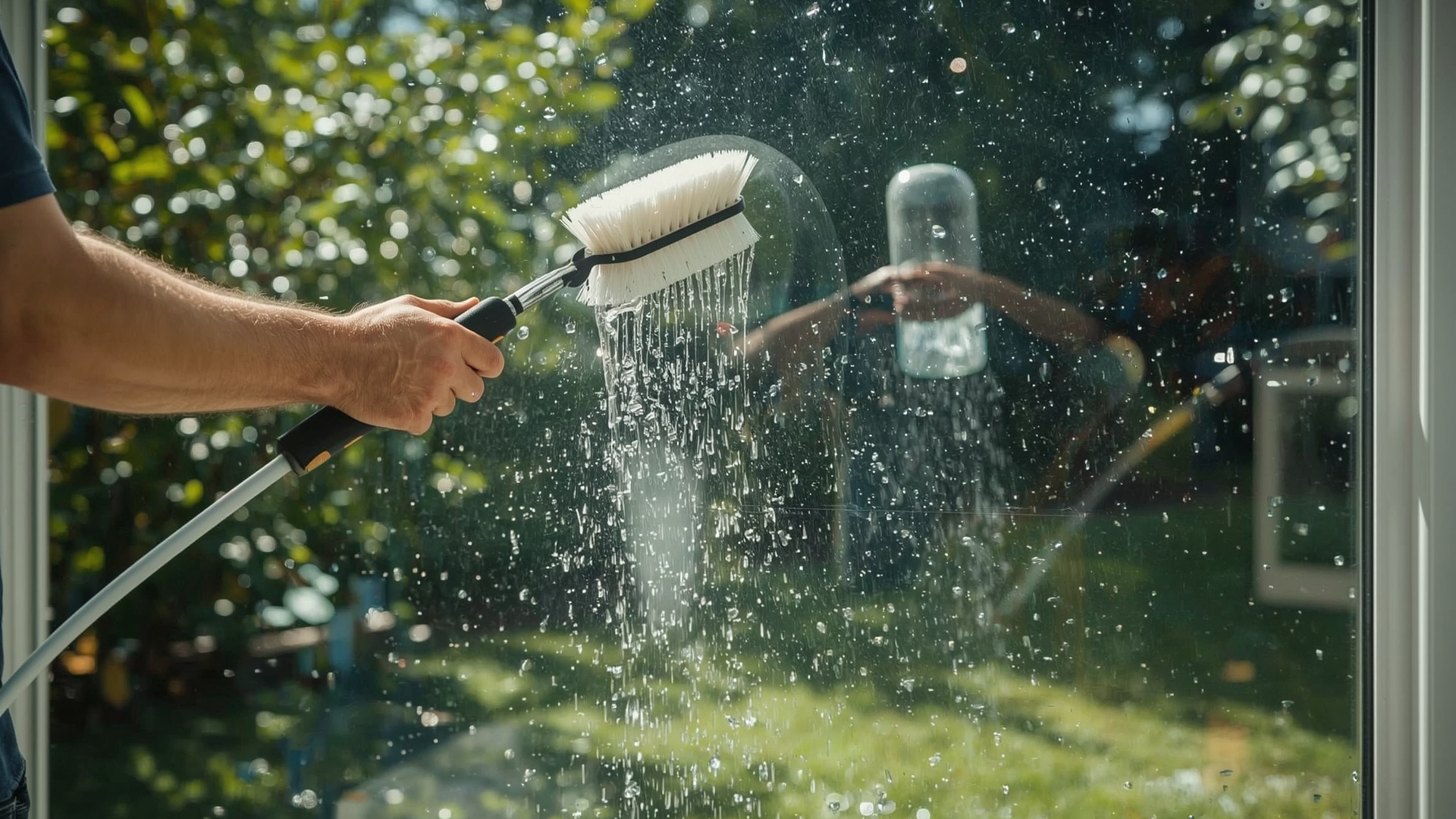
Quick Answer: Deionized water dries spot-free on glass because it has no minerals to leave behind. You rinse the window, let it air dry, and the glass is clean without any wiping or squeegee work. Results depend on achieving 0–10 ppm output TDS.
How the Pure Water Rinsing Method Works
You apply the deionized water to the window with a soft brush (often called a water-fed brush) attached to your wand. The brush agitates and lifts dirt. Then you rinse with a pure water stream from the same wand.
Because the water leaving the surface has no dissolved minerals, it does not leave deposits as it evaporates. The surface dries clear. This is the same principle used by professional window cleaning crews with water-fed pole systems, just scaled down for home use.
Tips for Better Results at Home
- Clean windows on an overcast day. Direct sun evaporates water too fast, which can cause light spotting even with DI water if the glass is hot.
- Start from the top and work down so dirty rinse water does not run over already-cleaned sections.
- Use a soft-bristle brush to agitate stubborn dirt before rinsing. Do not scrub with a dry brush.
- Check your TDS reading before each session. Resin can partially exhaust between uses if stored improperly.
- Flush the filter for 30 seconds at the start of each use if it has been sitting for more than a week.
What Are Common Problems with Home DI Filter Setups and How Do You Fix Them?
Quick Answer: The most common problems are rising output TDS (resin exhaustion), low water pressure, and slow flow rate. Resin exhaustion requires a refill or replacement. Low pressure is usually fixed by removing a flow restrictor or checking for kinked hoses.
Troubleshooting Guide
| Problem | Likely Cause | Fix |
|---|---|---|
| Output TDS rising above 10 ppm | Resin exhaustion | Replace or refill resin |
| Low flow rate | Flow restrictor too tight or kinked hose | Loosen restrictor or straighten hose |
| Spotting on windows after drying | TDS above 15 ppm or windows dried too fast | Check TDS, clean on overcast days |
| Milky or cloudy water output | Resin fines (fine particles) from new resin | Flush filter for 2–3 minutes before use |
| Filter leaking at connections | Loose fittings or worn O-rings | Tighten connections, replace O-rings |
| Resin exhausting faster than expected | High inlet TDS or flow rate too high | Add pre-filter or reduce flow rate |
How Do You Store a DI Filter Between Uses?
Quick Answer: Store a DI filter in a cool, shaded location out of direct sunlight. Keep the resin moist by leaving a small amount of water inside. Do not let the resin freeze, as freezing temperatures permanently damage the ion exchange beads.
Storage Best Practices
- Never store a DI filter in direct sunlight. UV exposure and heat degrade resin performance over time.
- Leave the filter slightly damp inside, not bone dry. Fully dried resin can crack and lose capacity.
- Do not store below 32°F (0°C). Frozen resin breaks down and will no longer exchange ions properly.
- If storing for more than two months, consider flushing with clean water, then sealing both ends with caps to keep moisture in.
- Check TDS before each use after storage. Even a short storage period can show a slight TDS rise on first flush.
Is a DI Filter Alone Enough, or Do You Need a Pre-Filter Too?
Quick Answer: For soft to moderately hard tap water (under 200 ppm TDS), a standalone DI filter is usually enough. For hard water above 300 ppm, adding a sediment pre-filter or carbon block pre-filter protects the resin and significantly extends its life.
When a Pre-Filter Adds Real Value
A sediment pre-filter removes physical particles like rust, sand, and pipe scale. These particles do not contribute to TDS, but they clog and physically damage resin beads over time.
A carbon block pre-filter removes chlorine and chloramines. Chlorine does not raise TDS significantly, but it oxidizes the resin surface and destroys ion exchange capacity faster than anything else. If your tap water is chlorinated (most municipal supplies are), a carbon pre-filter will meaningfully extend resin life.
Frequently Asked Questions
Can I use a DI filter for cleaning windows on upper floors at home?
Yes. You extend the reach by using a telescoping rinse wand or a lightweight extension pole with a fan-spray nozzle. Most poles reach 12 to 25 feet, covering two-story windows from the ground. The DI filter stays at ground level connected to your garden hose.
What is mixed-bed DI resin and is it different from single-bed resin?
Mixed-bed resin combines both cation resin (which removes positively charged minerals) and anion resin (which removes negatively charged ions) in a single vessel. Single-bed systems use one type at a time in separate stages. Mixed-bed resin achieves lower output TDS and is the standard choice for window cleaning applications.
Does deionized water damage window seals or rubber gaskets?
Deionized water is non-corrosive to glass, rubber, and most window frame materials including vinyl and aluminum. It is actually gentler than tap water because it has no mineral content to leave deposits in or around seals. Prolonged soaking of any rubber component is not ideal, but normal rinsing with DI water poses no risk.
How do I know what my tap water TDS is before buying a filter?
You can measure it with a TDS meter, which costs $10 to $20. Simply dip the probe into tap water and read the display. Your local water utility also publishes an annual water quality report, which lists average mineral hardness and TDS for your area.
Can I use a DI filter with a pressure washer for window cleaning?
You can, but standard DI resin is designed for low-pressure applications. High-pressure flow compresses the resin bed and reduces contact time, raising output TDS. If you use a pressure washer, run it at low pressure (under 500 psi) and low flow, or place the DI filter before the pressure washer inlet rather than after it.
How often should a homeowner expect to replace DI resin when cleaning windows seasonally?
A typical homeowner cleaning windows four to six times per year will use 20 to 50 gallons per session. With moderately hard water (200 ppm TDS), a 2-liter canister filter should last one to two full seasons before resin exhaustion. Always confirm with a TDS meter rather than guessing based on time alone.