Low-E glass is one of the most effective upgrades in a modern window. Yet most homeowners have never seen the coating, can’t explain what it does, and aren’t sure which type they have. That gap matters, because choosing the wrong low-E coating for your climate can actually make your home less comfortable.
This guide covers exactly what low-E glass is, how the coating works at a physical level, the three main types, and how low-E interacts with spacer bars and the insulated glass unit (IGU) around it. By the end, you’ll know enough to ask the right questions before buying replacement windows.
Key Takeaways
- Low-E stands for low emissivity. The coating reflects infrared heat back toward its source rather than letting it pass through the glass.
- There are two main manufacturing processes: hard-coat (pyrolytic) and soft-coat (sputtered). Each suits different climates and performance goals.
- Solar heat gain coefficient (SHGC) and U-factor are the two numbers that tell you how well a low-E window performs in your specific climate.
- The coating’s position inside the IGU matters. Surface 2 and surface 3 placements produce different thermal results.
- Spacer bars and gas fills amplify low-E performance. The coating alone doesn’t make a window efficient — the full IGU system does.
- Low-E glass blocks 40–70% of solar heat while maintaining high visible light transmission, typically 70–80%.
What Does Low-E Mean in Window Glass?
Quick Answer: Low-E stands for low emissivity. It refers to a microscopically thin metallic coating applied to glass that reflects radiant heat rather than absorbing it. The coating reduces heat transfer through the window without blocking visible light.
Emissivity is a material’s ability to emit thermal radiation. Plain glass has an emissivity of around 0.84, meaning it radiates most of the heat that hits it. Low-E glass drops that number to 0.02–0.20, depending on the coating type.
Think of it like a thermos. The reflective inner wall of a thermos doesn’t stop heat by being thick — it reflects radiant energy back. A low-E coating does the same thing for your window, but at a thickness measured in nanometers.
The coating is invisible to the naked eye. It’s usually made of silver, tin oxide, or titanium dioxide layered in precise sequences. These layers are thin enough to let visible light through while reflecting infrared (heat) radiation.
What Is Emissivity and Why Does It Matter?
Emissivity is measured on a scale from 0 to 1. A surface with an emissivity of 1 is a perfect heat emitter. A surface with 0 emits no heat at all. Standard float glass sits at about 0.84. Low-E coatings bring that down dramatically.
That reduction is what drives the energy savings. A window that emits less heat loses less energy to the outdoors in winter and gains less heat from the outdoors in summer.
How Does the Low-E Coating Actually Work?
Quick Answer: The low-E coating reflects infrared radiation — the invisible heat energy in sunlight and indoor heating — back toward its source. In winter it reflects indoor heat back inside. In summer it reflects outdoor solar heat away from the interior.
Heat moves through a window in three ways: conduction (through the glass itself), convection (air movement near the glass), and radiation (infrared energy passing through the glass). Low-E coatings specifically target radiation, which is responsible for a large share of heat gain and loss.
The metallic layers in the coating act as a mirror for infrared wavelengths. Visible light (wavelengths of 380–700 nm) passes through freely. Infrared radiation (wavelengths above 700 nm) gets reflected. The result is a window that feels clear but behaves like insulation.
The Difference Between Solar Infrared and Long-Wave Infrared
There are two types of infrared radiation relevant to windows. Solar infrared comes from the sun and carries heat into the building. Long-wave infrared is emitted by warm surfaces inside your home, like heated floors, furniture, and people.
Different low-E coatings are optimized to block one type more than the other. This is why climate matters when choosing a coating — what works best in Minnesota works differently in Arizona.
What Are the Different Types of Low-E Glass?
Quick Answer: The two main types are hard-coat (pyrolytic) low-E and soft-coat (sputtered) low-E. Hard-coat is more durable and suited for cold climates. Soft-coat offers better performance but requires protection inside a sealed IGU.
Hard-Coat Low-E (Pyrolytic)
Hard-coat low-E is applied during glass manufacturing. The coating is fused onto the hot glass as it rolls off the production line. This creates a very durable surface that’s bonded to the glass itself.
Because the coating is exposed, it can be used in single-pane windows or on the outer surface of an IGU. The trade-off is lower performance. Hard-coat low-E typically has an emissivity of 0.15–0.20, compared to 0.02–0.04 for the best soft-coat products.
Hard-coat glass tends to have a slightly higher solar heat gain coefficient (SHGC). That makes it a reasonable choice for cold climates where you want some solar heat gain in winter.
Soft-Coat Low-E (Sputtered)
Soft-coat low-E is applied after the glass is manufactured using a vacuum deposition process called magnetron sputtering. Thin layers of silver and metal oxides are deposited atom by atom onto the glass surface.
The result is much better performance. Emissivity values reach as low as 0.02. However, the coating is delicate and will degrade if exposed to air and moisture. This means soft-coat glass must always be sealed inside a double or triple-pane IGU.
Most high-performance windows sold today use soft-coat low-E on surface 2 or surface 3 of the IGU (explained in the next section).
Spectrally Selective Low-E
Spectrally selective coatings are an advanced category of soft-coat low-E. They’re engineered to block specific wavelengths of solar radiation while maximizing visible light transmission. These are ideal for hot climates where you want to block heat without tinting the glass.
A spectrally selective coating can achieve a very low SHGC (0.20–0.30) while still transmitting 60–70% of visible light. Standard tinted glass achieves a similar SHGC but transmits far less light, making rooms darker.
What Is the Difference Between SHGC and U-Factor in Low-E Windows?
Quick Answer: U-factor measures how much heat escapes through the window (lower is better). SHGC measures how much solar heat enters through the glass (lower means less heat gain). Together, these two numbers define how a low-E window performs in your climate.
| Glass Type | U-Factor | SHGC | Visible Light Transmission | Emissivity |
|---|---|---|---|---|
| Single Pane (no coating) | 1.04 | 0.86 | 90% | 0.84 |
| Double Pane (no coating) | 0.48 | 0.76 | 82% | 0.84 |
| Double Pane + Hard-Coat Low-E | 0.34 | 0.45 | 75% | 0.15–0.20 |
| Double Pane + Soft-Coat Low-E | 0.29 | 0.28 | 72% | 0.02–0.04 |
| Triple Pane + Soft-Coat Low-E | 0.15–0.20 | 0.20–0.25 | 65–70% | 0.02–0.04 |
Cold climates (heating-dominated) benefit from a higher SHGC to capture free solar heat in winter. Hot climates (cooling-dominated) need a lower SHGC to keep the sun’s heat out. Mixed climates require a balance, typically SHGC 0.25–0.40 with U-factor below 0.30.
Where Is the Low-E Coating Placed Inside the Window?
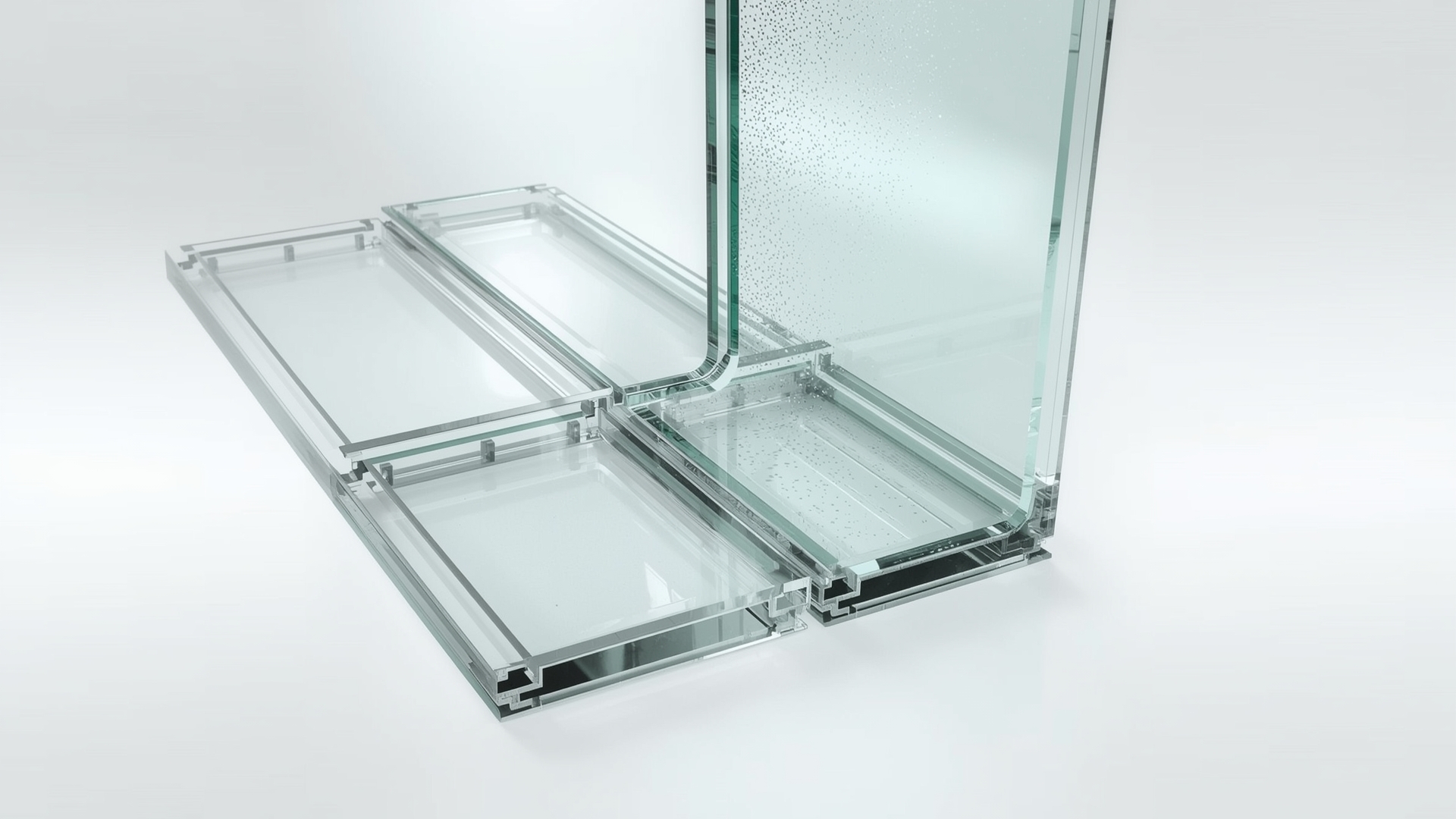
Quick Answer: Glass surfaces in an IGU are numbered 1 to 4 from outside to inside. Low-E coatings are most often placed on surface 2 (facing the gap) for cold climates, or surface 3 (facing the interior gap) for hot climates, to control the direction of heat reflection.
Understanding Glass Surface Numbering
A standard double-pane window has four surfaces. Surface 1 is the outer face of the outer pane (facing outside). Surface 2 is the inner face of the outer pane. Surface 3 is the outer face of the inner pane. Surface 4 is the inner face of the inner pane (facing indoors).
The gap between surfaces 2 and 3 is where argon or krypton gas is sealed. Coating placement determines which direction the coating reflects heat.
Surface 2 vs. Surface 3 Placement
A coating on surface 2 faces into the gas gap. In cold climates, this position reflects indoor long-wave heat back into the room and reduces U-factor. It’s the most common placement for northern climates.
A coating on surface 3 also faces the gas gap but from the inside pane’s perspective. This position is better at blocking incoming solar infrared, making it more effective in hot climates. Some manufacturers use dual coatings on both surfaces 2 and 3 to optimize performance in mixed climates.
How Do Spacer Bars Affect Low-E Performance?
Quick Answer: Spacer bars hold the two panes apart and seal the gas fill inside the IGU. Metal spacers conduct heat at the edges, creating a “cold edge” effect that reduces overall window efficiency regardless of how good the low-E coating is.
The spacer bar runs around the perimeter of the IGU. It maintains the precise gap between panes (typically 6–16 mm) and contains the desiccant (a moisture-absorbing material) that keeps the interior space dry.
Traditional aluminum spacers are highly conductive. Heat flows easily through them, creating a cold strip around the interior edge of the window. This is called the edge-of-glass effect, and it can cause condensation even on otherwise efficient windows.
Warm-Edge Spacer Technology
Warm-edge spacers reduce that edge conduction problem. They’re made from stainless steel, foam, or hybrid materials with much lower thermal conductivity than aluminum.
Switching from aluminum to a warm-edge spacer improves the overall window U-factor by 0.02–0.06 in tested conditions. That might sound small, but across an entire house it adds up to measurable heating and cooling savings.
| Spacer Type | Material | Thermal Conductivity (W/m·K) | Edge Condensation Risk | Cost Premium vs. Aluminum |
|---|---|---|---|---|
| Standard Aluminum | Aluminum alloy | 160 | High | Baseline |
| Stainless Steel | Stainless steel | 16 | Moderate | 5–10% |
| Swisspacer / TGI | Fiberglass + polymer | 0.2–0.5 | Low | 10–20% |
| Foam Spacer | Expanded polyurethane | 0.03–0.04 | Very Low | 15–25% |
How Does Gas Fill Work With Low-E Coatings?
Quick Answer: Argon and krypton gas fill the space between panes to reduce convective heat transfer. These gases are denser than air and slow heat movement across the gap. Combined with low-E coatings, they cut a window’s U-factor significantly compared to air-filled units.
Air is a decent insulator on its own, but it also carries heat through convection — warm air rises, cool air falls, creating a circulation loop that transfers energy across the gap. Dense gases like argon and krypton disrupt that circulation.
Argon is the standard choice. It’s plentiful, affordable, and reduces convective heat transfer by about 30% compared to air. Krypton performs better but costs more. It’s typically used in narrower gap IGUs (6–9 mm) where argon is less effective due to the reduced space.
The combination of soft-coat low-E on surface 2 plus argon fill plus warm-edge spacers consistently produces double-pane U-factors of 0.22–0.29. That represents roughly a 75% improvement over a single-pane window.
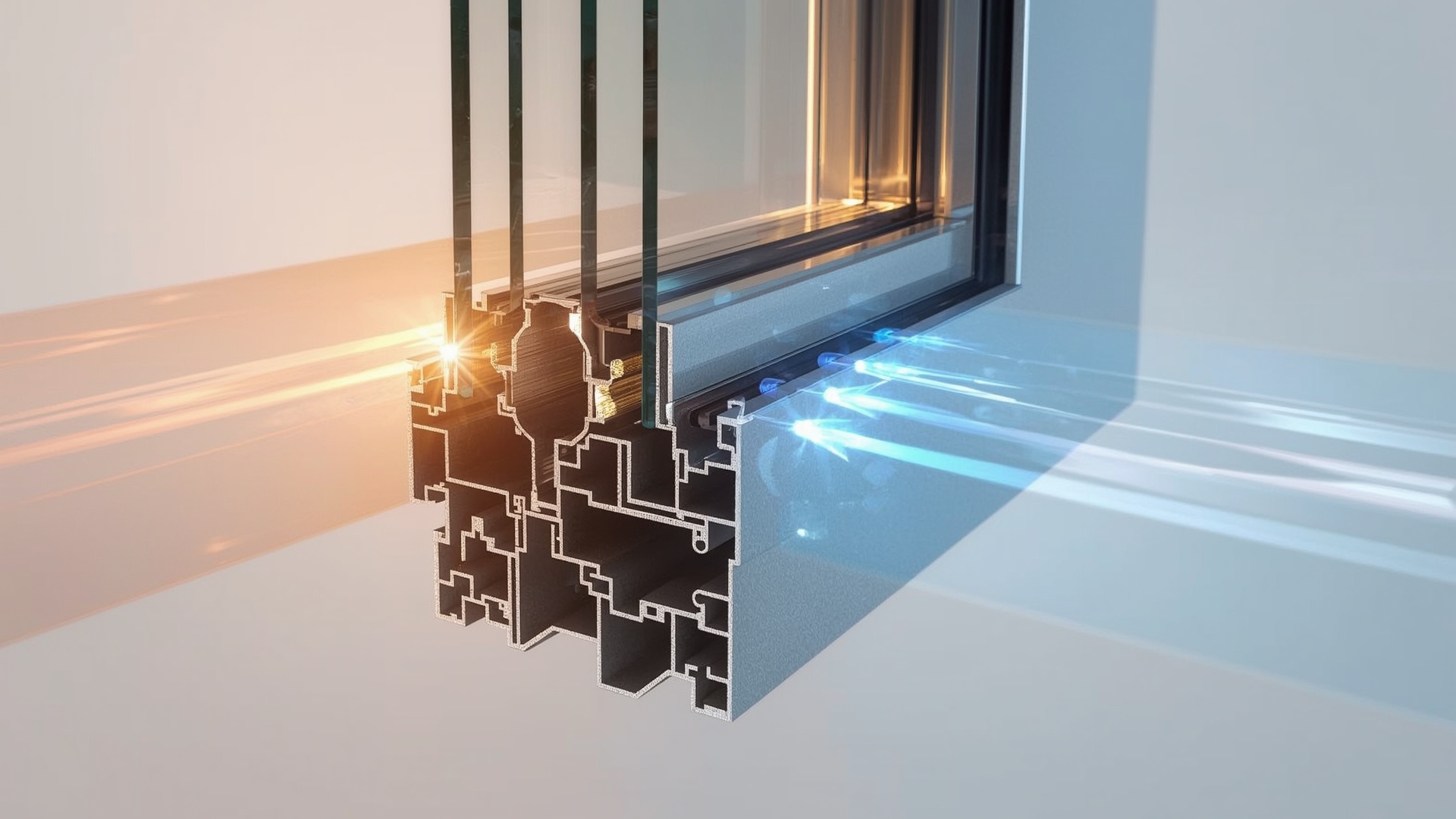
What Is the Full Insulated Glass Unit (IGU) System?
Quick Answer: An IGU is the sealed glass assembly inside a window frame. It includes two or three panes, a spacer bar, gas fill, and the low-E coating. All four components work together — the coating alone doesn’t make a window energy efficient.
| Component | Primary Function | Energy Impact | Failure Mode |
|---|---|---|---|
| Low-E Coating | Reflects infrared radiation | Reduces U-factor by 30–50% | Coating delamination, oxidation (soft-coat) |
| Gas Fill (Argon/Krypton) | Reduces convective heat transfer | Reduces U-factor by 15–30% | Gas leakage through failed seals |
| Spacer Bar | Maintains gap, seals unit | Warm-edge types cut edge U-value 20–30% | Seal failure, desiccant saturation |
| Glass Pane Count | Adds additional air/gas barriers | Triple pane reduces U-factor by ~35% vs. double | Additional weight, frame stress |
| Primary Seal (PIB) | Gas-tight inner seal | Prevents gas loss and moisture entry | UV degradation, thermal cycling stress |
When any one of these components fails, the others can’t compensate. A perfect low-E coating on a failed IGU with no gas fill is no better than a plain double-pane window. This is why whole-unit performance ratings (from NFRC labels) matter more than coating specifications alone.
Does Low-E Glass Block UV Rays?
Quick Answer: Yes. Low-E glass blocks 40–70% of ultraviolet radiation depending on the coating type. UV blocking reduces fading in furniture, flooring, and artwork. However, no standard low-E glass blocks UV rays completely — specialized UV-filtering glass is required for full protection.
UV radiation falls in wavelengths of 10–400 nm. The metallic layers in most low-E coatings absorb or reflect a portion of UV while still transmitting visible light. The exact UV blocking percentage varies by product and manufacturer.
Soft-coat low-E coatings generally provide better UV protection than hard-coat versions. Some manufacturers combine low-E coatings with laminated interlayers to achieve UV blockage above 99%.
Is Low-E Glass Worth the Cost?
Quick Answer: For most climates, yes. Low-E double-pane windows typically cost $50–$150 more per window than non-coated double-pane units. Energy savings of $125–$465 per year compared to single-pane windows mean most homeowners recover that cost within 3–7 years.
| Window Configuration | Avg. Cost Per Window | Est. Annual Energy Savings vs. Single Pane | Payback Period | ENERGY STAR Eligible |
|---|---|---|---|---|
| Double Pane, No Coating | $150–$400 | $100–$250/year | 2–5 years | Depends on U-factor |
| Double Pane + Hard-Coat Low-E | $200–$500 | $150–$350/year | 3–5 years | Often yes |
| Double Pane + Soft-Coat Low-E + Argon | $250–$600 | $200–$465/year | 3–7 years | Yes (most products) |
| Triple Pane + Soft-Coat Low-E + Krypton | $400–$900 | $250–$550/year | 5–10 years | Yes |
Energy savings estimates are based on the U.S. Department of Energy’s window replacement analysis for an average 2,000 sq ft home in a mixed climate zone. Actual savings vary by home size, local energy prices, and climate.
The federal energy-efficient home improvement credit allows homeowners to claim up to 30% of the cost of qualifying windows (up to a $600 limit for windows and skylights combined) for ENERGY STAR-certified products. Check current IRS guidance for eligibility rules in your tax year.
How Can You Tell If Your Windows Already Have Low-E Coating?
Quick Answer: Hold a lit lighter or match near the glass and look at the reflections. A standard window shows identical flame reflections. A low-E window shows one reflection with a slightly different color (often pink, green, or blue) due to the metallic coating’s tint.
This is called the flame test or candle test. Each pane surface creates one reflection. On a double-pane window you’ll see four reflections. If one of those reflections looks slightly different in color, the coating is present.
You can also check the window’s NFRC label (usually a sticker on the frame or glass edge) or call the manufacturer with the unit’s serial number. The NFRC label will show U-factor and SHGC values that confirm whether a coating is present.
What the NFRC Label Tells You
The National Fenestration Rating Council (NFRC) is the independent organization that tests and certifies window performance in North America. Every NFRC-certified window carries a label showing U-factor, SHGC, visible transmittance, air leakage, and condensation resistance.
A U-factor below 0.30 in a double-pane window almost always indicates a low-E coating is present. A U-factor of 0.48 or above typically means no coating is present.
How Does Low-E Glass Interact With Window Frame Materials?
Quick Answer: The frame material affects the whole-window U-factor significantly. A high-performing low-E IGU inside a low-quality aluminum frame can still result in a poor overall U-factor. Vinyl, fiberglass, and wood frames all outperform aluminum in thermal performance.
The glass unit’s center-of-glass U-factor is always better than the whole-window U-factor. This is because frames conduct heat and edge-of-glass performance is always worse than center-of-glass.
NFRC whole-window ratings account for the frame. A soft-coat low-E IGU with a U-factor of 0.20 at center-of-glass might have a whole-window U-factor of 0.28–0.32 when accounting for the frame and edge effects. Frame choice is as important as glass choice.
Frequently Asked Questions About Low-E Glass Windows
Can low-E glass be used in single-pane windows?
Hard-coat low-E can be used in single-pane windows because the coating is durable enough to be exposed to air. Soft-coat low-E cannot — it needs to be sealed inside an IGU to prevent oxidation. Single-pane low-E windows still perform far below modern double-pane standards.
Does low-E glass make rooms look darker?
Slightly, but not noticeably in most cases. High-quality soft-coat low-E glass transmits 70–75% of visible light. Standard clear glass transmits about 90%. Most people don’t notice the difference in everyday conditions. Spectrally selective coatings maintain the highest visible light levels while still blocking heat.
Does low-E coating prevent window condensation?
Low-E coatings reduce the risk of interior condensation by keeping the interior glass surface warmer. A warmer glass surface is less likely to fall below the dew point of indoor air. However, condensation can still occur on the frame edges if warm-edge spacers aren’t used, or on exterior surfaces in humid conditions.
How long does a low-E coating last?
A properly sealed soft-coat low-E coating inside an IGU can last 20–25 years before seal failure becomes likely. The coating itself doesn’t degrade if the seal holds. Hard-coat low-E, being fused to the glass, lasts the life of the glass. Once an IGU seal fails, the coating on a soft-coat unit can oxidize and lose effectiveness.
Can you clean low-E glass with standard window cleaners?
On the exterior surface, yes — standard cleaners are safe because the coating is inside the sealed unit, not on the outer surface. Never use abrasive cleaners or scrubbing pads on any glass surface. On interior glass, the coating is still protected, so normal cleaning is safe on any exposed surface.
What is the difference between low-E glass and tinted glass?
Tinted glass blocks heat by absorbing solar energy into the glass itself, which then re-radiates some heat inward. Low-E glass reflects infrared radiation rather than absorbing it. Low-E glass achieves better heat control with higher visible light transmission, making it superior to tinting in most residential applications.