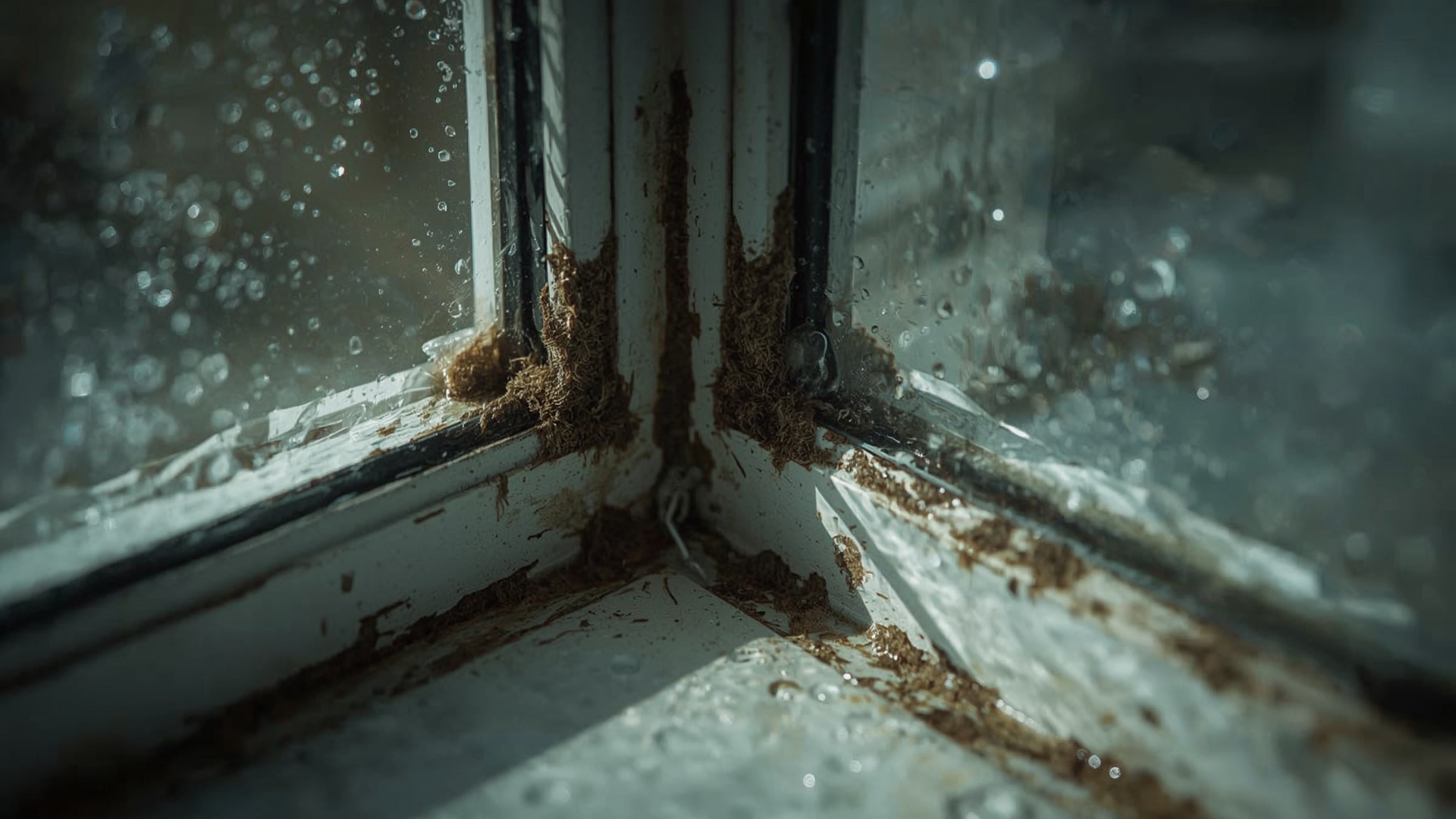
White crusty buildup on your windows isn’t just ugly — it’s actively damaging the glass beneath it. Mineral deposits form when water evaporates and leaves behind calcium, magnesium, and silica. Over time, those minerals bond chemically to the glass surface and become harder and harder to remove.
The good news is that most mineral deposits can be removed with the right approach. The bad news is that the wrong approach — harsh scrubbing, the wrong acid, or waiting too long — can make things worse or even permanently etch the glass.
This guide covers exactly how mineral scale forms, how to identify what you’re dealing with, and which removal method matches your situation.
Key Takeaways
- Mineral deposits are caused by evaporating water that leaves calcium, magnesium, and silica on the glass surface.
- External deposits come from sprinklers, rain runoff, and hard tap water — and are usually the easier type to remove.
- Internal deposits form between double-pane glass when the window seal fails, and cannot be cleaned from the outside.
- White vinegar and citric acid work well on light to moderate buildup; stronger acids are needed for heavily bonded mineral scale.
- Mechanical removal (polishing with cerium oxide) is required when acid alone can’t break the bond.
- Glass that shows deep etching, cloudiness, or permanent haze after cleaning may need professional restoration or full replacement.
- Acting early matters — deposits left for years chemically integrate with the glass and become nearly impossible to remove without abrasion.
What Causes Mineral Deposits to Form on Window Glass?
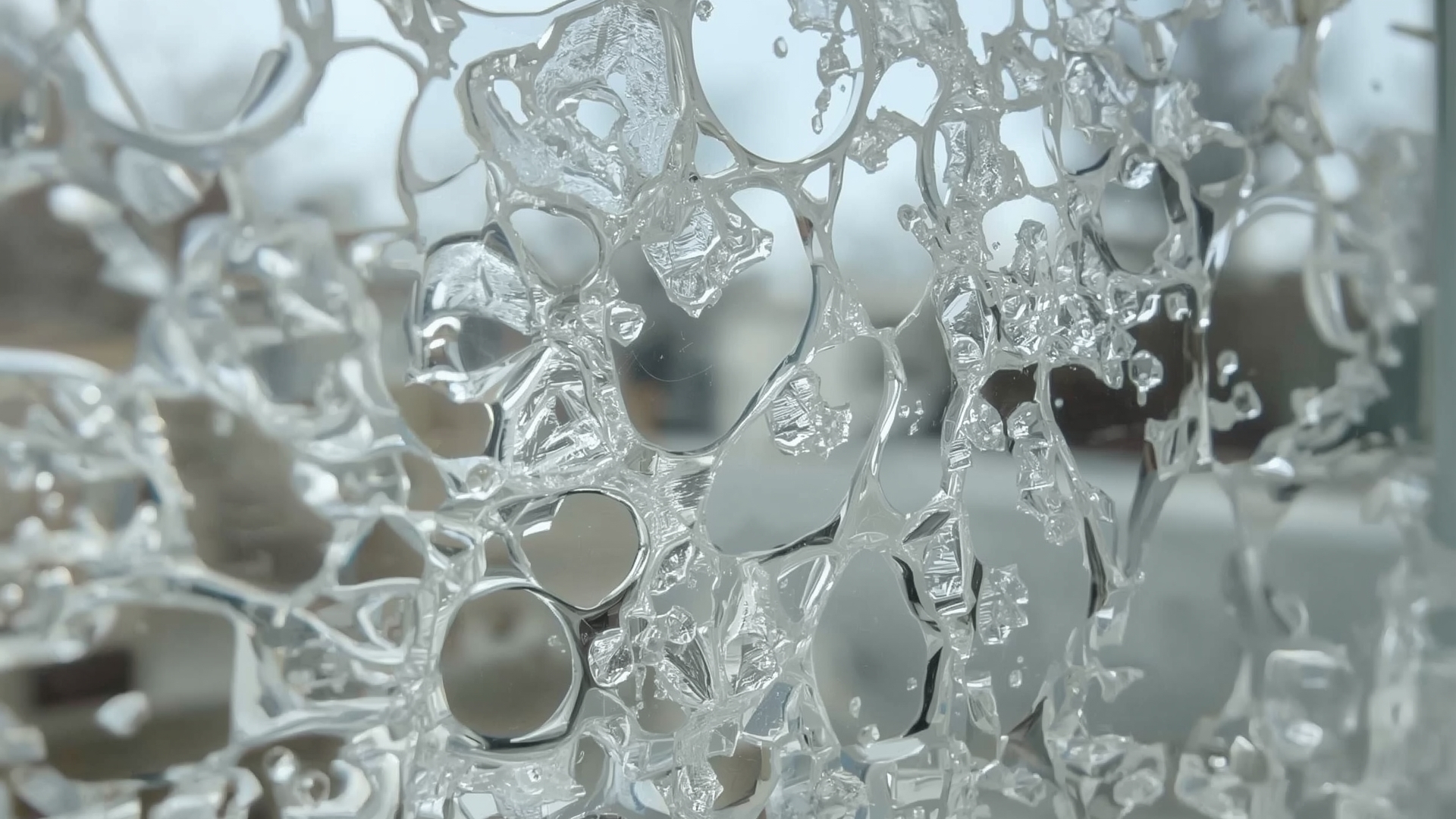
Quick Answer: Mineral deposits form when water evaporates on glass and leaves behind dissolved calcium, magnesium, and silica. Sprinkler overspray, rain runoff, and hard tap water are the most common sources. Repeated wetting and drying cycles make deposits progressively harder to remove.
Every drop of water that touches your windows carries dissolved minerals. When the water evaporates, the minerals stay behind. A single wetting cycle leaves a faint residue. Dozens of cycles leave a thick, chalky crust.
The main minerals involved are calcium carbonate, magnesium carbonate, and silica. Calcium and magnesium are alkaline (high pH) and respond well to acid-based cleaners. Silica is chemically inert and requires mechanical abrasion to remove once it fully bonds to glass.
What Water Sources Cause the Most Buildup?
Irrigation sprinklers are the biggest offender. They deposit hard water directly onto glass surfaces, often daily, for months at a time. That repeated exposure builds up layers of scale that become progressively thicker and harder to remove.
Other common sources include garden hoses, roof runoff carrying dissolved minerals from concrete or masonry, and tap water used during window cleaning. Even rainwater contains trace minerals, though buildup from rain alone is usually light.
Why Do Deposits Get Harder to Remove Over Time?
Fresh mineral deposits sit on top of the glass surface. They’re weakly bonded and easy to dissolve. But over weeks and months, minerals begin to chemically integrate with the silica in the glass itself. This process is called silicate bonding.
Once silicate bonding occurs, acid cleaners alone can’t fully remove the deposit. You’re no longer just dissolving a surface layer — you’re dealing with a compound that has partially merged with the glass. At that stage, mechanical polishing is required.
What Is the Difference Between External and Internal Mineral Deposits?
Quick Answer: External deposits form on the outer surface of glass from water contact and can be cleaned with acids or polishing compounds. Internal deposits form between panes in double-pane windows when the seal fails, and require professional intervention or glass unit replacement.
External Deposits: What They Look Like
External mineral deposits appear as white, cloudy, or chalky spots on the outside of the glass. In early stages, they look like water spots. In later stages, they form a thick haze or crust that’s visible even when the glass is dry.
You can confirm deposits are external by touching the glass. If the rough or chalky texture is on the outer surface, you’re dealing with external scale. External deposits are the type most homeowners encounter and can often be removed at home.
Internal Deposits: What They Look Like
Internal mineral deposits appear as fogging, streaking, or a cloudy film between the two panes of glass in a double-pane window. The key sign is that the haze doesn’t wipe away — it’s sealed inside the window unit.
This type of deposit forms when the seal between the two panes fails. Moisture enters the air gap, evaporates, and deposits minerals on the interior glass surfaces. Because those surfaces are enclosed, they can’t be accessed for cleaning through normal methods.
| Attribute | External Deposits | Internal Deposits |
|---|---|---|
| Location | Outer or inner accessible glass surface | Between panes of double-pane window unit |
| Primary Cause | Sprinklers, rain, tap water, runoff | Failed window seal, moisture infiltration |
| Visual Signs | White spots, chalky haze, surface crust | Foggy haze, streaks, cloudiness between panes |
| Touch Test | Rough or gritty texture on glass surface | Glass feels smooth, haze is internal |
| DIY Removal | Yes, with appropriate products | No — surfaces are inaccessible |
| Professional Options | Polishing and restoration | Defogging service or full IGU replacement |
| Risk of Permanent Damage | Moderate (etching if left too long) | High (seal failure worsens over time) |
How Do You Remove Light Mineral Deposits From Window Glass?

Quick Answer: Light mineral deposits respond well to white vinegar, citric acid solutions, or commercial hard water removers. Apply the solution, let it dwell for 5 to 10 minutes, then scrub gently with a non-scratch pad. Rinse thoroughly and dry with a microfiber cloth.
White Vinegar Method
White vinegar contains acetic acid, which dissolves calcium and magnesium carbonate deposits. It works best on deposits that are less than six months old and haven’t deeply bonded to the glass.
Mix equal parts white vinegar and distilled water in a spray bottle. Spray the affected area generously and let it sit for 5 to 10 minutes. Scrub with a white non-scratch pad using circular motions, then rinse with clean water. Dry immediately with a lint-free microfiber cloth.
Don’t let vinegar dry on the glass. It can leave its own residue on untreated surfaces and may damage window frames, especially painted wood or aluminum with an oxidized finish.
Citric Acid Method
Citric acid is slightly stronger than acetic acid and works better on moderate deposits. It’s available as a powder and mixes easily with water.
Dissolve 1 tablespoon of citric acid powder in 1 cup of warm water. Apply with a sponge or spray bottle, allow 10 to 15 minutes of dwell time, then scrub and rinse. Citric acid is less aggressive on surrounding surfaces than stronger acids, making it a good middle-ground option.
Commercial Hard Water Removers
Products specifically formulated for mineral scale removal typically use phosphoric acid or sulfamic acid. These are stronger than vinegar and citric acid and work on deposits that have started to bond to the glass.
Follow the manufacturer’s instructions carefully. Most require 5 to 15 minutes of dwell time. Always test on a small, inconspicuous area first — especially on tinted or coated glass.
| Method | Active Agent | Best For | Dwell Time | Risk Level |
|---|---|---|---|---|
| White Vinegar | Acetic acid (4-8% concentration) | Fresh, light deposits (under 6 months) | 5-10 minutes | Low |
| Citric Acid Solution | Citric acid (5-10% solution) | Moderate deposits, older spots | 10-15 minutes | Low-Medium |
| Phosphoric Acid Cleaner | Phosphoric acid (5-15% solution) | Heavy bonded scale | 5-15 minutes | Medium |
| Hydrofluoric Acid (professional only) | Hydrofluoric acid (<1% diluted) | Severe silicate-bonded deposits | 1-3 minutes maximum | Very High |
| Cerium Oxide Polish | Mechanical abrasion + cerium oxide compound | Etched glass, silica-bonded deposits | N/A (polishing time: 10-30 min per pane) | Medium (requires skill) |
How Do You Remove Heavy or Bonded Mineral Deposits?
Quick Answer: Heavy deposits that don’t respond to acid cleaners require mechanical polishing with cerium oxide compound and a rotary polisher or drill-mounted pad. This physically removes the bonded mineral layer and restores clarity. Incorrect technique can cause swirl marks or uneven surface removal.
When Acids Stop Working
If you’ve applied a commercial hard water cleaner and the deposit barely budged, the minerals have likely undergone silicate bonding. The deposit is no longer just sitting on the glass — it has partially fused with the silica matrix of the glass itself.
At this stage, acid can soften the surface layer but can’t fully dissolve it. You need a mechanical approach to physically remove the bonded material.
Cerium Oxide Polishing for Mineral Deposits
Cerium oxide is a fine abrasive compound used to polish glass. It removes a microscopic layer of glass surface, taking the bonded deposit with it. The result is a restored, clear surface — provided the damage hasn’t gone too deep.
Mix cerium oxide powder with water to form a thick paste. Apply it to the affected glass with a felt polishing pad attached to a variable-speed drill or angle grinder. Work in overlapping circular passes at low to medium speed (1,000 to 3,000 RPM). Keep the pad wet to prevent overheating. Rinse the area clean and inspect.
This process requires patience and consistent pressure. Rushing leads to uneven glass removal and visible swirl marks. If you haven’t used cerium oxide before, start on a less visible pane to build your technique.
Steel Wool and Razor Blade Cautions
Some guides recommend 0000-grade steel wool or a razor blade scraper for mineral deposits. Both carry real risks.
Steel wool can scratch glass if the pad is contaminated with debris or used with too much pressure. Razor blades can scratch the glass outright and may void manufacturer warranties on tempered or coated glass. Use these methods only if you understand the risks and are working on plain annealed glass without coatings.
Can You Remove Mineral Deposits From the Inside of Double-Pane Windows?
Quick Answer: No — mineral deposits inside double-pane windows form on surfaces that are sealed and inaccessible. The only way to address them is through professional defogging services, which have limited long-term success, or by replacing the insulated glass unit entirely.
Why Internal Deposits Are Different
A double-pane window (also called an insulated glass unit, or IGU) has two panes of glass sealed together with a spacer bar and desiccant material inside. The space between the panes is filled with air or an inert gas like argon.
When the seal fails, outside air enters that sealed cavity. The moisture in the air condenses on the interior glass surfaces, evaporates, and deposits minerals. Because the surfaces face inward toward the sealed cavity, they can’t be wiped, sprayed, or polished from the outside.
What Is the Defogging Process?
Defogging is a professional service where technicians drill small holes in the window unit, inject a cleaning solution or desiccant spray into the cavity, and then seal the holes. The goal is to remove the moisture and light mineral haze without replacing the glass.
Defogging can improve clarity on windows with mild internal fogging. But it doesn’t fix the broken seal — moisture will re-enter the cavity over time. Most professionals consider defogging a temporary measure, not a permanent solution.
When Should You Replace an IGU Instead?
IGU replacement is the right answer when the internal haze is heavy, when mineral deposits have etched the interior glass surfaces, or when the window unit is more than 10 to 15 years old. At that point, the seal has failed structurally and will continue to allow moisture intrusion regardless of patching.
Replacing just the glass unit (not the entire window frame) is usually cost-effective if the frame is in good condition. A glazier or window company can remove the old IGU and install a new one within the existing frame.
| IGU Condition | Recommended Action | Estimated Cost (Per Window) | Long-Term Effectiveness |
|---|---|---|---|
| Light fogging, early seal failure | Professional defogging service | $75-$150 | 1-5 years (temporary) |
| Moderate fogging, mineral haze | Defogging or IGU replacement | $150-$350 | Replacement is permanent |
| Heavy mineral deposits, etched interior | IGU replacement | $200-$600 | Permanent (full clarity restored) |
| Failed seal + frame damage | Full window replacement | $400-$1,200+ | Permanent (new frame + glass) |
What Tools and Products Do You Need for Mineral Deposit Removal?
Quick Answer: You need an acid-based cleaner (vinegar, citric acid, or phosphoric acid product), non-scratch scrubbing pads, microfiber cloths, a spray bottle, and rubber gloves. For heavy deposits, add cerium oxide powder, a drill-mounted polishing pad, and safety glasses to your kit.
Basic Cleaning Kit
- White vinegar or citric acid powder — for light to moderate deposits
- Non-scratch scrubbing pad (white Scotch-Brite or equivalent) — safe on glass without coatings
- Microfiber cloths — for drying and final buffing
- Spray bottle — for applying and reapplying solution
- Rubber gloves — to protect skin from acid contact
- Distilled water — for mixing solutions and rinsing (avoids adding new minerals)
Heavy-Duty Polishing Kit
- Cerium oxide powder — primary polishing compound for bonded scale
- Felt polishing pad — attaches to drill, used to apply compound
- Variable-speed drill or angle grinder — drives the polishing pad
- Safety glasses — required when working with polishing compounds and power tools
- Painter’s tape — to protect window frames and seals from compound splatter
How Do You Protect Window Glass From Mineral Deposits After Cleaning?

Quick Answer: After cleaning, apply a hydrophobic glass coating or water-repellent treatment to create a barrier that causes water to bead up and roll off instead of sitting and evaporating. Redirect sprinklers away from windows and rinse glass after any water contact to prevent new deposits from forming.
Hydrophobic Glass Coatings
A hydrophobic coating (also called a water-repellent coating) bonds to the glass surface and creates a barrier that water can’t easily stick to. Water beads up and rolls off, taking dissolved minerals with it before they can evaporate and deposit.
These coatings are applied after cleaning and require the glass to be completely free of deposits first. Applying a coating over existing mineral scale traps the deposits underneath and makes future removal harder.
Sprinkler and Drainage Adjustments
The most effective long-term protection is source control. Adjust irrigation heads so they don’t overspray onto windows. Check that gutters and downspouts direct water away from glass surfaces. Extend downspout discharge points if roof runoff hits windows regularly.
Regular Maintenance Schedule
Clean windows every 4 to 8 weeks in areas with hard water or active irrigation. Fresh deposits are always easier to remove than old ones. Consistent maintenance keeps buildup from reaching the silicate-bonding stage where professional intervention becomes necessary.
| Prevention Method | Mechanism | Effectiveness | Maintenance Required |
|---|---|---|---|
| Hydrophobic glass coating | Water beads and rolls off, limits mineral contact | High (reduces new deposit formation by 70-90%) | Reapply every 6-24 months depending on product |
| Sprinkler head redirection | Eliminates primary hard water source | Very High (eliminates source-specific deposits) | Annual inspection of irrigation heads |
| Gutter and downspout extension | Redirects mineral-carrying runoff away from glass | Moderate to High | Clear gutters every 3-6 months |
| Regular window cleaning (4-8 week cycle) | Removes deposits before bonding occurs | High (prevents progression to bonded scale) | Ongoing — consistent schedule required |
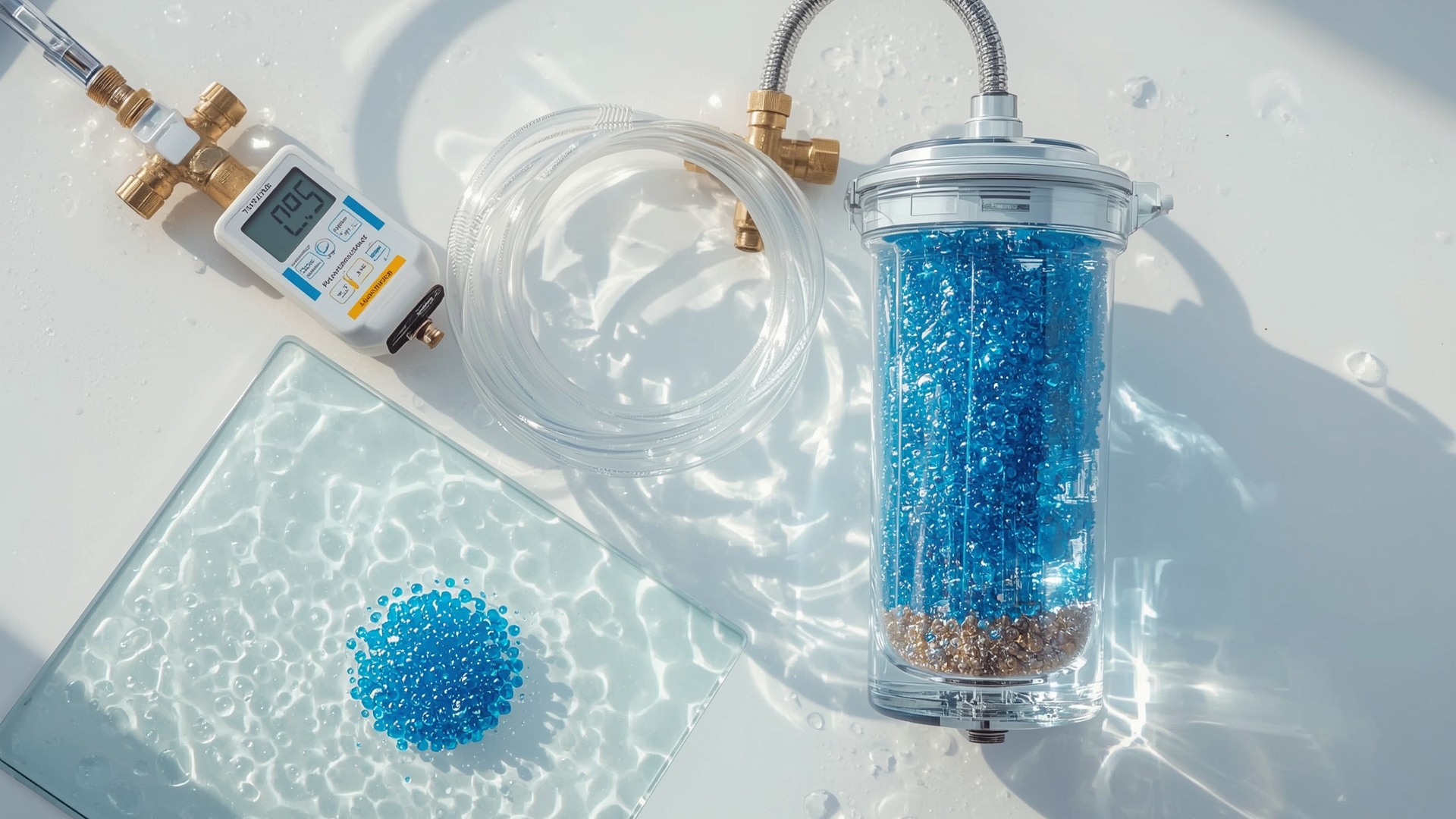
| Deionized water for cleaning | Zero dissolved solids — no mineral residue from rinse water | High (no new deposits from cleaning itself) | Replace DI resin when TDS rises above 10 ppm |
When Should You Call a Professional Instead of Doing It Yourself?
Quick Answer: Call a professional when deposits cover large areas, when the glass has coatings or tinting that could be damaged by DIY acids, when mechanical polishing is needed on upper-floor windows, or when internal fogging between double-pane glass requires defogging or IGU replacement.
Signs DIY Methods Won’t Be Enough
- Deposits have been on the glass for more than two years
- The glass appears permanently hazy even after cleaning
- You can see etching (microscopic pitting) in the glass surface under direct light
- The glass has a low-E coating (a heat-reflecting metallic film) that could be damaged by improper acid application
- The window is a leaded, stained, or tempered unit requiring specialized handling
- The affected area is above the ground floor and requires ladder or lift equipment
What Professionals Can Do That Homeowners Usually Can’t
Professional glass restoration technicians use higher-concentration acid treatments, controlled polishing equipment, and techniques developed for specific glass types. They can also assess glass condition accurately — identifying whether restoration is even viable before investing time and money.
For internal deposits in double-pane units, a professional glazier is your only real option. They can measure existing IGUs, source replacements, and install them correctly to maintain the window’s energy performance and warranty.
When Is Window Glass Too Damaged to Restore?
Quick Answer: Glass is beyond restoration when mineral deposits have caused deep etching that mechanical polishing can’t fully correct, when removing enough glass surface to eliminate etching would compromise structural integrity, or when the glass has optical distortion after polishing attempts.
Understanding Glass Etching vs Surface Deposits
There’s an important distinction between a deposit sitting on glass and etching in the glass. Deposits are additive — something has been added to the surface. Etching is subtractive — the glass itself has been chemically damaged and material has been removed.
Prolonged exposure to mineral deposits, especially from highly alkaline water or acidic rain, can cause the glass surface to corrode. The result is a pitted, frosted, or permanently cloudy appearance that polishing may improve but can rarely fully eliminate.
When Replacement Is the Only Answer
If a professional polishing attempt leaves the glass with visible optical distortion — where objects viewed through the glass look warped or wavy — too much surface material has been removed. Replacement is the only way to restore full clarity.
The same applies to double-pane units where the interior glass surfaces are heavily etched. No external treatment reaches those surfaces, and etched interior glass does not improve after defogging.
Frequently Asked Questions
Can I use CLR or other bathroom descalers on window glass?
Yes, CLR (Calcium, Lime, and Rust remover) can be used on window glass. It contains a blend of acids effective on calcium and lime deposits. Always dilute it according to the manufacturer’s instructions, avoid contact with surrounding frames or seals, and rinse thoroughly. Don’t use it on glass with metallic coatings like low-E films.
Will baking soda remove mineral deposits from glass?
Baking soda is mildly abrasive but alkaline (high pH), which means it can’t dissolve calcium or magnesium deposits the way acids can. It may help scrub off very light, loose surface residue, but it won’t work on bonded mineral scale. Use an acid-based solution instead for any meaningful deposit removal.
How can I tell if a deposit is mineral scale or glass etching?
Apply a commercial hard water remover and scrub the area. If the haze clears, it was a deposit. If a dull or cloudy area remains after cleaning, the glass surface itself has been etched. Etching has a frosted appearance under direct sunlight and won’t wipe away. Deposits have a chalky or crusty texture before cleaning.
Does hard water hardness level affect how difficult deposits are to remove?
Yes. Water hardness is measured in grains per gallon (GPG) or parts per million (PPM). Water above 10 GPG (171 PPM) is considered very hard and produces deposits that bond to glass faster than soft water deposits do. Areas with water above 15 GPG may see silicate bonding occur within weeks of repeated exposure rather than months.
Can I apply a protective coating to double-pane windows?
Yes, but only to the external glass surface. A hydrophobic coating applied to the outer pane reduces mineral deposit formation and makes cleaning easier. It has no effect on the sealed interior surfaces. If the inner seal is compromised, a coating won’t stop internal fogging — that requires professional repair or IGU replacement.
How long does cerium oxide polishing take on a standard window?
A standard single-pane window (approximately 24 by 36 inches) typically takes 15 to 30 minutes of polishing time with a drill-mounted cerium oxide pad, depending on deposit severity. Multiple passes are usually needed. Larger panes or heavily etched glass can take an hour or more per panel.