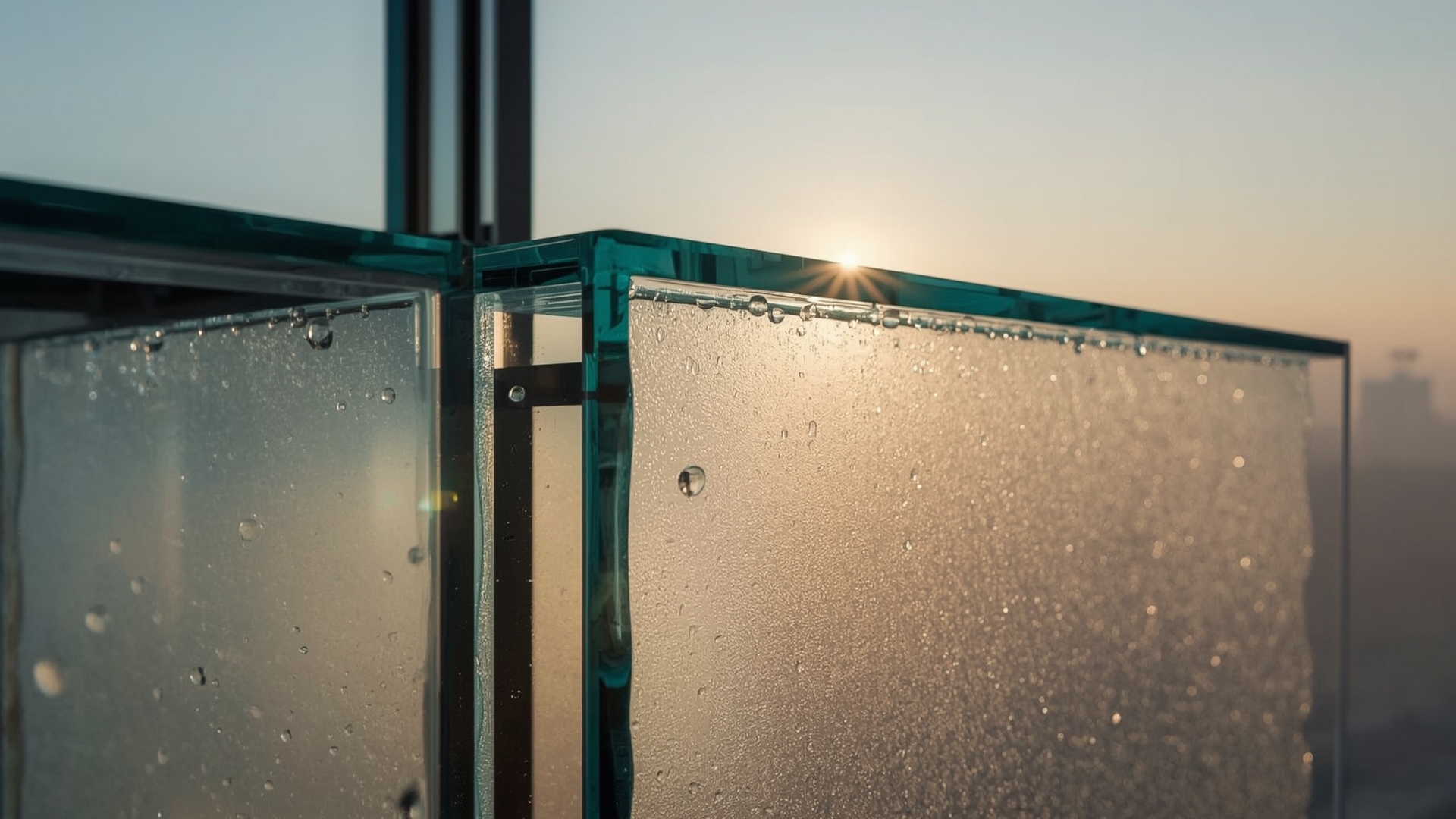
Your windows might look fine from across the room. But a failed window seal is doing quiet damage — higher energy bills, foggy glass, and moisture trapped between panes. Most homeowners don’t notice until the problem is well advanced.
The good news: window seal failure has clear, identifiable signs. You don’t need special tools or a contractor to spot them. You just need to know what to look for.
Key Takeaways
- Fogging between panes is the clearest sign of a failed insulated glass unit (IGU) seal — it means the inert gas inside has escaped and moisture has entered.
- Failed seals don’t fix themselves. The fog, condensation, and energy loss will get worse over time without intervention.
- IGU replacement costs between $150 and $600 per window in most cases — significantly cheaper than full window replacement.
- Seal failure is caused by thermal cycling, UV exposure, age, improper installation, and pressure washing damage.
- You can diagnose most seal failures yourself in 10 minutes with no tools. A professional assessment is only needed for complex cases.
- Some signs look like seal failure but aren’t — surface condensation, for example, is a humidity issue, not a seal problem.
What Are the Most Common Signs of Window Seal Failure?
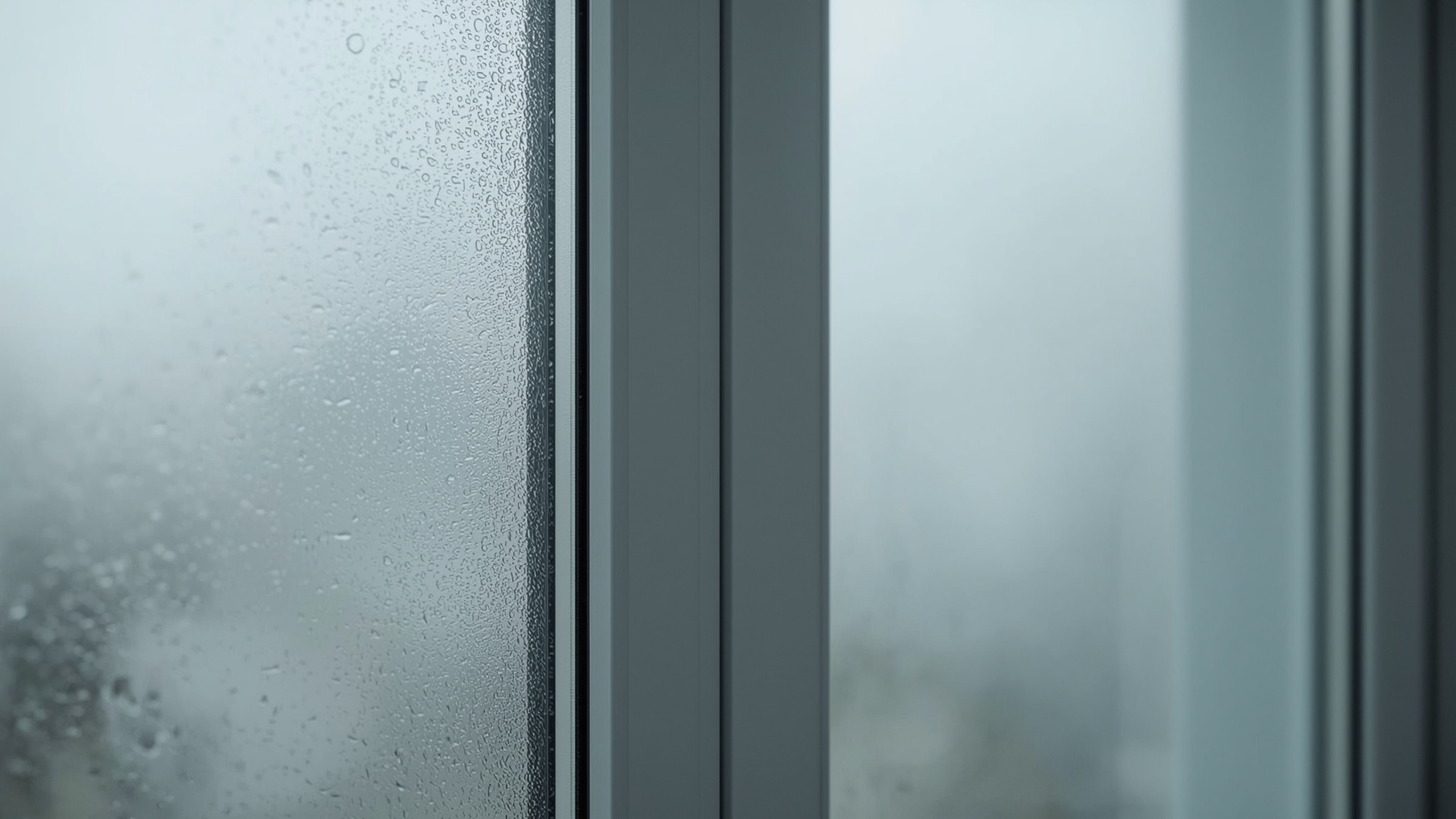
Quick Answer: The most common signs are foggy or hazy glass between the panes, visible moisture or water droplets inside the glass unit, distorted reflections, and a film or streaky residue that doesn’t wipe off. These appear between the two panes, not on the surface.
Window seal failure happens inside the glass unit. That’s important to understand first. The fog, moisture, or film you’re seeing is trapped between the two panes of glass — not on the interior or exterior surface.
Here are the signs to look for, ranked from most to least obvious:
Fogging or Haze Between the Panes
This is the signature sign of a failed IGU seal. The fog appears inside the glass sandwich and doesn’t respond to wiping or cleaning. It may come and go with temperature changes early on, then become permanent as the failure progresses.
Run a dry cloth across both surfaces of the glass. If the haze doesn’t move, it’s between the panes — not on them.
Visible Condensation or Water Droplets Inside the Glass
Small water droplets collecting between the panes means moisture has fully entered the unit. This often appears in corners or along the bottom edge of the glass. It’s a more advanced stage of seal failure than fogging alone.
Distorted or Wavy Reflections
When argon or krypton gas — the insulating gas sealed between panes — escapes, the pressure balance inside the unit shifts. This can cause one or both panes to bow slightly inward or outward. The result is a wavy, distorted reflection that looks like a funhouse mirror.
Stand at an angle to the window and look at a straight horizontal line reflected in the glass. If the line bends or curves, the glass has likely bowed due to pressure loss.
White, Grey, or Oily Film That Won’t Wipe Off
As the failed seal allows moisture to cycle in and out over time, mineral deposits and contaminants build up on the inner glass surfaces. This leaves a white haze, grey film, or oily-looking streaks that are permanently etched into the glass. Cleaning products applied to the outer surface won’t touch it.
Streaky or Dirty-Looking Glass With No External Cause
If a window consistently looks dirty even right after cleaning, and there’s no source of exterior staining, the contamination may be internal. This is a mid-to-late stage sign of seal failure.
What Causes Window Seals to Fail?
Quick Answer: Window seals fail due to thermal cycling (daily expansion and contraction), UV degradation of the sealant, age past 10 to 20 years, improper installation gaps, and physical damage from pressure washing or impact. Most failures combine two or more of these factors.
Thermal Cycling Is the Primary Cause
Every day, your windows heat up and cool down. The glass, spacer bar, and sealant all expand and contract at slightly different rates. Over thousands of cycles across years, this mechanical stress weakens the seal. This is why seal failure is more common in climates with extreme temperature swings.
UV Exposure Degrades the Sealant Over Time
The sealant used in IGUs (insulated glass units) is typically polyisobutylene (PIB) as a primary seal and a structural secondary sealant like silicone or polysulfide. UV rays degrade both over time. South- and west-facing windows receive more direct sun and tend to fail faster than north-facing ones.
Age Beyond the Service Life of the Unit
Most IGU seals are rated for 10 to 20 years. After that threshold, seal failure becomes statistically more likely regardless of other factors. If your windows were installed more than 15 years ago and you’re seeing early signs, age is likely a contributing factor.
Improper Installation
Windows set directly on a sill without proper clearance allow water to pool against the frame. This accelerates sealant breakdown. Insufficient glazing tape or incorrect spacing during installation can also compromise the seal from day one, causing premature failure within just a few years.
Pressure Washing Damage
High-pressure water directed at window frames and glass can force water past the seal and weaken the sealant bond. This is one of the few forms of rapid, externally caused seal damage. Even a single aggressive pressure washing session can initiate seal failure in an older unit.
| Cause | Mechanism | Timeline to Failure | Most Affected Windows |
|---|---|---|---|
| Thermal Cycling | Repeated expansion/contraction stress on sealant | 10–20 years | All climates; worse with large temperature swings |
| UV Degradation | UV breaks down polyisobutylene and silicone sealant | 8–15 years | South- and west-facing windows |
| Age | Sealant material fatigue past rated service life | 15–20+ years | All IGU windows older than 15 years |
| Improper Installation | Water pooling, insufficient clearance, bad glazing tape | 2–8 years | Windows with poor sill drainage |
| Pressure Washing | Forced water intrusion breaks sealant bond | Immediate to 1 year | Older units with weakened sealant |
| Physical Impact | Micro-cracks in sealant from vibration or strike | Months to years | Windows near high-traffic areas |
How Do You Tell the Difference Between a Failed Seal and Normal Condensation?
Quick Answer: Normal condensation forms on the room-facing glass surface when indoor humidity is high, and it clears up within hours. Failed seal moisture appears between the panes, doesn’t wipe off, and persists even in dry conditions. Location and persistence are the two tests.
This is one of the most common points of confusion for homeowners. Surface condensation and seal failure look similar at first glance, but they behave very differently.
How to Test Which One You Have
Touch the glass where you see moisture or fog. If your finger clears it, the moisture is on the surface — this is normal condensation driven by indoor humidity. If the glass feels dry and clear but the fog is still visible, it’s between the panes.
Also check timing. Surface condensation typically appears on cold mornings and disappears as the room warms up. Seal failure fog often appears during temperature transitions and may partially clear, but it never fully goes away as the failure worsens.
When Surface Condensation Is Actually the Problem
High indoor humidity — from cooking, showering, or poor ventilation — causes condensation on any cold surface, including glass. Running a dehumidifier, improving bathroom and kitchen ventilation, or using exhaust fans consistently will reduce or eliminate surface condensation. No window repair is needed.
Can You Diagnose Window Seal Failure Yourself?

Quick Answer: Yes. Most window seal failures are visually obvious and require no tools to identify. Walk each window in good natural light, look for internal fogging, touch-test any haze, and check reflections for distortion. A full home inspection takes 10 to 20 minutes.
Step-by-Step DIY Inspection Method
- Choose the right light. Do your inspection in daylight with light coming through the window toward you. Backlit conditions reveal internal haze much more clearly than night or artificial light.
- Look, don’t touch first. Stand at arm’s length and scan the full pane for any cloudiness, moisture, or film. Move to different angles to catch reflections.
- Touch-test any haze. Place your finger on any foggy or hazy area. If the area clears, it’s surface condensation. If it doesn’t, it’s between the panes.
- Check all four corners. Seal failure often begins at corners where the spacer bar meets the sealant. Look for early moisture accumulation in these spots.
- Inspect the reflection. Find a straight line — a countertop, a shelf, a door frame — and look at its reflection in the window. Distortion signals pane bowing from pressure loss.
- Check the frame and spacer bar. Look for any visible gap between the spacer bar (the metal or foam strip between the panes at the edge) and the glass. Separation here is a direct sign of sealant failure.
When to Call a Professional
You should get a professional assessment when you have multiple windows showing symptoms and you’re unsure whether to repair or replace. A glazing contractor or window specialist can measure energy performance and assess whether the full window frame is compromised — something you can’t determine visually.
Also get a professional involved if the windows are under warranty. DIY diagnosis doesn’t void a warranty, but you’ll want documentation of the failure for any warranty claim.
What Happens If You Ignore Window Seal Failure?
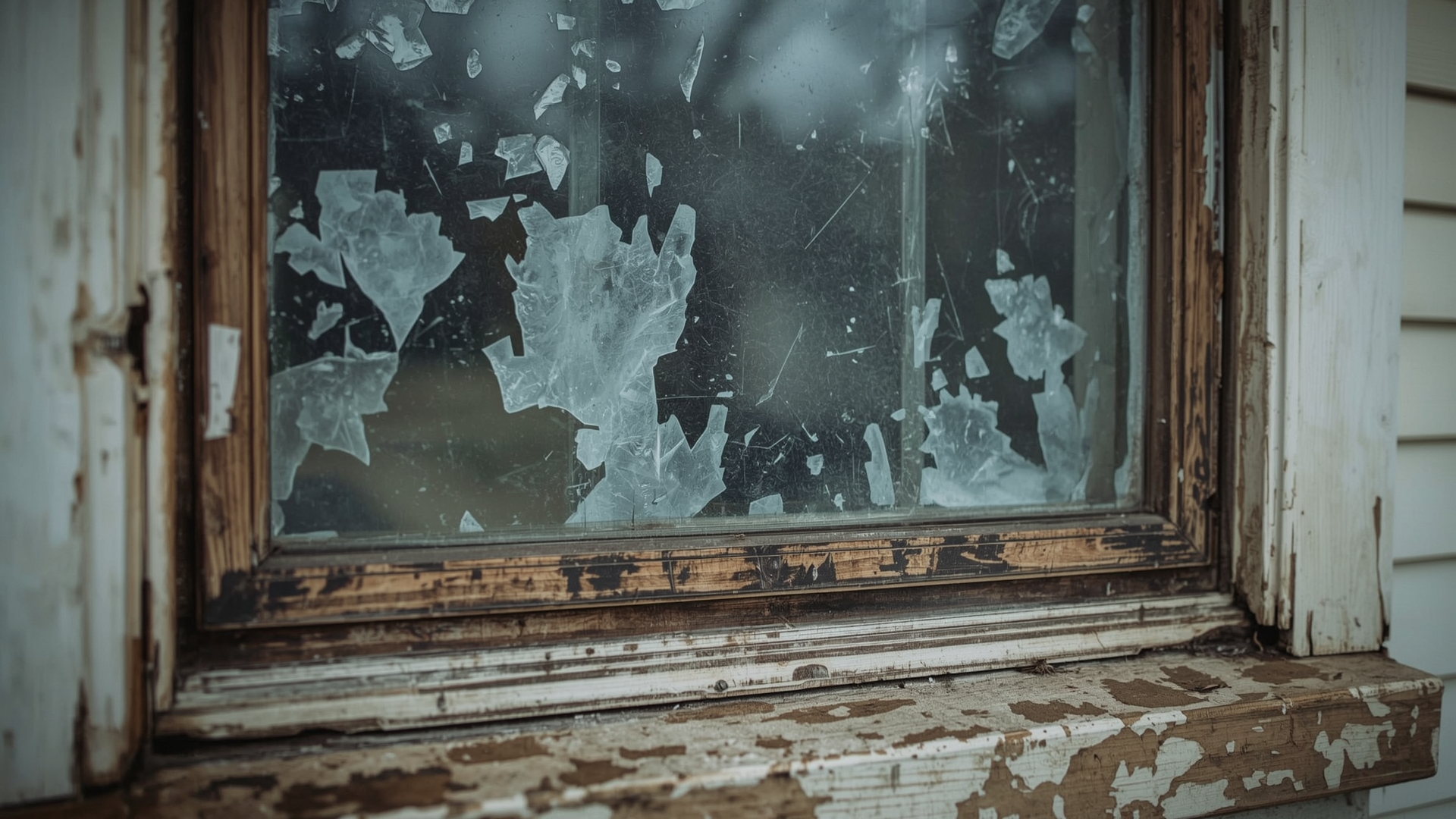
Quick Answer: Ignoring a failed window seal leads to progressively worse fogging, permanent glass staining from mineral deposits, measurable heat loss through the window, and potential moisture damage to the surrounding frame and wall. The problem does not stabilize on its own.
Energy Loss Compounds Over Time
A functioning double-pane window uses argon gas between the panes to insulate. When the seal fails and the gas escapes, the window performs closer to a single-pane unit. The U-factor (a measure of heat transfer — lower is better) of a double-pane window rises from roughly 0.25–0.30 toward 0.50–0.60 as the insulating gas dissipates. That’s a significant drop in thermal performance.
Permanent Glass Staining Develops
As moisture cycles in and out through the failed seal over months and years, mineral deposits form on the inner glass surfaces. This creates a permanent white or grey haze that cannot be cleaned off. At this stage, the glass panes themselves are cosmetically ruined and must be replaced.
Frame and Wall Damage Is a Risk
In severe cases, ongoing moisture intrusion can reach the window frame, sill, and surrounding wall structure. Wood frames can rot. Drywall can absorb moisture. Mold can establish in wall cavities. Catching the seal failure early prevents a window problem from becoming a structural one.
What Are Your Repair Options for a Failed Window Seal?
Quick Answer: The main options are IGU replacement (replacing just the glass unit, not the full window), full window replacement (frame and all), or defogging services (a limited cosmetic fix). IGU replacement is the recommended solution for most homeowners with intact frames.
IGU Replacement: The Standard Repair
An IGU replacement means removing the failed glass unit from your existing window frame and installing a new insulated glass unit. The frame stays in place. This is the most cost-effective repair when the frame itself is in good condition.
The new IGU restores the full insulating performance of the window, including argon gas fill and low-E coatings if your original window had them. Most glazing contractors can complete an IGU replacement in under two hours per window.
Defogging Services: What They Do and Don’t Do
Defogging is a process where a technician drills small holes in the glass, injects a cleaning solution to clear the internal moisture and contamination, then seals the holes. It’s significantly cheaper than IGU replacement.
The limitation is important to understand: defogging clears the visual fog but does not restore the insulating gas. The window will continue to perform poorly from an energy standpoint. It’s a cosmetic fix, not a performance fix. It also carries a risk of the fog returning within a few years.
Full Window Replacement
If your window frame is rotted, warped, or more than 20 years old, replacing the entire window unit makes more sense than an IGU swap. Full replacement is also worth considering if your existing windows are single-pane, have outdated frames, or lack modern energy efficiency features like low-E glass and warm-edge spacers.
| Repair Option | Average Cost (Per Window) | Restores Insulation? | Cosmetic Fix? | Best For |
|---|---|---|---|---|
| IGU Replacement | $150–$600 | Yes (full restoration) | Yes | Frames in good condition, any age |
| Defogging Service | $75–$200 | No | Yes (temporary) | Budget-limited; cosmetic priority only |
| Full Window Replacement | $400–$1,500+ | Yes (new unit) | Yes | Damaged frames, outdated window systems |
How Much Does IGU Replacement Cost?
Quick Answer: IGU replacement costs $150 to $600 per window for most standard residential sizes. The price depends on glass size, low-E coatings, argon gas fill, spacer type, and labor rates in your area. Custom shapes, large panels, and triple-pane units cost more.
What Drives the Cost of an IGU
The glass unit itself is the main cost variable. Standard clear double-pane IGUs are the least expensive. Low-E coated glass (which reflects heat and blocks UV) adds to the price but dramatically improves energy performance. Argon gas fill is standard and included in most replacement quotes.
Labor is typically $50 to $150 per window on top of the unit cost, depending on complexity and your location. Windows above ground level, unusually shaped units, or frames requiring partial disassembly will add time and cost.
| IGU Type | Glass Size Range | Unit Cost | Labor (Added) | Low-E Coating Available? |
|---|---|---|---|---|
| Standard Double-Pane Clear | Up to 24″ x 36″ | $80–$200 | $50–$100 | Yes (optional) |
| Low-E Double-Pane with Argon | Up to 24″ x 36″ | $150–$350 | $50–$100 | Yes (standard) |
| Large Panel (36″ x 60″+) | 36″–72″ wide | $250–$550 | $100–$150 | Yes |
| Triple-Pane IGU | Any size | $300–$700+ | $100–$200 | Yes |
| Custom Shape (arched, angled) | Varies | $400–$1,000+ | $150–$300 | Yes |
Does Window Seal Failure Affect Home Energy Bills?
Quick Answer: Yes. A failed IGU seal eliminates the insulating benefit of the gas fill between panes, raising the window’s U-factor significantly. This increases heat transfer — making rooms hotter in summer and colder in winter — and pushes heating and cooling systems to work harder.
Measuring the Energy Impact
A properly sealed double-pane window with argon fill typically has a U-factor of 0.25 to 0.30. That means it allows only 0.25 to 0.30 BTUs per hour per square foot per degree of temperature difference to pass through. When the seal fails and gas escapes, that value can rise to 0.45 to 0.60 — similar to an uncoated double-pane window with air fill.
For a home with multiple failed windows, the cumulative energy impact can be meaningful. The U.S. Department of Energy estimates that heat gain and heat loss through windows accounts for 25 to 30 percent of residential heating and cooling energy use. Failed seals push that percentage higher.
Drafts Near Windows Don’t Always Mean Seal Failure
Drafts are caused by air gaps around the window frame — between the frame and the rough opening, or through worn weatherstripping. That’s a frame or installation issue, not a seal failure. Seal failure affects insulation performance (heat transfer through the glass) but doesn’t create drafts. Both problems can coexist, and both should be addressed separately.
How Can You Prevent Window Seal Failure?
Quick Answer: You can extend window seal life by avoiding pressure washing near frames, keeping exterior caulk intact, ensuring proper frame drainage, replacing cracked glazing tape, and inspecting windows annually for early signs. You can’t stop thermal aging, but you can slow other contributors.
Maintenance Actions That Make a Real Difference
- Inspect and replace exterior caulk every 5 to 7 years. Cracked caulk allows water to contact the sealant bond. Silicone caulk is more UV-resistant than latex and lasts longer around window frames.
- Never pressure wash window frames directly. Keep pressure washing at least 12 inches away from frame edges and never aim the spray directly at the glass edge where the sealant lives.
- Check that weep holes are clear. Weep holes are small openings at the bottom of window frames that let water drain out. Blocked weep holes allow water to pool against the sealant.
- Avoid applying interior window film without checking compatibility. Some aftermarket window films trap solar heat between the film and the glass, dramatically accelerating thermal stress on the IGU seal.
- Don’t use harsh chemical cleaners on frames. Strong solvents can degrade frame gaskets and edge sealants over time.
| Action | Frequency | What It Prevents | DIY or Pro? |
|---|---|---|---|
| Inspect exterior caulk for cracks | Annual | Water intrusion at sealant bond | DIY |
| Replace deteriorated caulk | Every 5–7 years | Frame moisture damage, sealant breakdown | DIY or Pro |
| Clear window weep holes | 2x per year | Water pooling against frame sealant | DIY |
| Full window condition inspection | Annual | Catch early failure before it worsens | DIY |
| Professional glazing inspection | Every 10 years | Structural seal integrity, hidden failures | Pro |
Is Window Seal Failure Covered by Warranty?
Quick Answer: Many manufacturers offer a 10 to 20-year warranty on IGU seal failure, but coverage depends on proper installation and maintenance. Damage from pressure washing, improper films, or modified frames typically voids the warranty. Check your original window documentation for specific terms.
What Warranties Typically Cover
Standard IGU warranties cover seal failure due to manufacturing defects and normal thermal aging. They usually include replacement of the glass unit at no cost or at a discounted rate. Labor costs are rarely covered after the first year.
If you bought your home without receiving the original window documentation, contact the manufacturer (identified by a label on the spacer bar inside the IGU at the corner of the glass) to check if a warranty is still active.
What Typically Voids an IGU Warranty
- Aftermarket window films applied without manufacturer approval
- Pressure washing damage to the frame or glass edge
- Structural modifications to the window frame
- Failure caused by building settlement or structural movement
- Windows installed by an uncertified installer
Frequently Asked Questions
Can a failed window seal be resealed without replacing the glass?
No. Once an IGU seal fails, the sealant bond cannot be restored in place. The only way to properly fix the problem is to replace the full glass unit. Defogging services can clear the fog temporarily but don’t repair or replace the seal itself.
How long do double-pane window seals last?
Most IGU seals are rated for 10 to 20 years under normal conditions. South- and west-facing windows in climates with large temperature swings tend to reach the lower end of that range. Proper installation and regular maintenance can help extend service life toward the upper end.
What is the spacer bar in a double-pane window?
The spacer bar is a thin strip of metal or foam that separates the two panes of glass around their perimeter. It creates the air gap filled with insulating gas. It’s also the area where sealant bonds to both the glass and the frame. When the sealant around the spacer bar fails, moisture can enter the unit.
Will foggy windows always get worse over time?
Yes. Once a seal fails and moisture enters the IGU, the process accelerates. Moisture and contaminants deposit on the inner glass surfaces with each thermal cycle. The fogging becomes denser, and eventually the glass develops permanent mineral staining that can’t be reversed.
Do all double-pane windows have argon gas?
Not all double-pane windows use argon gas. Older units and budget windows often use air fill between the panes. Argon gas became standard in higher-quality IGUs because it’s denser than air, which slows heat transfer and improves the U-factor. Krypton gas is used in some triple-pane and thin-profile units for even better performance.
How do I find a contractor to replace my window’s glass unit?
Look for glazing contractors or glass shops that specialize in residential IGU replacement — not just general window installers. Get at least two quotes that itemize the unit cost and labor separately. Ask specifically whether the new unit will include argon gas fill and a manufacturer warranty on the seal.


