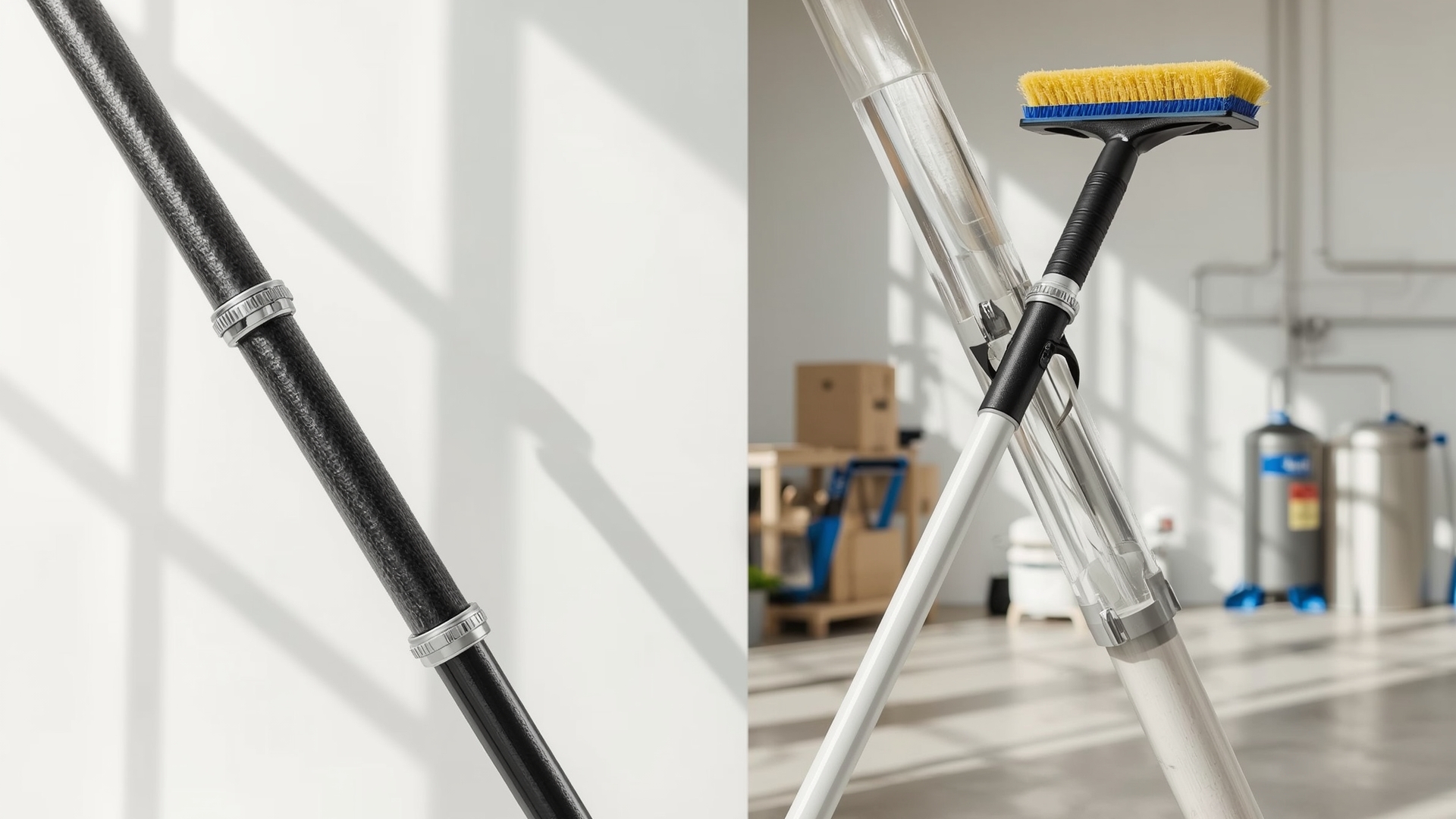
Choosing the wrong pole material can make an 8-hour workday feel like 12. Your water fed pole is the tool you hold for hours on end, so material choice directly affects fatigue, control, and how much work you can actually get done in a day. Carbon fiber and fiberglass each have genuine strengths, and neither is the automatic winner for every operator.
This guide breaks down both materials across every attribute that matters: weight, stiffness, reach, durability, cost, and long-term value. You’ll also find a section on hybrid poles and a clear framework for first-time buyers.
Key Takeaways
- Carbon fiber poles are lighter and stiffer, making them better for high-reach work and long shifts where arm fatigue is a concern.
- Fiberglass poles cost significantly less, typically 40–60% cheaper than equivalent carbon fiber models, which matters when you’re just starting out.
- Stiffness affects brush control at height — stiffer poles give you more precision when scrubbing upper-floor windows.
- Hybrid poles blend both materials, using fiberglass lower sections and carbon fiber upper sections to balance cost and performance.
- For operators cleaning above 30 feet regularly, carbon fiber is worth the investment. Below that threshold, fiberglass is a practical and proven choice.
- Pole weight compounds over time — a 1 lb difference feels minor at first but becomes significant after four or five hours of overhead work.
What Is a Water Fed Pole and Why Does Material Matter?
Quick Answer: A water fed pole is an extendable cleaning tool that delivers purified water through internal channels to a brush head. The pole material determines weight, flex, and reach — all of which directly affect cleaning speed, fatigue, and results above ground level.
A water fed pole connects to a purified water system and pushes deionized or reverse osmosis water through the pole’s spine to a brush at the tip. The water dissolves dirt, the brush agitates the glass, and the water rinses clean without leaving mineral spots behind.
What makes material choice critical is that these poles telescope out to significant lengths, sometimes 40, 50, or even 65 feet. At full extension, a heavy or flexible pole becomes genuinely hard to control. The material determines how much the pole bends under its own weight and how easily you can direct the brush where you need it.
Think of it like a fishing rod. A cheap, flexible rod may work fine for casual fishing, but a precision rod lets you place the lure exactly where you want it, every cast. Pole material is the same idea applied to window cleaning.
How Do Carbon Fiber and Fiberglass Poles Differ in Construction?
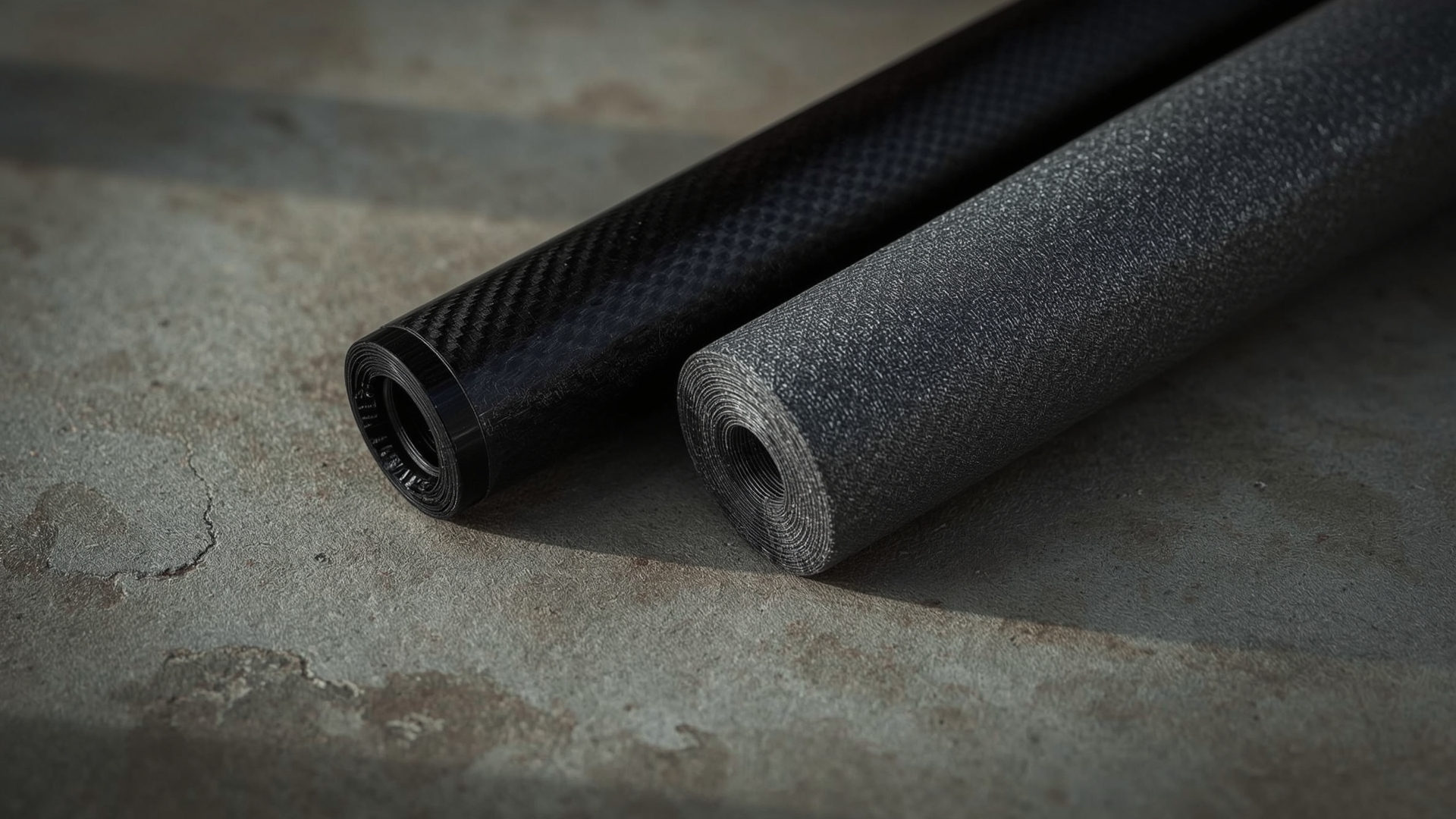
Quick Answer: Carbon fiber poles use woven carbon strands set in resin, producing a very stiff, lightweight tube. Fiberglass poles use glass fiber strands in resin, creating a heavier but more flexible and impact-resistant tube that costs less to manufacture.
How Carbon Fiber Poles Are Built
Carbon fiber poles are made by layering thin sheets of carbon fiber fabric around a mold, then curing them with epoxy resin under heat and pressure. The result is a composite tube with an extremely high stiffness-to-weight ratio. The carbon fiber modulus — a measure of how much the material resists bending — ranges from around 24 to 70 million psi (pounds per square inch) depending on grade.
Higher modulus carbon fiber bends less per unit of force applied. That’s why top-spec poles labeled “high modulus” or “HM” are noticeably stiffer than entry-level carbon poles, even at the same wall thickness.
How Fiberglass Poles Are Built
Fiberglass poles use E-glass or S-glass fibers wound or woven around a core, then bonded with polyester or epoxy resin. The modulus of fiberglass is roughly 10–12 million psi, meaning it bends more than carbon under the same load. The material is naturally more elastic, which gives it better impact resistance — it flexes on impact rather than fracturing.
Fiberglass is also less expensive to produce. The raw materials cost less, and the manufacturing process requires less precision, which is why fiberglass poles can be priced much lower without sacrificing basic durability.
Which Pole Material Is Lighter: Carbon Fiber or Fiberglass?

Quick Answer: Carbon fiber poles weigh roughly 30–40% less than equivalent fiberglass poles at the same length. A 35-foot carbon fiber pole typically weighs 3.0–4.5 lbs, while a comparable fiberglass pole weighs 5.0–7.5 lbs. That difference is significant across a full workday.
Weight matters most when you’re holding the pole at arm’s length for extended periods. Most window cleaners work 6–8 hour days. Arm fatigue from a heavier pole doesn’t just make you tired — it reduces brush control as the day progresses, which affects cleaning quality on your last few jobs.
| Pole Type | Typical Reach | Approx. Weight | Weight Savings vs. Fiberglass | Best Use Case |
|---|---|---|---|---|
| Fiberglass (entry) | 25–35 ft | 5.0–7.5 lbs | Baseline | Single-story to 3-story |
| Carbon Fiber (standard modulus) | 25–45 ft | 3.0–5.0 lbs | ~30–35% | 3 to 5-story buildings |
| Carbon Fiber (high modulus) | 40–65 ft | 2.5–4.5 lbs | ~35–45% | 5+ story commercial |
| Hybrid (fiberglass base / carbon top) | 30–45 ft | 4.0–6.0 lbs | ~15–25% | Mixed residential/commercial |
Which Material Produces a Stiffer Pole for Better Brush Control?
Quick Answer: Carbon fiber is significantly stiffer than fiberglass. At 30 feet of reach, a carbon fiber pole deflects roughly 6–12 inches under working load, while a fiberglass pole at the same length may deflect 18–30 inches. Less deflection means more accurate brush placement on upper-floor glass.
Why Stiffness Matters Above 25 Feet
Below 20–25 feet, most operators can compensate for pole flex without much trouble. The brush stays roughly where you direct it, and you can correct mid-stroke.
Above 30 feet, flex becomes a real problem. A fiberglass pole at full extension can whip and bounce, making it hard to apply consistent pressure or reach corners accurately. You end up working harder to control the brush and often need more passes per window.
Carbon fiber at the same height holds its line much better. You apply pressure at the bottom, and the brush responds predictably at the top. For experienced operators, this translates directly into faster cleaning and fewer re-rinses.
How Modulus Grade Affects Stiffness
Not all carbon fiber is equal. Entry-level carbon poles often use standard modulus carbon at around 33–36 million psi. Mid-range poles use intermediate modulus at 40–45 million psi. High-end poles use high modulus fiber at 55–65 million psi or above.
Each step up in modulus adds stiffness and reduces weight, but also increases cost and brittleness. High modulus poles are excellent tools but require more careful handling to avoid stress fractures.
How Do Carbon Fiber and Fiberglass Poles Compare on Reach?
Quick Answer: Both materials can be built to similar maximum lengths, but carbon fiber’s stiffness makes greater reach practically usable. Fiberglass poles above 35 feet become difficult to control without significant experience. Carbon fiber remains manageable up to 55–65 feet for skilled operators.
| Building Height | Estimated Reach Needed | Fiberglass Practical? | Carbon Fiber Practical? | Notes |
|---|---|---|---|---|
| 1 story (~12 ft) | 15–18 ft | Yes | Yes | Both work well, fiberglass more economical |
| 2 stories (~24 ft) | 25–30 ft | Yes | Yes | Fiberglass flex manageable here |
| 3 stories (~35 ft) | 35–40 ft | Marginal | Yes | Carbon fiber noticeably better above 35 ft |
| 4 stories (~45 ft) | 45–52 ft | Not recommended | Yes | Fiberglass too flexible for consistent results |
| 5+ stories (55+ ft) | 55–65 ft | No | Yes (HM only) | High modulus carbon required |
What Is the Cost Difference Between Carbon Fiber and Fiberglass Poles?
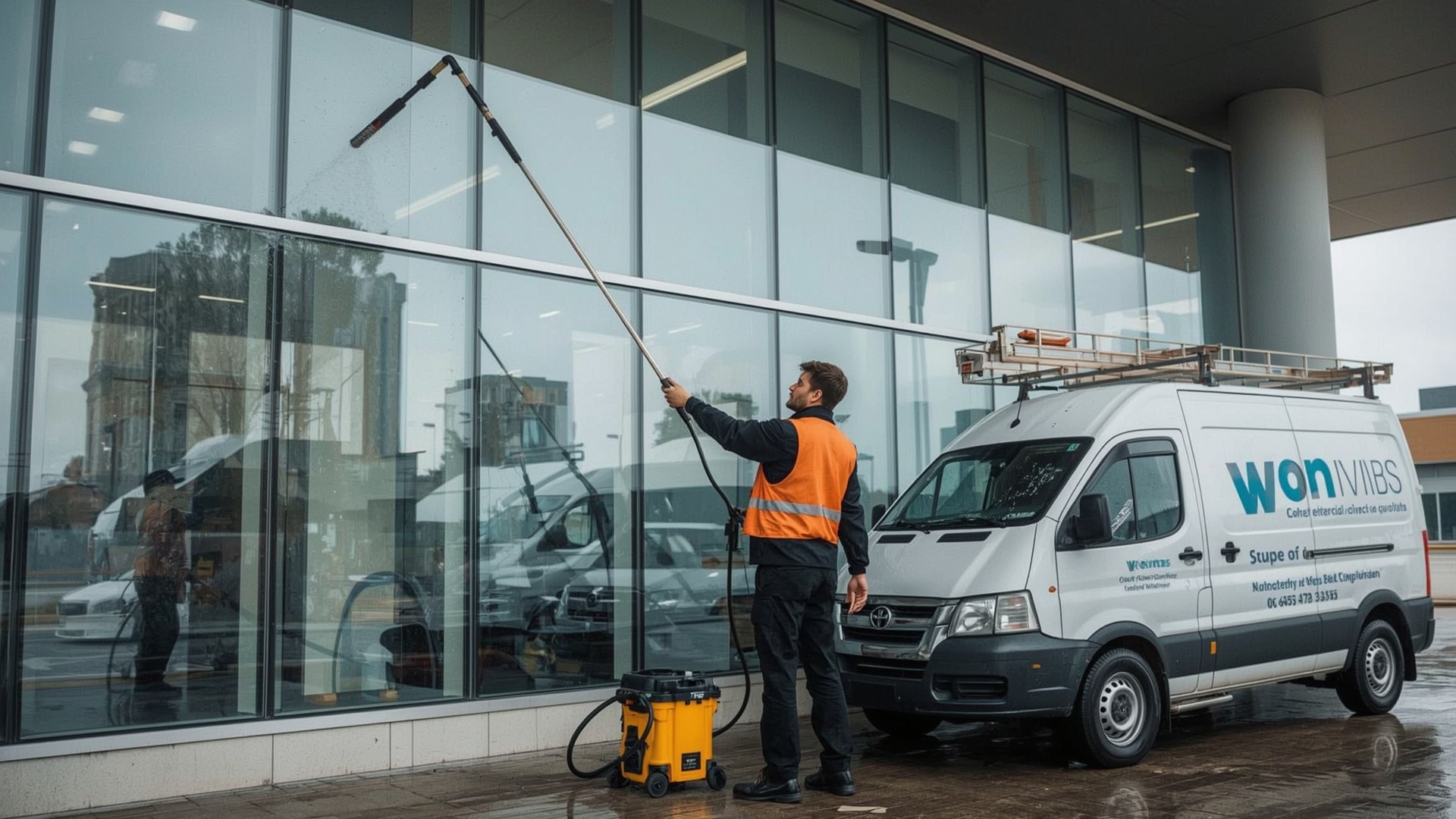
Quick Answer: Fiberglass water fed poles typically cost $150–$400 for professional-grade models. Carbon fiber poles range from $400–$1,200 for standard modulus and $900–$2,500 for high modulus. Hybrid poles fall between $300–$700. The gap is real but narrows over time through durability and productivity gains.
Breaking Down the Cost by Category
| Pole Category | Price Range | Typical Reach | Expected Lifespan | Best For |
|---|---|---|---|---|
| Fiberglass entry-level | $150–$250 | 18–30 ft | 3–6 years | Residential startup |
| Fiberglass professional | $250–$400 | 25–40 ft | 4–7 years | Mixed residential routes |
| Hybrid pole | $300–$700 | 30–45 ft | 4–7 years | Growing operators |
| Carbon fiber standard | $400–$1,200 | 25–50 ft | 5–10 years | Commercial and multi-story |
| Carbon fiber high modulus | $900–$2,500 | 40–65 ft | 6–12 years | High-rise commercial work |
How to Think About Cost Per Day of Use
A $1,200 carbon fiber pole used 200 days per year over 7 years costs about $0.86 per day. A $300 fiberglass pole used the same way over 5 years costs about $0.30 per day. The fiberglass is still cheaper per day, but the carbon fiber earns that difference back if it lets you clean more windows in the same time or take on higher-paying commercial contracts.
If you’re booking jobs above 35 feet regularly, the productivity gain from carbon fiber makes the math work. If your route is mostly single- and two-story residential, fiberglass is the smarter financial choice.
Which Pole Material Is More Durable Over Time?
Quick Answer: Fiberglass is more impact-resistant and handles drops and rough use better than carbon fiber. Carbon fiber can develop stress fractures or delamination from hard impacts, especially in high modulus versions. With proper care, both materials last 5–10 years in professional use.
Fiberglass Durability Strengths
Fiberglass absorbs impact energy rather than concentrating it. If a fiberglass pole falls or gets bumped against a hard surface, the material typically flexes and survives without damage. This makes fiberglass more forgiving for operators who work in tight spaces, load and unload gear frequently, or are newer to handling long poles.
The main wear point on fiberglass poles is the locking clamp mechanism. Clamps can wear out, strip, or crack after years of daily use, but the tube itself usually outlasts the hardware.
Carbon Fiber Durability Considerations
Carbon fiber is stiff, which is its advantage — but stiffness also means it can’t absorb impact the way fiberglass can. A dropped high modulus carbon pole landing on a hard surface at the wrong angle can crack or delaminate at the section joint. Once the carbon fiber matrix is compromised, the pole’s structural integrity is reduced and it should be replaced.
That said, operators who care for their poles properly — transporting them in protective bags, handling them carefully near structures, and not overextending sections — routinely get 8–12 years from quality carbon fiber poles.
| Attribute | Carbon Fiber | Fiberglass |
|---|---|---|
| Impact resistance | Low to moderate (HM = low) | High |
| UV resistance | Good with resin coating intact | Good |
| Stress fracture risk | Moderate to high (HM) | Low |
| Water resistance | Excellent | Excellent |
| Clamp/joint wear rate | Similar across materials | Similar across materials |
| Expected tube lifespan | 6–12 years (with care) | 4–8 years |
What Are Hybrid Water Fed Poles and Who Should Use Them?
Quick Answer: Hybrid poles combine fiberglass lower sections with carbon fiber upper sections. The fiberglass base reduces cost and adds impact resistance near the ground. The carbon fiber top sections provide stiffness where it matters most — at height. They’re ideal for operators who want a performance upgrade without paying full carbon fiber prices.
How Hybrid Poles Are Constructed
A typical hybrid pole has 2–3 lower sections made from fiberglass and 2–4 upper sections made from carbon fiber. The carbon upper sections are where stiffness matters because that’s where the pole is most likely to flex. The fiberglass lower sections take more physical abuse — contact with vans, ladders, and building walls — so their impact resistance is useful there.
The joint where fiberglass and carbon sections connect is a critical engineering point. Lower-quality hybrid poles can have compatibility issues at this junction, causing wobble or premature clamp wear. Look for poles where the manufacturer designed the hybrid construction intentionally, rather than mixing sections from two separate pole systems.
Who Benefits Most from a Hybrid Pole
Hybrid poles make the most sense for operators cleaning 2–4 story buildings on a mixed route of residential and light commercial jobs. You get better control above 25 feet than a full fiberglass pole provides, but you don’t pay the full premium for all-carbon construction. For a growing business that isn’t quite ready to commit to a high-end carbon fiber pole, a hybrid is a practical bridge.
How Should a First-Time Buyer Choose Between These Pole Materials?
Quick Answer: First-time buyers should start with fiberglass or a hybrid pole unless they’re entering commercial window cleaning immediately. A quality fiberglass pole in the $250–$400 range handles residential routes up to 3 stories and gives you time to develop technique before investing in carbon fiber.
Key Questions to Ask Before You Buy
Before spending money on a pole, answer three questions honestly. First, what’s the maximum height you’ll be cleaning in your first year? Second, how many hours per day will you use the pole? Third, are you starting with residential clients, commercial clients, or both?
If most of your work will be residential homes up to 3 stories, a fiberglass pole gets the job done without straining your startup budget. If you’re targeting commercial contracts from day one — office buildings, schools, storefronts above 35 feet — start with at least a standard modulus carbon fiber pole. The performance difference at those heights is meaningful enough to affect client satisfaction.
First Pole Recommendations by Business Type
| Business Profile | Recommended Material | Suggested Reach | Budget Range | Reason |
|---|---|---|---|---|
| Solo residential cleaner | Fiberglass | 25–35 ft | $250–$400 | Cost-effective for 1–3 story homes |
| Residential + light commercial | Hybrid | 30–45 ft | $400–$650 | Balances reach and cost |
| Commercial-focused operator | Carbon fiber (standard) | 40–55 ft | $700–$1,200 | Stiffness needed above 35 ft |
| High-rise specialist | Carbon fiber (HM) | 55–65 ft | $1,200–$2,500 | HM required for 5+ story work |
| Part-time or hobby cleaner | Fiberglass (entry) | 18–25 ft | $150–$250 | Low volume doesn’t justify carbon |
What Else Matters Beyond Pole Material
Material is the biggest variable, but it’s not the only one. Section count affects stiffness — fewer sections with longer tubes are generally stiffer than many short sections. Clamp quality determines how well sections lock in position at height. Brush head compatibility matters because not all pole tips accept every brush fitting. And internal bore diameter — the width of the water channel inside the pole — affects flow rate to the brush.
A great pole with a poor clamp system will frustrate you constantly. Pay attention to user reviews specifically about clamp wear and gland failure when evaluating brands.
What Are the Pros and Cons of Each Pole Material at a Glance?
Quick Answer: Carbon fiber wins on weight, stiffness, and high-reach performance but costs more and is less impact-resistant. Fiberglass wins on price, durability, and ease of handling for newer operators but becomes difficult to control above 35 feet. Hybrid poles sit between both on every metric.
Carbon Fiber: Strengths and Limitations
- Lighter by 30–40% at equivalent length, reducing fatigue on long shifts
- Significantly stiffer, giving better brush control above 30 feet
- Supports greater usable reach, up to 65 feet with high modulus grades
- Higher cost, ranging from $400 to $2,500 for professional models
- More fragile under impact, especially high modulus versions
- Requires careful handling to avoid stress fractures at section joints
Fiberglass: Strengths and Limitations
- Lower purchase cost, typically $150–$400 for professional-grade models
- Better impact resistance, handles drops and rough use more forgivingly
- Practical for work up to 30–35 feet without major control issues
- Heavier overall, adding fatigue on full-day routes
- Increasing flex above 35 feet reduces brush control and cleaning accuracy
- Not suitable for high-rise commercial work above 4 stories
Frequently Asked Questions
Can you use a fiberglass pole for commercial window cleaning?
Yes, but only for buildings up to about 3 stories. Above that height, fiberglass poles flex too much to give you reliable brush placement. Most professional commercial operators move to carbon fiber or hybrid poles for buildings above 35 feet.
Does pole weight really make a difference for a part-time cleaner?
If you’re working 2–3 hours at a time, pole weight matters less. The fatigue impact becomes significant during 6–8 hour workdays. Part-time operators cleaning residential routes can comfortably use fiberglass without the weight becoming a real problem.
Are there pole materials other than carbon fiber and fiberglass?
Aluminum poles exist but are rarely used in water fed pole systems because aluminum conducts electricity, which creates safety risks near power lines. Some poles use Kevlar composite materials, but these are uncommon and primarily used in specialty applications. Carbon fiber and fiberglass dominate the professional market.
How do I know if my pole is high modulus carbon fiber?
Most manufacturers label poles with their modulus grade, often shown as “HM,” “IM,” or “SM” (high, intermediate, or standard modulus). You can also look up the specific product specifications from the manufacturer. High modulus poles are noticeably stiffer and usually carry a premium price tag above $1,000.
What is section count and why does it matter?
Section count is how many telescoping tubes make up the full pole. A 6-section pole has more joints than a 4-section pole of the same length. More joints means more potential flex points, so lower section counts generally produce stiffer poles. For work above 35 feet, fewer sections is usually better.
Do carbon fiber poles conduct electricity?
Yes. Carbon fiber is electrically conductive, which is an important safety consideration. You should never use a carbon fiber pole near live power lines or electrical equipment. Fiberglass is non-conductive, which gives it a safety advantage in environments where electrical hazards exist, such as utility work or certain industrial sites.