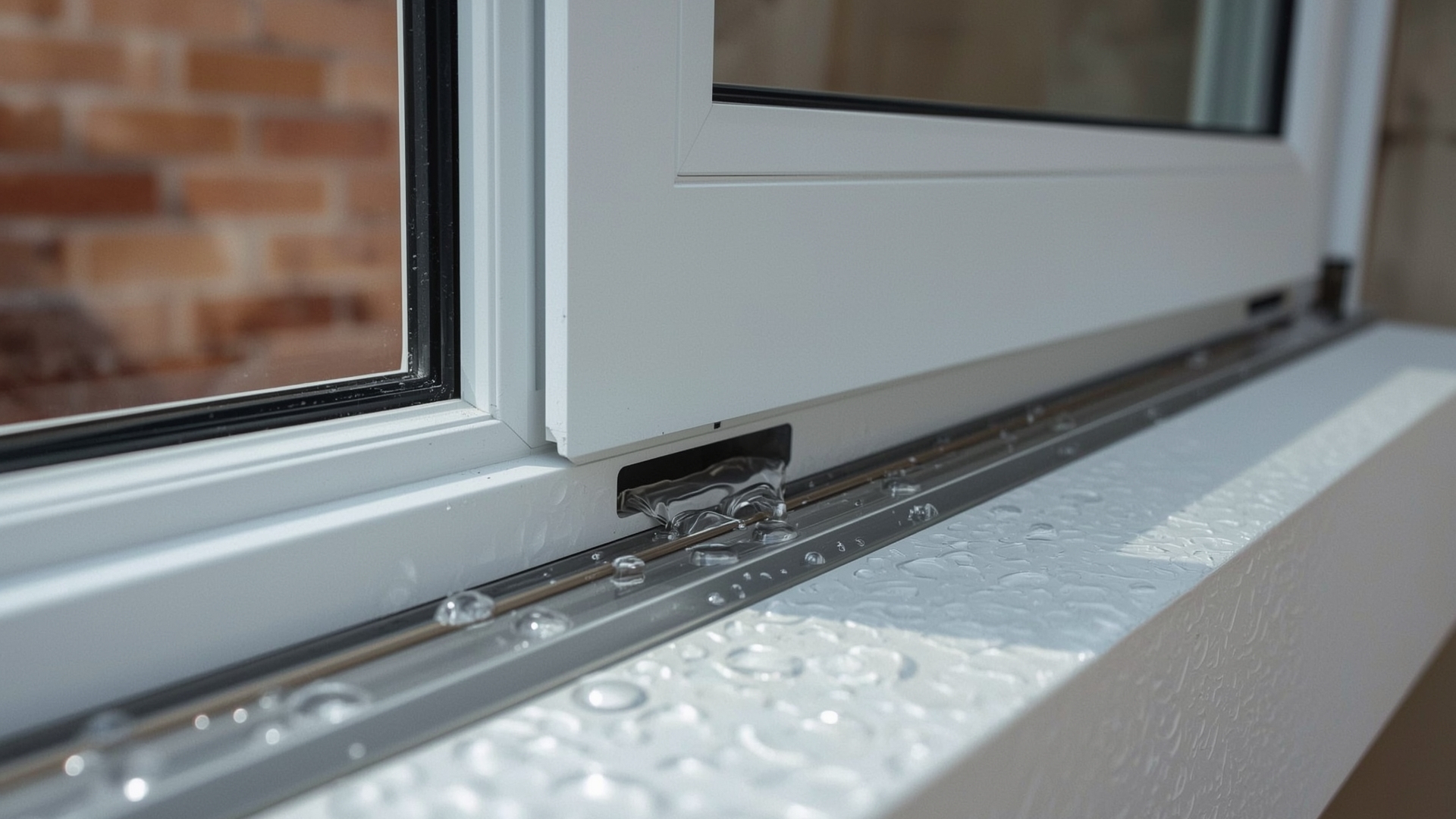
Those small slots or holes along the bottom of your window frame are not a design flaw. They are weep holes, and they have one job: drain water out before it causes damage. When they get clogged with dirt, debris, or dead insects, water backs up inside the frame. That backup leads to staining, rot, mold, and eventually structural damage to your walls.
Most homeowners never think about weep holes until water shows up somewhere it should not. This guide covers everything you need to know about cleaning them, maintaining them, and spotting the early signs that something is wrong.
Key Takeaways
- Weep holes are drainage channels built into vinyl, aluminum, and some wood window frames to push water out.
- Clogged weep holes cause water damage including interior staining, sill rot, mold growth, and wall moisture intrusion.
- Cleaning takes under 10 minutes per window using a wire brush, compressed air, or a thin probe tool.
- Inspect weep holes twice a year, ideally in spring and fall, to stay ahead of blockages.
- Signs of drainage failure include standing water on the sill, rust streaks on the frame exterior, and musty odors near the window.
- Weep hole covers (baffles) protect openings from pests and wind without blocking drainage.
What Are Window Weep Holes and Why Do They Matter?
Quick Answer: Weep holes are small drainage openings at the bottom of a window frame. They channel rainwater and condensation out of the frame track before it can pool and cause rot, mold, or water damage inside your wall.
Windows are not completely sealed against water. Rain hits the glass, runs down, and collects in the bottom track of the frame. Condensation also builds up there on cold days. Without an exit, that water sits and soaks into whatever surrounds it.
Weep holes solve this by giving water a way out. Most vinyl and aluminum windows have two to four of them, spaced evenly along the exterior bottom edge of the frame. They are typically 3mm to 10mm wide and cut through the frame wall to the outside.
Some windows use weep hole covers, also called baffles or flaps. These are small plastic inserts that allow water to drain out while blocking wind and insects from entering. They are useful but can become a clogging point themselves.
Which Window Types Have Weep Holes?
Not every window uses weep holes. The frame material and design determine whether they are present.
| Window Type | Has Weep Holes? | Location | Typical Count | Cover Type |
|---|---|---|---|---|
| Vinyl (PVC) Single/Double Hung | Yes | Exterior bottom track | 2 to 4 | Plastic baffle or open slot |
| Aluminum Sliding Window | Yes | Exterior bottom rail | 2 to 3 | Open slot |
| Vinyl Casement Window | Sometimes | Side frame or sill | 1 to 2 | Varies by brand |
| Wood Double Hung | Rarely | Sill or exterior casing | 0 to 2 | Open channel |
| Fiberglass Frame | Yes | Bottom exterior rail | 2 to 4 | Plastic baffle |
What Causes Weep Holes to Clog?
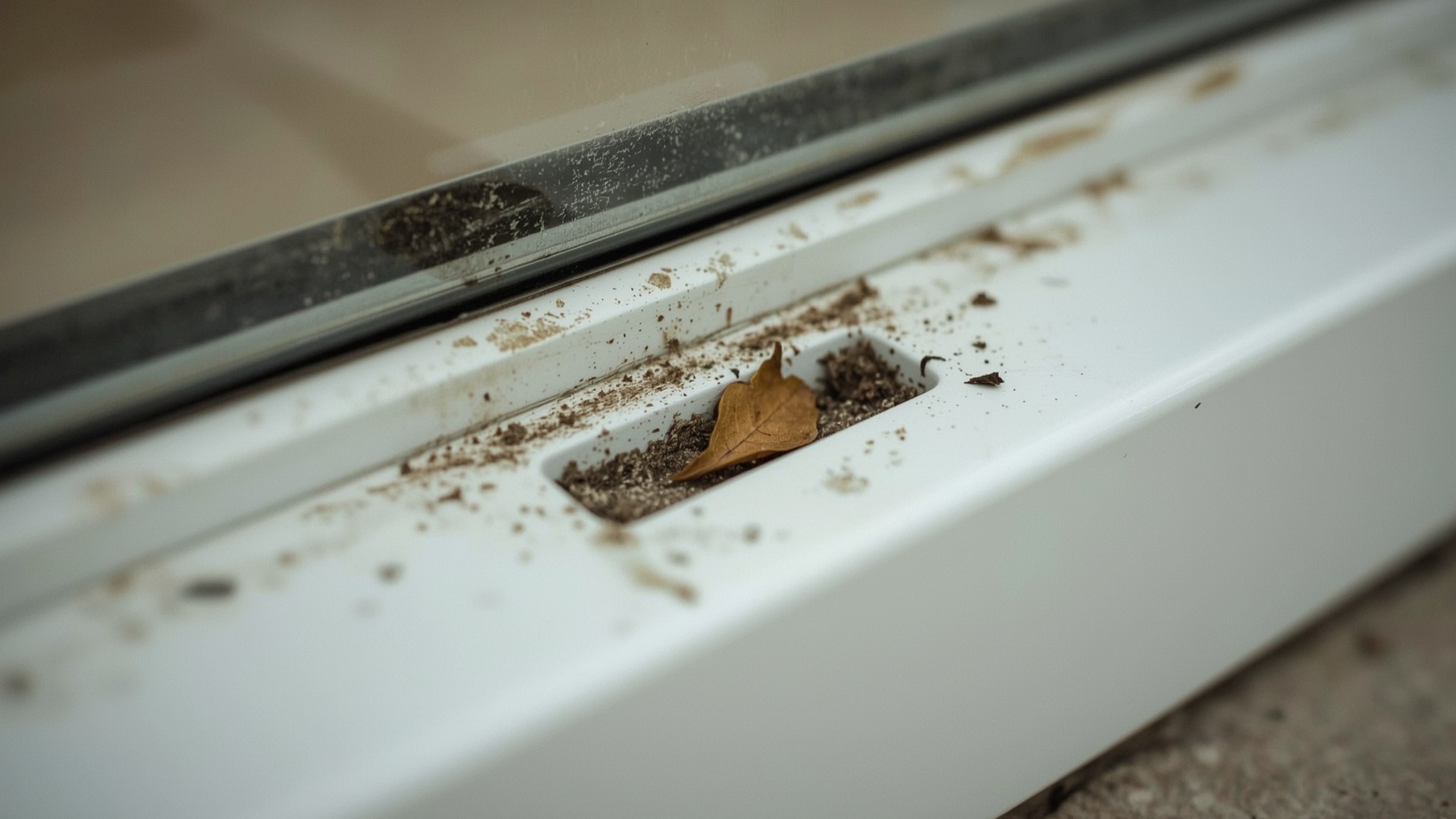
Quick Answer: Weep holes clog from dirt, dead insects, leaf debris, paint overspray, and mineral buildup. In homes near construction zones, fine dust is a common culprit. Baffle covers can also stick shut from UV degradation over time.
The most common blockage is simple dirt and organic debris. Wind pushes dust and leaf particles into the track. Over months, it compacts into a paste that seals the opening. Add moisture, and you get a solid plug.
Insects are another major cause. Small spiders, ants, and wasps build nests inside weep holes or weep hole covers. A single wasp nest can completely block a weep hole in days.
In older homes, paint is a frequent offender. When a window frame gets repainted, paint easily drips into the track and hardens across the opening. Homeowners often do not realize this has happened until water problems appear.
Common Weep Hole Blockage Sources
- Dirt and dust compaction: the most common blockage in all climates
- Insect nests: especially wasps, mud daubers, and spiders
- Leaf and organic debris: common in homes with overhanging trees
- Paint overspray or drips: from frame repainting or nearby painting work
- Mineral deposits: calcium and silica from hard water pooling in the track
- UV-degraded baffle covers: old plastic flaps that become brittle and collapse inward
- Construction dust: fine concrete or drywall dust that sets hard in the channel
How Do You Know If Your Weep Holes Are Blocked?
Quick Answer: Pour a small amount of water into the bottom window track and watch the exterior. If water does not drain out within 30 seconds, the weep hole is blocked or restricted. Standing water in the track is the clearest sign of a problem.
The simplest test costs you nothing. Open the window and pour about 250ml (one cup) of water into the bottom track. Go outside and watch the weep hole openings. A clear weep hole drains that water within 15 to 30 seconds. A blocked one shows nothing coming out.
Visual signs are also reliable. Look at the exterior bottom edge of your window frame. Rust-colored streaks below a weep hole slot usually mean water has been sitting in the track and corroding metal fasteners. Dark staining on the window sill exterior points to the same problem.
Drainage Failure Warning Signs by Location
| Location | Warning Sign | Likely Cause | Urgency |
|---|---|---|---|
| Interior window sill | Water pooling or warping | Track overflow from blocked weep hole | High |
| Exterior frame base | Rust or brown streaks below opening | Sediment-laden water leaking slowly | Medium |
| Interior wall below window | Paint bubbling or damp drywall | Water bypassing frame into wall cavity | High |
| Window frame corners | Mold or black spotting | Prolonged moisture in sealed track | High |
| Exterior sill | White mineral crust or efflorescence | Hard water evaporating and leaving deposits | Low to Medium |
| Near frame base indoors | Musty odor without visible water | Hidden moisture behind frame or in wall | High |
How Do You Clean Window Weep Holes Step by Step?

Quick Answer: Use a thin wire, pipe cleaner, or compressed air to clear the opening. Work from the track inward, flush with water, then test drainage. The whole process takes 5 to 10 minutes per window and needs no special tools.
Tools You Need Before You Start
- Thin wire probe or straightened paper clip (for debris removal)
- Soft wire brush or old toothbrush (for track scrubbing)
- Compressed air can or air compressor with a nozzle
- Spray bottle with warm water and a few drops of dish soap
- Small bucket or cup for the drainage test
- Cotton swabs or foam paintbrush (for tight corners)
- Safety glasses (when using compressed air)
Step-by-Step Weep Hole Cleaning Process
- Open the window fully to access the full bottom track. Remove any removable screen or sash if possible.
- Vacuum or brush loose debris from the track using a soft brush or vacuum crevice attachment. Remove leaves, dead insects, and loose dirt.
- Locate the weep holes on the exterior edge of the bottom frame. They look like small rectangular slots or round holes, sometimes covered with a plastic flap.
- Insert your wire probe gently into each weep hole and move it in a circular motion. This breaks up compacted dirt and insect material without pushing it deeper.
- Blow compressed air through the hole from the interior track side toward the exterior. This pushes loosened debris out rather than further in.
- Scrub the track with your wire brush and soapy water. Focus on the area directly above each weep hole opening.
- Flush the track with water from a spray bottle. Watch the exterior for drainage. Repeat flushing until the water runs clear from the weep hole.
- Check baffle covers if present. Press each flap gently with your finger to confirm it moves freely. Replace any cover that feels stiff, brittle, or cracked.
- Dry the track lightly with a cloth and do a final drainage test with one cup of water poured directly into the track.
What to Do If the Weep Hole Is Painted Over
A painted-over weep hole needs more than a wire probe. Use a sharp utility knife to carefully score around the opening and remove the paint layer. Do not drill or enlarge the opening, as this can weaken the frame. If the paint layer is thick, a heat gun set to low can soften it before scoring.
After clearing the paint, flush with water to confirm full drainage. If the opening feels narrow after clearing, a small round file can smooth the edges without widening the structural channel.
How Often Should You Clean and Inspect Weep Holes?
Quick Answer: Clean weep holes at least twice a year. The best times are spring, to clear winter debris buildup, and fall, before heavy rain season. Homes with overhanging trees or in dusty environments should inspect every three months.
Twice-yearly cleaning is the standard recommendation for most homes. Spring cleaning removes the compacted debris from winter, including leaf fragments and insect nests that form over cold months. Fall cleaning prepares the drainage path for rain-heavy months.
If your home sits in a high-pollen area or near construction activity, add a third inspection mid-summer. Fine particles from pollen or construction dust compact faster than regular dirt. You do not always need a full cleaning on the third visit. A quick water flush test tells you whether a deeper clean is needed.
Weep Hole Maintenance Schedule by Condition
| Condition | Recommended Frequency | Key Cleaning Action | Extra Priority |
|---|---|---|---|
| Standard suburban home | 2x per year | Brush, flush, test drainage | Spring and fall |
| Home with overhanging trees | 3 to 4x per year | Debris removal + flush | After leaf fall |
| High-dust or construction zone | Every 2 to 3 months | Compressed air + flush | Ongoing monitoring |
| Coastal or humid climate | 3x per year | Full clean + baffle check | Pre-storm season |
| Older windows (15+ years) | Quarterly | Full clean + cover inspection | Frame condition check |
Can Clogged Weep Holes Cause Water Damage Inside Your Home?
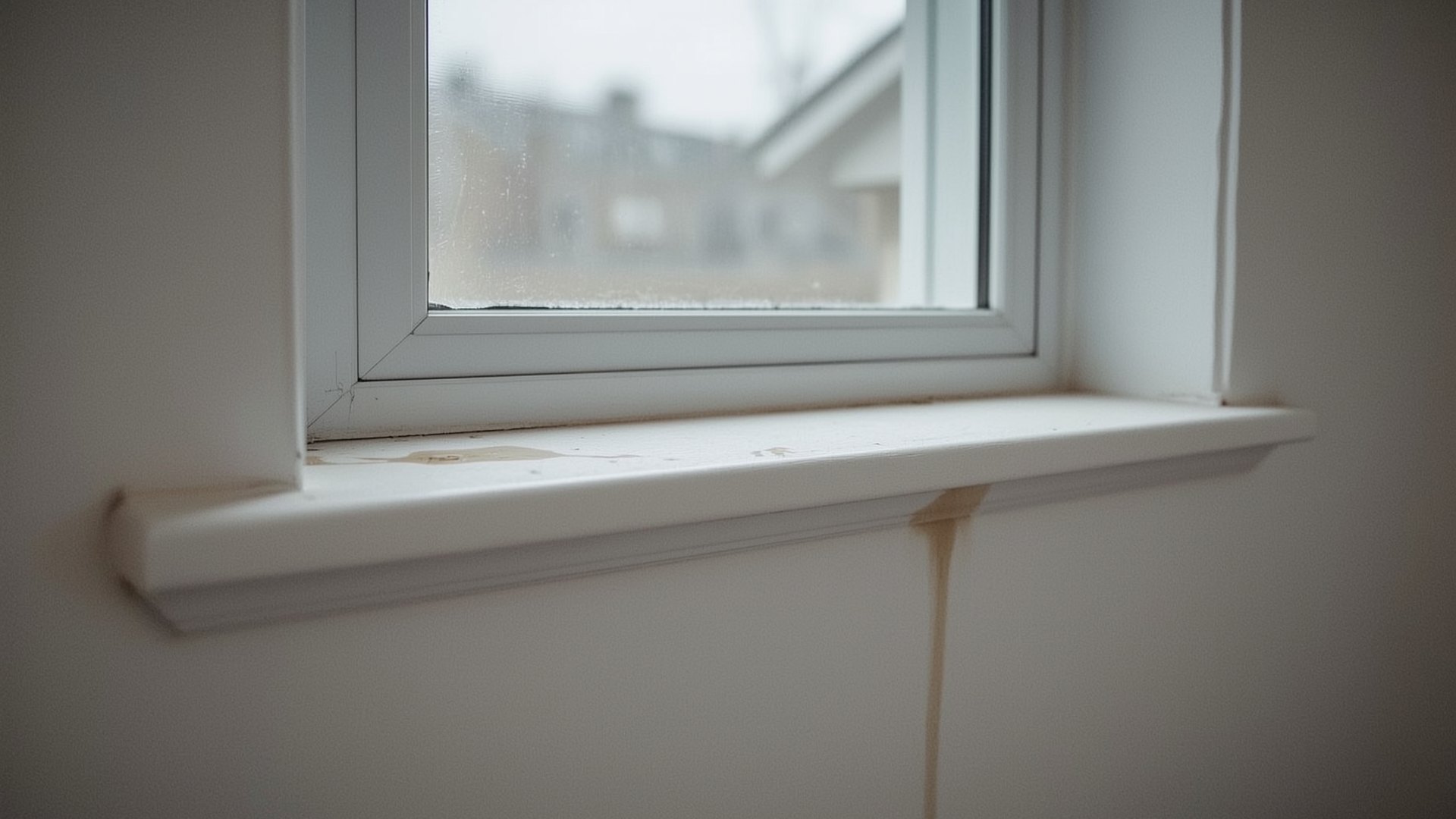
Quick Answer: Yes. When weep holes are blocked, water overflows the frame track and seeps into the wall cavity behind the window. This causes drywall damage, wood rot in the rough opening framing, mold growth, and long-term structural issues if left unresolved.
A clogged weep hole does not just create a cosmetic problem. The track at the bottom of a window frame connects directly to the space between your window frame and your wall framing. When that track fills with water, it has nowhere to go except through that gap and into the wall.
Wall cavities are dark and slow to dry. Moisture that enters through an overflowing window track can sit behind drywall for weeks before showing any sign on the surface. By the time you see paint bubbling or a water stain on the wall below a window, the damage is already significant.
Wood rot is particularly destructive. The rough opening framing that holds your window in place is structural. When it rots from repeated water exposure, window alignment shifts, gaps form in the seal, and the window itself can become loose. Repairing rotted rough opening framing often costs between $300 and $1,200 depending on the extent and access difficulty.
Water Damage Progression from Blocked Weep Holes
- Stage 1 (days to weeks): Water pools in the window track. No visible damage yet.
- Stage 2 (weeks to months): Track overflow seeps into the wall cavity. Mold begins forming in hidden areas.
- Stage 3 (months): Interior staining appears on the wall below the window. Paint bubbles or peels. Musty odor develops.
- Stage 4 (months to years): Wood framing in the rough opening begins to rot. Window alignment shifts. Seal gaps form.
- Stage 5 (years): Structural damage to the wall framing. Insulation saturation. Full window replacement may be required.
How Do You Prevent Weep Holes from Clogging Again?
Quick Answer: Install weep hole covers (baffles) if your windows do not already have them, keep window tracks free of debris with regular brushing, and trim nearby vegetation. Avoid caulking over weep holes during exterior painting or resealing projects.
The single most effective prevention step is installing weep hole baffle covers. These small plastic inserts press into the weep hole opening and have a weighted or spring-loaded flap that allows water to drain but blocks insects, wind-driven debris, and nesting material. Most hardware stores carry universal-fit baffles for $1 to $3 each.
Track cleanliness matters as much as the weep hole itself. A dirty track funnels debris directly into the drainage point. A quick brush of the bottom track when you clean your windows adds almost no extra time and dramatically reduces the buildup that reaches the weep hole.
Never caulk over a weep hole. This is a surprisingly common mistake during exterior resealing projects. Caulking the exterior of a window frame is good practice for air sealing, but the weep holes must stay open. Inspect every weep hole after any exterior painting or caulking work on your home.
Weep Hole Baffle Types and Comparison
| Baffle Type | Material | Approx. Cost Each | Pest Protection | Wind Resistance | Lifespan |
|---|---|---|---|---|---|
| Gravity flap (standard) | PVC plastic | $1.00 to $2.00 | Good | Moderate | 5 to 10 years |
| Slotted open cover | UV-stabilized plastic | $0.75 to $1.50 | Partial | Low | 8 to 12 years |
| Foam mesh insert | Open-cell polyurethane | $2.00 to $4.00 | Excellent | High | 3 to 5 years |
| Spring-loaded flap | Stainless steel and PVC | $3.00 to $6.00 | Excellent | High | 10 to 15 years |
Is It Ever Wrong to Have Weep Holes in a Window Frame?
Quick Answer: No. Weep holes are a required drainage feature in most window frame designs. Blocking or filling them creates more problems than it solves. The only scenario where you might not see them is on interior-only frame elements or certain fixed picture windows with no track.
Some homeowners try to fill or caulk weep holes because they allow cold air or insects inside. This is understandable but creates a bigger problem. The drainage function is more important than the small drafts a weep hole allows. A proper baffle cover addresses both concerns.
In some building codes, particularly for commercial construction, weep holes in window assemblies and masonry walls are actually required. The International Building Code (IBC) references drainage provisions for exterior wall openings, which includes window frame weep systems in many jurisdictions. For residential windows, the window manufacturer’s installation instructions will specify that weep holes must remain unobstructed.
What Is the Difference Between Window Weep Holes and Wall Weep Holes?
Quick Answer: Window weep holes drain the window frame track. Wall weep holes are openings in brick or masonry veneer that drain the cavity between the masonry and the structural wall behind it. Both serve drainage functions but are in different locations and maintained differently.
Wall weep holes appear as open vertical mortar joints at the base of a brick wall, typically every 24 to 33 inches along the first course above a foundation or flashing. They are much larger than window frame weep holes and sometimes use rope wicks or mesh screens instead of solid covers.
The maintenance process differs. Wall weep holes need checking for mortar that has dripped down and sealed them during repointing work. Window frame weep holes need the cleaning and flushing process described above. If you notice both types on your home, treat them as separate maintenance items.
When Should You Call a Professional for Weep Hole Problems?
Quick Answer: Call a professional when you see interior wall staining, mold in the frame corners, or soft wood around the window frame. These signs suggest water has already entered the wall cavity, and the damage assessment requires more than surface cleaning.
Standard weep hole cleaning is a DIY task. But if cleaning the weep holes does not resolve standing water in the track, the problem may be in the flashing or the window installation itself. Flashing is the waterproof membrane installed behind the window frame during installation. If it fails or was installed incorrectly, water bypasses the weep hole system entirely.
A window installer or contractor can probe the frame to check flashing integrity. If the rough opening framing has gone soft from rot, the window may need to be removed, the framing replaced, and the window reinstalled. This is a multi-step project that goes beyond basic maintenance.
If you find mold in the frame corners or wall cavity, address it promptly. Mold in a wall cavity is not a cosmetic issue. It spreads through framing and insulation and becomes a health concern if left untreated.
Frequently Asked Questions About Window Weep Holes
Do all windows have weep holes?
No. Most vinyl and aluminum-framed windows have weep holes, but some fixed picture windows and interior window assemblies do not. Wood-framed windows sometimes rely on a sloped sill design to shed water rather than weep holes in the frame itself. Check the exterior bottom edge of the frame to confirm whether yours are present.
Can weep holes cause drafts inside the house?
A small amount of air movement through weep holes is normal. The opening is intentional. If you feel a noticeable draft, the fix is adding a baffle cover, not sealing the hole. Foam mesh inserts and spring-loaded flap covers reduce airflow while keeping drainage intact.
How do you clean weep holes on a second-story window?
Access the interior track from inside the home with the window open. Use a wire probe and compressed air from the interior side to push debris outward. Confirm drainage by flushing water through the track. For exterior inspection, binoculars can help you check the exterior weep hole openings from ground level before committing to ladder use.
What do efflorescence stains below a weep hole mean?
Efflorescence is the white powdery crust that forms when water carries dissolved salts through a surface and evaporates, leaving the minerals behind. Below a weep hole, it means water has been draining but carries mineral deposits from the track. Clean the track thoroughly, flush until the water runs clear, and consider whether hard water deposits have built up inside the track.
How long does a weep hole baffle cover last?
Standard PVC gravity flap baffles last 5 to 10 years before UV degradation makes them brittle. Stainless steel and UV-stabilized versions last 10 to 15 years. Replace them whenever you notice cracking, stiffness, or a flap that no longer moves freely when you press it with a finger.
Can insects nest inside weep hole covers?
Yes. Mud dauber wasps and small spiders commonly nest inside weep hole slots and baffle covers. Foam mesh inserts are the most effective deterrent because they block the opening entirely with a porous material that allows water to pass but not insects. Check for nests during every semi-annual inspection and remove them with a wire probe before they compact and cause a blockage.