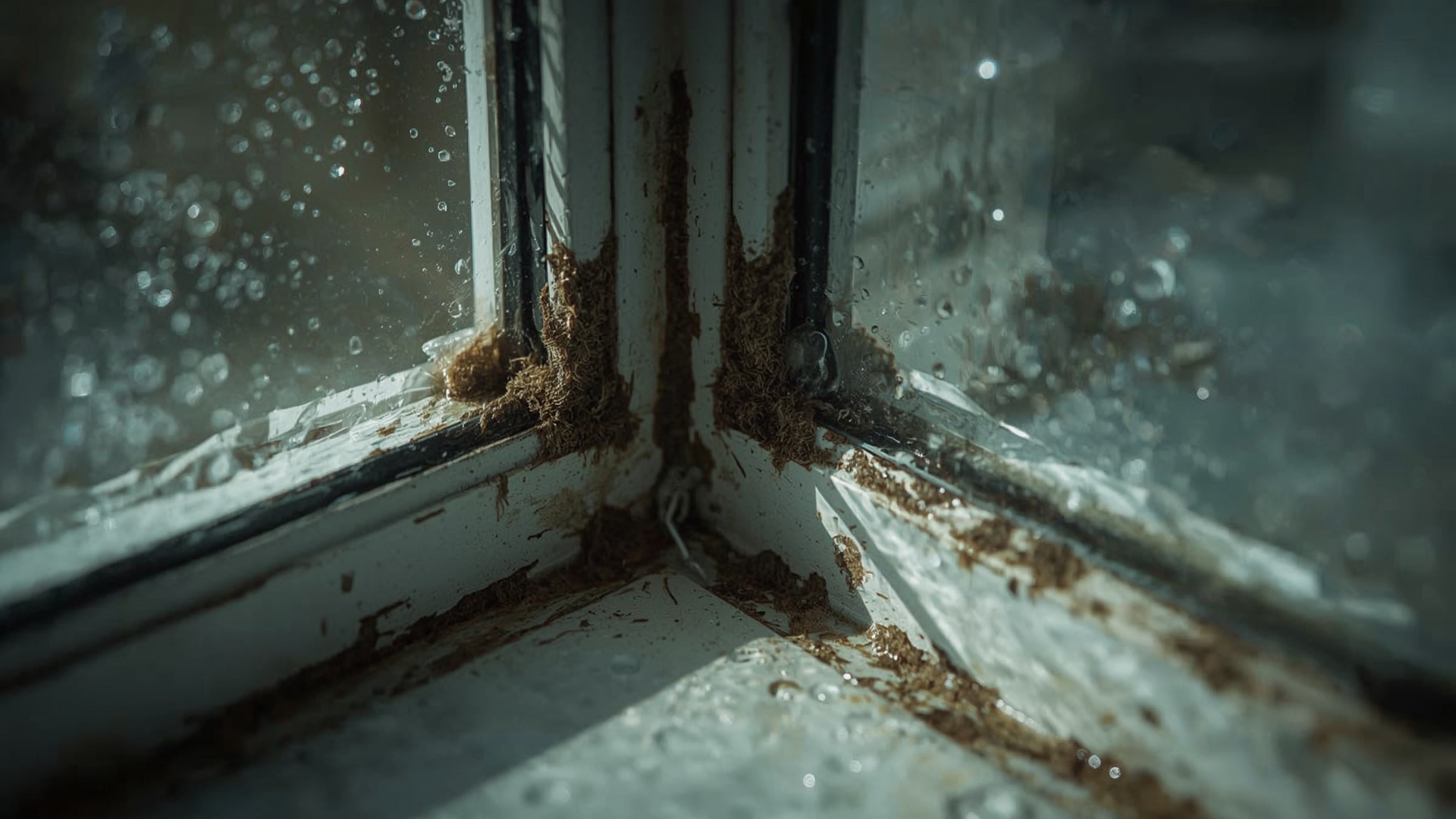
Mold on window frames and sills is one of the most common household problems — and one of the most overlooked. It starts as a faint dark smudge in the corner of a window. Left alone, it spreads across the sill, works into cracks, and eventually damages the frame itself. Worse, some mold types release spores that affect your indoor air quality.
The good news is that most window mold is surface-level and removable with the right approach. The material your window frame is made from — vinyl, wood, or aluminum — determines which cleaning method you should use. Using the wrong solution on the wrong material can cause staining, warping, or corrosion.
This guide walks you through identifying mold, choosing the right removal method for your frame type, and sealing the conditions that let mold grow in the first place.
Key Takeaways
- Identify the mold first: Black, green, or white growth on window frames signals surface mold — most can be cleaned without professional help.
- Match your method to your material: Vinyl, wood, and aluminum each require different cleaning solutions to avoid damage.
- Safety comes first: Always wear gloves and a mask before cleaning mold — even small patches release spores when disturbed.
- Condensation is the root cause: High indoor humidity and poor window ventilation create the moisture mold needs to grow.
- Prevention matters more than cleaning: Fixing the moisture source stops mold from coming back within weeks.
- Porous damage is permanent: Deep mold penetration into wood frames may require sanding, sealing, or full replacement — not just surface cleaning.
What Does Mold on Window Frames Actually Look Like?
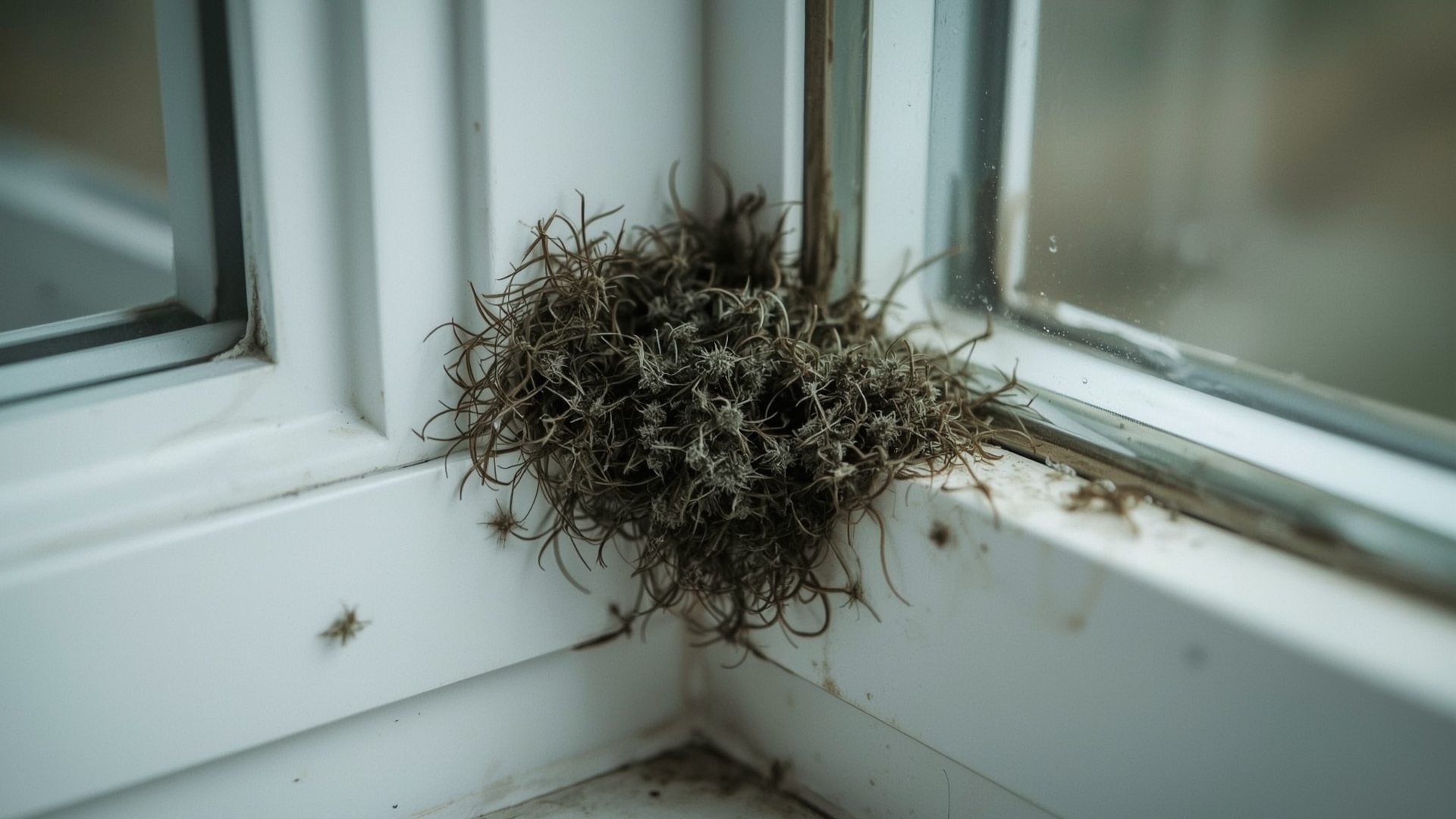
Quick Answer: Window frame mold appears as black, green, gray, or white fuzzy or powdery spots, usually in corners and along the sill edge. It often has a musty smell. Pink or orange staining is typically bacteria, not mold, but needs the same removal process.
Mold growth on windows tends to cluster in predictable spots. Corners where the frame meets the sill, the rubber seal around the glass, and any area with visible condensation are the most common locations.
How to Tell Mold Apart from Dirt and Mildew
Dirt wipes away with a dry cloth and has no smell. Mildew is a flat, powdery surface growth — usually white or gray — and is easier to remove than mold. Mold tends to be darker, fuzzier, and more deeply embedded. It also returns faster after wiping if the moisture source isn’t fixed.
A simple test: apply a drop of diluted bleach (1 part bleach to 10 parts water) to the stain. If it lightens within 1 to 2 minutes, it’s mold or mildew. If it doesn’t change, it’s likely dirt or soot.
Which Mold Types Appear on Windows?
The most common window mold species are Cladosporium (black or green, low health risk), Aspergillus (green or gray, moderate concern), and Stachybotrys chartarum (black mold, high concern, rare on window surfaces). Most window mold is surface Cladosporium and can be handled without professional remediation.
If the mold covers more than 10 square feet, returns within a week after cleaning, or you notice respiratory symptoms, contact a licensed mold remediation professional.
What Supplies Do You Need Before You Start Cleaning?

Quick Answer: You need rubber gloves, an N95 mask, safety glasses, old cloths or paper towels, a stiff-bristled brush, and a cleaning solution matched to your frame material. Having these ready before you start prevents spreading spores while you gather supplies mid-clean.
Safety Gear Checklist
- N95 or P100 respirator mask — standard dust masks don’t filter mold spores
- Nitrile or rubber gloves — vinyl gloves tear too easily with bleach solutions
- Safety glasses or goggles — cleaning sprays and scrubbing splash
- Old clothing or disposable coveralls — mold spores cling to fabric
Cleaning Supplies by Frame Type
| Frame Material | Recommended Cleaner | Avoid | Brush Type |
|---|---|---|---|
| Vinyl (uPVC) | White vinegar or diluted bleach (1:10) | Abrasive scrubbers, acetone | Soft-bristled brush |
| Wood | Distilled white vinegar or baking soda paste | Bleach (discolors wood), soaking with water | Stiff natural bristle brush |
| Aluminum | Diluted dish soap or hydrogen peroxide (3%) | Bleach (causes oxidation/pitting), acidic cleaners | Soft cloth or nylon brush |
| Fiberglass | White vinegar or mild detergent | Abrasive powders, strong solvents | Soft cloth |
| Painted Wood | Diluted bleach (1:10) on paint surface only | Vinegar on bare wood underneath | Soft toothbrush for detail areas |
How Do You Remove Mold from Vinyl Window Frames?
Quick Answer: Mix 1 cup of white vinegar with 1 cup of water in a spray bottle. Spray the moldy area, let it sit for 10 minutes, then scrub with a soft brush and wipe clean. For stubborn stains, use a 1:10 bleach-to-water solution and rinse thoroughly.
Vinyl frames (also called uPVC) are the most common window frame material and the easiest to clean. The non-porous surface means mold grows on top rather than into the material, which makes full removal realistic in one session.
Step-by-Step: Cleaning Vinyl Frames
- Open the window to ventilate the area and reduce spore concentration indoors.
- Put on your safety gear before touching the mold.
- Mix your cleaning solution: 1 cup white vinegar + 1 cup water in a spray bottle.
- Spray generously over all visible mold and let it sit for 10 minutes. Don’t wipe yet.
- Scrub with a soft-bristled brush, working from the outside edges of the mold toward the center to avoid spreading spores.
- Wipe away loosened mold with a damp cloth. Dispose of used cloths in a sealed plastic bag immediately.
- Rinse the surface with clean water and dry completely with a fresh cloth.
- For stubborn stains: apply a 1:10 bleach solution, let sit 5 minutes, scrub, and rinse thoroughly.
What About the Rubber Seal Around the Glass?
The rubber gasket (the flexible seal between the glass and the frame) is a major mold hotspot. It’s porous and absorbs moisture. Use an old toothbrush dipped in undiluted white vinegar to scrub the gasket. If the rubber is black throughout and soft or crumbling, the seal needs replacement — cleaning won’t restore it.
How Do You Remove Mold from Wood Window Frames?
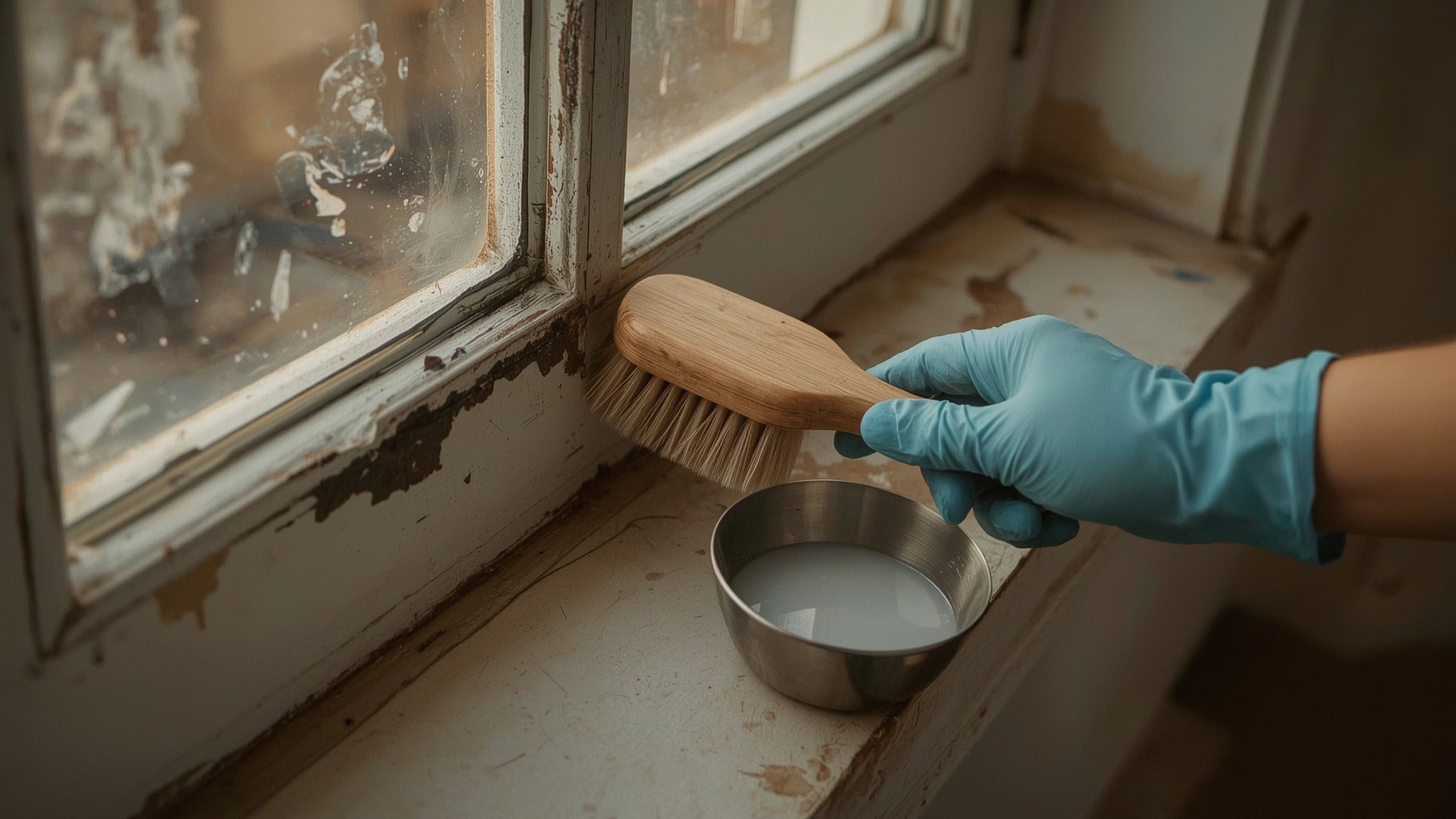
Quick Answer: Apply undiluted white vinegar directly to the moldy wood using a cloth or spray bottle. Let it sit for 30 to 60 minutes, then scrub with a stiff brush. Dry the wood immediately and thoroughly — moisture left in wood after cleaning accelerates mold regrowth.
Wood frames require the most careful approach. Wood is porous, meaning mold can grow into the grain rather than just on the surface. If you can see the grain of the wood through the mold, surface cleaning should work. If the wood looks black and soft, the mold has penetrated deeper.
Step-by-Step: Cleaning Wood Frames
- Dry-wipe loose mold first using a dry cloth to remove surface spores before introducing any liquid.
- Apply undiluted white vinegar with a cloth — don’t soak the wood.
- Wait 30 to 60 minutes to let the acid break down mold structure.
- Scrub firmly with a stiff natural bristle brush, going with the grain.
- Wipe away residue and immediately dry the wood with a clean towel.
- Allow to air dry fully — use a fan directed at the frame to speed drying.
- Lightly sand any remaining staining with 120-grit sandpaper once fully dry.
- Apply a wood sealant or paint once the surface is clean and dry to close pores against future mold.
When Should You Replace a Wood Frame Instead of Cleaning It?
Replace the frame (or affected section) if the wood is soft when pressed, shows visible rot, has black staining that goes deeper than 2 mm when you scratch the surface, or if mold covers more than 30% of the frame area. Surface mold can be cleaned. Structural mold damage cannot.
How Do You Remove Mold from Aluminum Window Frames?
Quick Answer: Mix 1 tablespoon of mild dish soap with 2 cups of warm water. Apply to the frame, scrub with a soft cloth or nylon brush, and rinse well. Alternatively, use 3% hydrogen peroxide — it kills mold without corroding or staining the aluminum surface.
Aluminum frames are durable but react badly to bleach. Bleach causes oxidation on aluminum, which creates a white powdery coating and pitting that weakens the frame over time. Stick to soap, hydrogen peroxide, or purpose-made aluminum cleaners.
Step-by-Step: Cleaning Aluminum Frames
- Wipe the frame surface with a damp cloth to remove loose debris.
- Mix cleaning solution: 1 tablespoon dish soap in 2 cups of warm water.
- Apply with a soft cloth and scrub in small circular motions.
- For persistent mold: apply 3% hydrogen peroxide directly, wait 5 minutes, then scrub and rinse.
- Rinse thoroughly with clean water to remove all soap residue, which can trap moisture.
- Dry the frame completely with a microfiber cloth — water sitting on aluminum promotes future mold growth.
EAV: Mold Removal Methods by Frame Material
| Frame Material | Best Cleaner | Dwell Time | Max Mold Depth Treatable | Sealant After Cleaning? |
|---|---|---|---|---|
| Vinyl (uPVC) | White vinegar or 1:10 bleach | 10 minutes | Surface only (non-porous) | Not required |
| Wood (unfinished) | Undiluted white vinegar | 30 to 60 minutes | Up to 2 mm penetration | Yes — wood sealant or paint |
| Aluminum | Dish soap or 3% hydrogen peroxide | 5 to 10 minutes | Surface only | Not required |
| Painted Wood | 1:10 bleach on painted surface | 5 minutes | Surface of paint layer | Touch-up paint recommended |
| Fiberglass | White vinegar or mild detergent | 10 to 15 minutes | Surface only | Not required |
How Do You Clean Mold Off Window Sills Specifically?
Quick Answer: Window sills collect standing condensation, so they often have heavier mold buildup than frames. Scrub sills with a stiff brush using your material-appropriate cleaner, then apply a final wipe with undiluted white vinegar and let it air dry — the residual acidity slows mold regrowth.
Sills are horizontal surfaces, which means water sits on them rather than running off. This makes them the most moisture-saturated part of the window assembly. Even after cleaning, sills need a preventive treatment to stay mold-free.
Extra Steps for Heavily Molded Window Sills
- Use a putty knife or plastic scraper to lift thick, caked mold before applying any liquid — this reduces the volume of spores you’re scrubbing into the air.
- Apply your cleaning solution twice if staining remains after the first round.
- Seal painted sills with a mold-resistant primer after cleaning, especially in bathrooms and kitchens.
- Check caulk lines around the sill edge — cracked caulk traps moisture and is almost always a mold source. Remove old caulk with a caulk remover tool and re-apply a mold-resistant silicone caulk.
Is White Vinegar or Bleach Better for Killing Window Mold?
Quick Answer: White vinegar is better for most window mold. It penetrates porous surfaces, kills about 82% of mold species, and is safe for wood and aluminum. Bleach is more effective on non-porous vinyl surfaces but damages wood and aluminum — and its fumes require extra ventilation.
Comparing the Two Most Common Mold Cleaners
| Attribute | White Vinegar | Bleach (diluted 1:10) |
|---|---|---|
| Mold kill rate | ~82% of mold species | ~99% on non-porous surfaces |
| Penetrates porous surfaces | Yes | No (bleach sits on surface) |
| Safe for wood | Yes | No (causes discoloration) |
| Safe for aluminum | Yes (diluted) | No (causes oxidation) |
| Safe for vinyl | Yes | Yes (diluted) |
| Fume risk | Low | Moderate — requires ventilation |
| Cost per treatment | $0.10 to $0.30 | $0.05 to $0.15 |
Never mix bleach and vinegar. The combination creates chlorine gas, which is toxic. Use one or the other — never both in the same cleaning session, even if you rinse between applications.
What Causes Mold to Grow on Window Frames in the First Place?
Quick Answer: Window mold grows when condensation regularly collects on frame surfaces. This happens when warm, humid indoor air hits cold window glass, dropping moisture on the surrounding frame. Poor ventilation, single-pane windows, and high indoor humidity above 60% are the main contributing factors.
Cleaning mold without fixing the moisture source is like mopping the floor while the tap is still running. It will come back. Usually within 2 to 4 weeks.
The Condensation Cycle Explained
Warm air holds more moisture than cold air. When warm indoor air contacts a cold window surface, it cools rapidly and releases that moisture as condensation — the water droplets you see on glass on cold mornings. This water runs down the glass and pools on the sill or settles in frame crevices, giving mold exactly what it needs.
Single-pane windows are far more prone to this than double- or triple-pane windows because the inner glass surface gets much colder. Double-pane windows have an insulating gas layer (typically argon) between the panes that keeps the inner glass warmer.
Other Factors That Accelerate Window Mold
- Indoor humidity above 60%: Recommended indoor humidity is 30 to 50%. Above 60%, mold growth accelerates significantly.
- Gaps in caulking or weatherstripping: Allow outdoor moisture and cold air infiltration, worsening condensation.
- Rooms with poor airflow: Bathrooms, kitchens, and laundry rooms have elevated humidity and are the highest-risk rooms for window mold.
- Heavy curtains blocking airflow: Keeping thick curtains closed traps humid air against the window surface.
- Leaking window seals: Failed seals on double-pane windows allow moisture to enter the gap between panes, creating a source of ongoing condensation and mold growth.
How Do You Prevent Mold from Coming Back on Window Frames?
Quick Answer: Reduce indoor humidity to below 50%, improve ventilation near windows, re-caulk any cracked seals, and wipe down sills weekly in damp seasons. Applying a mold-resistant sealant to wood frames and a silicone-based water repellent to sills creates a barrier that slows future mold growth.
Long-Term Prevention: EAV Framework
| Prevention Method | Target Problem | How Often | Effectiveness | Approximate Cost |
|---|---|---|---|---|
| Dehumidifier use | High indoor humidity | Continuous in damp seasons | High — directly removes moisture | $40 to $300 per unit |
| Bathroom/kitchen exhaust fan | Localized humidity spikes | During and 20 min after use | High in source rooms | $15 to $150 to install |
| Re-caulking window perimeter | Moisture infiltration through gaps | Every 3 to 5 years | High — closes moisture entry points | $5 to $20 per window |
| Mold-resistant silicone sealant on sills | Porous sill surface absorption | After each deep clean | Moderate — slows not eliminates risk | $8 to $20 per tube |
| Weekly sill wipe-down | Standing condensation on sills | Weekly (autumn through spring) | Moderate — removes moisture before mold forms | Minimal — cloth and cleaner only |
| Upgrading to double-pane windows | Condensation from cold glass surfaces | One-time upgrade | Very high — eliminates core cause | $300 to $1,000 per window |
Should You Use a Dehumidifier Near Windows?
Yes — place a dehumidifier in any room with chronic window mold. Set the target humidity to 45 to 50%. Rooms with consistent relative humidity below 50% rarely develop window mold, regardless of the window type. Empty the dehumidifier reservoir daily or connect it to a floor drain for continuous operation.
When Should You Call a Professional for Window Mold?
Quick Answer: Call a professional if the mold covers more than 10 square feet, is inside the wall cavity around the window, causes visible wood rot or frame damage, or if household members experience ongoing allergy or respiratory symptoms after cleaning. Surface mold is DIY territory — structural or health-risk mold is not.
Signs That Mold Has Gone Beyond Surface Level
- Mold returns within one week of thorough cleaning
- The frame feels soft, spongy, or crumbles when pressed
- Mold is visible inside the wall or on the interior plaster around the window
- There is a persistent musty odor even after cleaning
- Mold staining extends to the window trim or surrounding wall paint
A licensed mold remediation specialist will assess the extent of growth, take samples to identify the species, and contain the area during removal. This typically costs between $500 and $4,000 depending on the area affected and the mold species present.
What Are the Health Risks of Ignoring Window Frame Mold?
Quick Answer: Prolonged mold exposure can cause nasal congestion, throat irritation, coughing, and eye irritation in healthy adults. People with asthma, allergies, or weakened immune systems are at higher risk of serious respiratory reactions. The EPA recommends addressing all visible mold promptly, regardless of species.
Most window mold species are allergenic rather than toxic. This means they trigger immune responses — runny nose, itchy eyes, sneezing — rather than direct poisoning. However, Aspergillus and Stachybotrys species can cause more serious reactions in vulnerable individuals.
Who Is Most At Risk from Window Mold?
- Children under 5 (developing respiratory systems)
- Adults over 65 (weakened immune response)
- People with asthma, COPD, or chronic allergies
- Anyone undergoing chemotherapy or immunosuppressant treatment
If a household member falls into these groups, prioritize mold removal and moisture control. Don’t wait until visible mold becomes a large patch.
Frequently Asked Questions
Can I use tea tree oil to kill mold on window frames?
Yes, tea tree oil is a natural antifungal that kills many mold species. Mix 2 teaspoons of tea tree oil with 2 cups of water in a spray bottle, apply to the moldy surface, and leave it without rinsing. It’s safe on wood, vinyl, and aluminum, but it has a strong scent that fades within a few days.
Why does mold keep coming back in the same corner of my window?
Recurring mold in the same spot almost always points to a structural moisture source — cracked caulk, a failed window seal, or a cold bridge where heat escapes through the frame. Clean the mold, then inspect the caulk and weatherstripping around that specific corner. Re-sealing that area usually stops the cycle.
Is the black staining left after cleaning mold dangerous?
Dark staining after mold removal is usually dead mold pigment, not live mold. It isn’t dangerous, but it looks bad and can be confused for active growth. Sand it away on wood, or apply a mold-stain remover product on vinyl and painted surfaces. Re-test with diluted bleach — if it doesn’t lighten further, the mold is gone.
Can mold grow inside a double-pane window unit?
Yes, if the window seal fails and allows moisture into the space between panes, mold can grow on the inner glass surfaces. You’ll see fogging, cloudiness, or dark spots between the panes that can’t be wiped away. This requires replacing the insulated glass unit — the seal cannot be repaired.
How often should I inspect window frames for mold?
Check window frames once a month during autumn, winter, and early spring — the high-condensation months. A quick visual inspection and sill wipe-down takes under five minutes per window. Catching mold at the first dark spots is far easier than treating a fully colonized frame.
Does mold-resistant caulk actually prevent window mold?
Mold-resistant silicone caulk contains biocides — chemicals that inhibit mold growth on the caulk surface itself. It won’t prevent all window mold, but it significantly reduces mold on the caulk lines specifically. Use it when re-caulking around window perimeters, especially in bathrooms and kitchens where humidity is highest.