Hard water deposits form when water evaporates and leaves behind calcium and magnesium minerals on glass. These minerals bond to the surface over time, and each new layer makes the buildup harder to remove. The good news is that prevention is far easier than removal.
Whether your windows face irrigation overspray, hard tap water runoff from the roof, or mineral-heavy rainwater in your region, the right combination of barriers, habits, and materials keeps glass clear for longer. This guide covers every prevention strategy worth using.
Key Takeaways
- Redirecting sprinklers away from windows is the single most effective prevention step for most homeowners.
- Hydrophobic coatings slow mineral adhesion by reducing how long water sits on glass.
- Drying windows after water contact prevents deposits from forming before minerals can bond.
- Soft water or filtered water for any window rinsing removes the mineral source entirely.
- Regular light cleaning every 4 to 8 weeks removes early-stage mineral film before it hardens.
- Window overhangs and physical barriers block water contact from reaching glass at all.
What Causes Hard Water Deposits to Form on Windows?
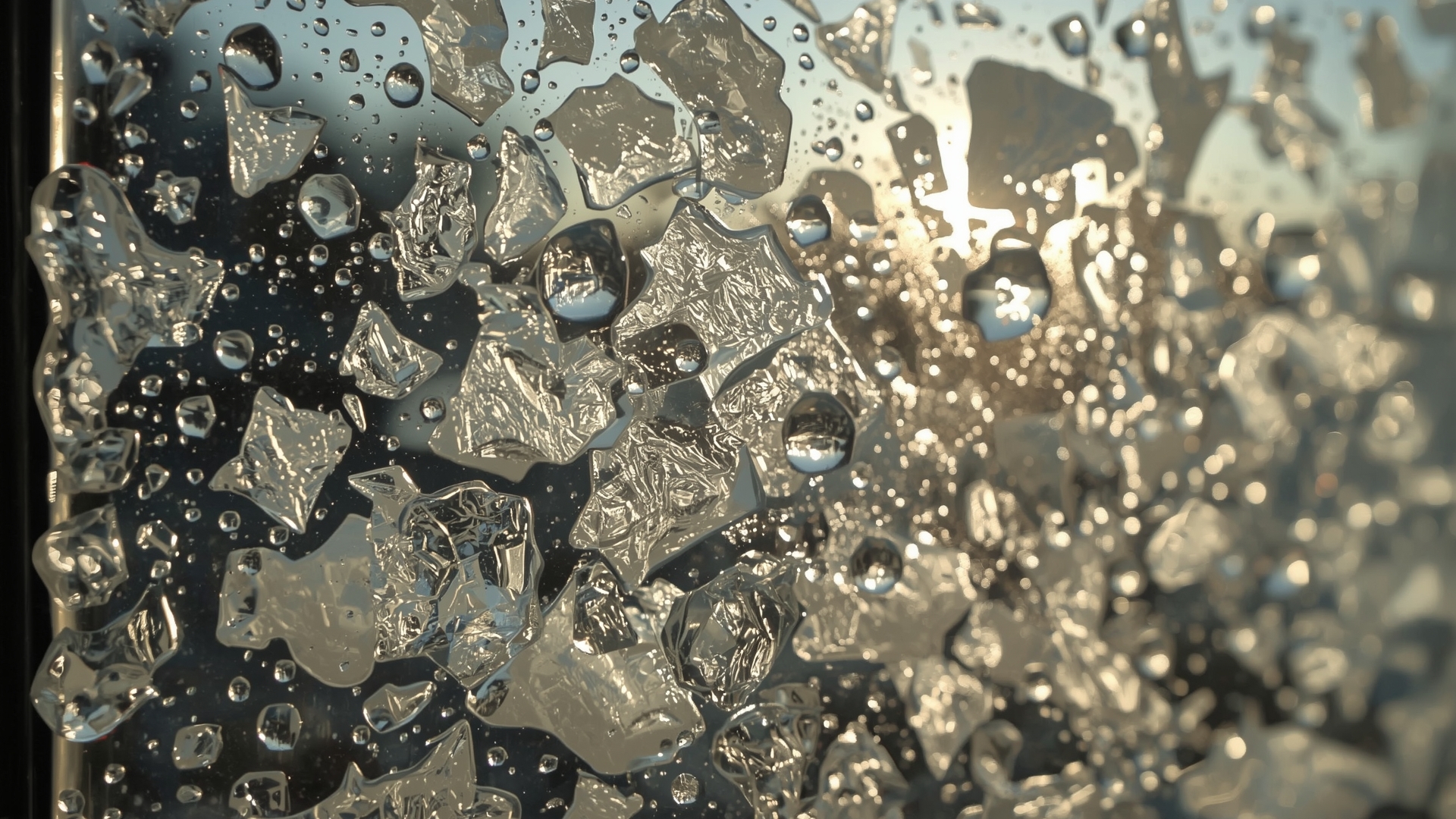
Quick Answer: Hard water deposits form when water containing dissolved calcium and magnesium evaporates on glass. The minerals stay behind and bond to the surface. Repeated cycles of wetting and drying build up layers that become progressively harder to remove.
Tap water, well water, and even municipal water supplies carry dissolved minerals. Calcium carbonate and magnesium bicarbonate are the two most common culprits. When either type of water lands on glass and evaporates, those minerals are left behind as a white or hazy film.
The bonding process gets stronger with each cycle. A single sprinkler hit on a warm afternoon might leave a faint haze. The same window hit daily for three weeks develops a layer that resists regular glass cleaner entirely.
What Is Total Dissolved Solids (TDS) and Why Does It Matter?
Total Dissolved Solids, or TDS, measures how many minerals are dissolved in water. It is expressed in parts per million (ppm). Water with a TDS reading above 200 ppm is considered moderately hard. Above 400 ppm, deposits form quickly and bond aggressively to glass surfaces.
If you live in a region with a TDS reading above 300 ppm, prevention becomes less optional and more essential. You can check your local water utility’s annual water quality report to find the TDS level in your area.
Which Water Sources Cause the Most Damage?
Irrigation systems are the leading cause of hard water deposits on exterior windows. They run frequently, aim directly at landscaping near buildings, and often use the same hard tap water that comes from your indoor faucets.
Roof runoff is the second most common source. Rain picks up mineral residue from roofing materials, gutters, and any debris on the roof. That runoff then drips onto windows below the roofline. Sprinkler overspray and roof runoff together account for the majority of window mineral buildup cases.
How Do You Stop Sprinklers From Hitting Your Windows?
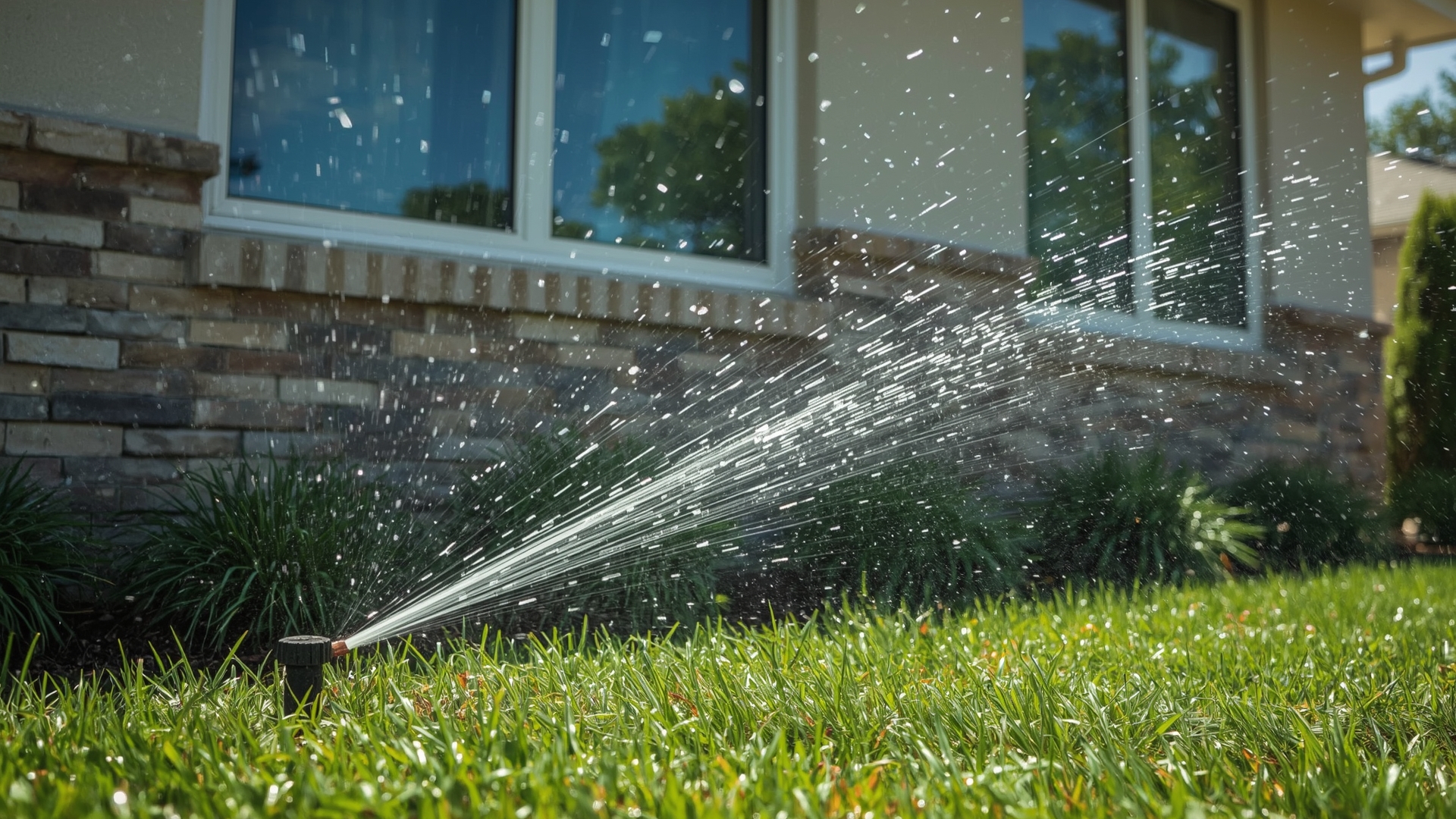
Quick Answer: Adjust sprinkler heads so their spray pattern stays at least 3 feet away from any glass surface. Use drip irrigation near foundation plantings instead of spray heads. Installing adjustable rotary nozzles gives you fine control over spray direction and distance.
Adjusting Sprinkler Head Angles and Coverage Zones
Most residential sprinkler heads are adjustable. A flat-head screwdriver or a rotor adjustment tool lets you change the spray arc and direction. The goal is to aim all spray patterns away from window glass and toward the soil, not the foundation wall or siding.
Walk your property during an active irrigation cycle and watch exactly where water lands. You will likely find at least one or two heads throwing water directly at windows. Adjust those heads first. This takes less than 20 minutes and often eliminates 80% of irrigation-related deposit buildup.
Switching to Drip Irrigation Near Windows
Drip irrigation delivers water directly to plant root zones through small emitters. No spray is involved. For any planting beds within 5 feet of a window, replacing spray heads with drip emitters removes water contact from the glass entirely.
Drip systems also use less water overall, which makes the switch practical beyond just window protection. Most drip conversion kits connect directly to existing irrigation lines.
Irrigation and Sprinkler Prevention Summary
| Method | Effectiveness | Installation Effort | Cost Range | Best For |
|---|---|---|---|---|
| Adjusting spray arc direction | High | Low (DIY, 20 min) | $0 | Redirecting existing heads |
| Rotary nozzle replacement | High | Low (DIY) | $3 to $8 per head | Precision spray control |
| Drip irrigation conversion | Very High | Medium | $50 to $200 per zone | Beds close to windows |
| Soil-level emitters | Very High | Medium | $1 to $4 per emitter | Individual plant watering |
| Window guard or plexiglass barrier | Medium | Low | $20 to $60 per window | Temporary or seasonal use |
Do Hydrophobic Coatings Actually Prevent Hard Water Deposits?

Quick Answer: Hydrophobic coatings reduce deposit buildup by causing water to bead and roll off glass instead of sitting and evaporating on the surface. They do not eliminate deposits entirely, but they slow formation significantly and make cleaning easier when deposits do occur.
A hydrophobic coating, sometimes called a water-repellent glass treatment, creates a thin barrier on the glass surface. Water forms tight beads on this barrier instead of spreading into a thin film. Thin films evaporate slowly and leave more mineral residue. Tight beads roll off the surface faster, carrying minerals with them.
How Long Do Hydrophobic Coatings Last on Exterior Windows?
Coating lifespan depends on UV exposure, rainfall frequency, and how often the glass is cleaned. Most consumer-grade hydrophobic coatings last 3 to 12 months on exterior glass. Professional-grade ceramic coatings, which bond more deeply to the glass, last 1 to 3 years under normal conditions.
You can test whether a coating is still active by misting the glass with water. If water beads and rolls off, the coating is working. If water spreads flat across the surface, the coating has worn down and needs reapplication.
Hydrophobic Coating Product Comparison
| Product Type | Active Ingredient | Lifespan on Exterior Glass | Application Method | Cost Range |
|---|---|---|---|---|
| Consumer spray coating | Fluoropolymer or silicone | 3 to 6 months | Spray and wipe | $10 to $30 |
| Paste-based glass sealant | Carnauba wax blend | 2 to 4 months | Apply, cure, buff | $15 to $40 |
| Professional ceramic coating | Silicon dioxide (SiO2) | 1 to 3 years | Professional application | $100 to $400 per project |
| Factory-applied hydrophobic glass | Nano-etched surface | 5 to 10 years | Built into glass at manufacture | $200 to $600 premium per window |
Can Window Overhangs and Physical Barriers Prevent Water Contact?
Quick Answer: Window overhangs, awnings, and drip caps block rain and roof runoff from reaching glass directly. A 12-inch overhang can reduce water contact on windows below it by 60 to 80 percent, depending on rainfall angle and wind conditions.
Physical barriers work passively without any maintenance. An awning over a window protects the glass from both rain and direct sun, which reduces the rate at which water evaporates on the surface. Slower evaporation still leaves minerals behind, but less frequent contact means less buildup overall.
What Is a Drip Cap and How Does It Help?
A drip cap is a small metal or PVC flashing piece installed above a window frame. It directs water away from the glass and out beyond the window edge. This stops roof runoff from dripping directly down the glass surface after rain.
Drip caps are inexpensive, costing $5 to $15 per window in materials, and are installed by most general contractors as part of standard window trim work. If your home lacks them, adding drip caps is one of the most cost-effective prevention measures available.
Gutter Maintenance as a Prevention Strategy
Clogged or overflowing gutters send water sheeting down exterior walls and across windows. Keeping gutters clear and properly pitched prevents overflow-related water contact entirely. Gutters should be cleaned at least twice per year in areas with heavy tree coverage, or after any significant storm event.
Gutter extensions and downspout diverters also help by moving water discharge away from the foundation and window areas. A downspout that empties 3 to 4 feet away from the building dramatically reduces wall and window water contact.
Does Rinsing Windows With Soft or Purified Water Prevent Deposits?
Quick Answer: Yes. Rinsing windows with purified water that has a TDS reading below 10 ppm leaves no minerals behind as it dries. This is the principle behind deionized water window cleaning, used by professional window cleaners for streak-free, spot-free results.
Standard tap water leaves a mineral residue every time it dries on glass. If your window cleaning routine uses tap water for the final rinse, you are adding deposits with each cleaning session. Switching your rinse water to filtered or softened water eliminates that cycle entirely.
Water Softener vs. Deionized Water for Window Rinsing
A home water softener removes calcium and magnesium through ion exchange, replacing them with sodium. Softened water still contains dissolved solids, just different ones. Using softened water for window rinsing is better than hard tap water but not as clean as deionized water.
Deionized water (DI water) has nearly all dissolved minerals removed through a resin filtration process. Its TDS reading is typically below 10 ppm. When it dries on glass, it leaves no visible residue. If you are serious about preventing deposits from cleaning water, a countertop DI filter or a garden hose attachment with a DI resin canister is worth the investment.
Water Purity Levels and Window Deposit Risk
| Water Type | Typical TDS (ppm) | Deposit Risk on Drying | Best Use Case |
|---|---|---|---|
| Tap water (hard region) | 200 to 600 ppm | High | Not recommended for final rinse |
| Tap water (soft region) | 50 to 150 ppm | Low to Medium | Acceptable with squeegee dry |
| Softened tap water | 80 to 200 ppm sodium | Low to Medium | Better than hard tap, not ideal |
| Filtered (RO) water | 10 to 50 ppm | Very Low | Good for regular window rinsing |
| Deionized (DI) water | 0 to 10 ppm | None | Ideal for streak-free spot-free finish |
What Cleaning Routine Prevents Hard Water Deposits From Hardening?
Quick Answer: Cleaning windows every 4 to 8 weeks removes early-stage mineral film before it bonds permanently to the glass. Early deposits are water-soluble and come off with mild acidic cleaners. Waiting 3 to 6 months allows calcium carbonate to crystallize and adhere much more firmly.
Prevention and maintenance overlap here. A consistent cleaning schedule does not just remove dirt. It removes the mineral film before it has time to harden into etched deposits. Think of it like wiping a cutting board after cooking instead of scrubbing dried food off it the next day.
What Cleaners Break Down Early-Stage Mineral Film?
Early mineral film is alkaline. Mild acids neutralize it on contact. White vinegar diluted 50/50 with water works well for light buildup. A diluted citric acid solution (1 tablespoon of citric acid powder per cup of water) is stronger and still safe for glass.
Commercial glass cleaners with ammonia do not effectively remove mineral deposits. They clean organic grime well, but calcium and magnesium require an acidic cleaner to dissolve. Always follow any acidic cleaner with a plain water rinse and a dry squeegee pass.
The Dry-Off Method After Rain or Irrigation Contact
If your windows get hit by irrigation water or a heavy rain, drying the glass before it air-dries on its own is a practical prevention step. Use a rubber squeegee or a clean microfiber cloth. This removes the water before evaporation leaves minerals on the surface.
This method is most practical for ground-floor windows or windows near active sprinkler zones. It is not realistic for every window on every rain event, but for high-risk windows, the habit makes a measurable difference.
Cleaning Frequency and Deposit Risk by Exposure Level
| Exposure Level | Example Scenario | Recommended Cleaning Interval | Cleaner Type |
|---|---|---|---|
| Low | Covered windows, no irrigation contact | Every 8 to 12 weeks | Standard glass cleaner |
| Moderate | Occasional rain contact, soft water region | Every 6 to 8 weeks | Standard or mild acid cleaner |
| High | Near irrigation, hard water region | Every 4 to 6 weeks | Diluted white vinegar or citric acid |
| Very High | Daily sprinkler contact, TDS above 400 ppm | Every 2 to 4 weeks | Citric acid solution or professional treatment |
Are There Window Films That Block Hard Water Deposits?
Quick Answer: Protective window films create a sacrificial layer between the glass and water. Deposits form on the film rather than the glass itself. When the film becomes too stained, it can be replaced, leaving the original glass undamaged beneath it.
This strategy is popular in commercial settings and homes with windows that cannot be easily shielded from irrigation. The film takes the damage instead of the glass. When mineral buildup becomes visible, the film is peeled off and replaced at a fraction of the cost of glass restoration or replacement.
Protective Film vs. Hydrophobic Coating: Which One Should You Use?
Protective window film and hydrophobic coatings serve different prevention roles. Hydrophobic coatings reduce mineral adhesion by making water bead and roll off faster. Protective films absorb the deposit damage entirely and are replaced when degraded.
For windows with severe irrigation exposure, film is the stronger long-term strategy. For windows with moderate exposure where deposits are caught early, a hydrophobic coating maintained on a regular schedule is usually sufficient and less expensive over time.
How Does Landscaping Design Affect Hard Water Deposits on Windows?
Quick Answer: Landscaping that places water-heavy plants close to windows creates ongoing deposit risk. Relocating sprinkler-dependent plants 4 to 6 feet away from the building, using mulch groundcover to reduce splash-back, and choosing drought-tolerant plants near foundations all reduce water contact with glass.
The plants themselves are not the problem. The water needed to keep them alive near your foundation is. A lush flower bed directly under a window may look appealing, but if those plants need frequent irrigation, every watering cycle puts mineral water on your glass.
Foundation Planting Strategies That Protect Windows
Mulch and gravel groundcover near building foundations absorb irrigation water before it can splash up onto windows. Organic mulch absorbs water and reduces surface runoff. Decorative gravel creates drainage pathways that pull water down and away from the wall surface.
Drought-tolerant and native plant species near foundations require less frequent watering. Less watering means fewer opportunities for water contact with window glass. This is a long-term solution that also reduces overall water usage and landscaping maintenance.
What Are the Most Effective Prevention Methods Combined?
Quick Answer: The most effective approach stacks three strategies together: redirect irrigation away from glass, apply a hydrophobic coating to treated glass surfaces, and clean every 4 to 8 weeks with a mild acid solution. Each layer compensates for the gaps left by the others.
No single prevention method works perfectly in all conditions. Sprinkler redirection handles irrigation. Hydrophobic coatings handle incidental rain contact. Regular mild-acid cleaning handles any mineral film that forms despite the other two steps.
Prevention Priority Ranking by Effectiveness
| Prevention Method | Deposit Prevention Effectiveness | Effort Level | Cost (Initial) | Ongoing Cost |
|---|---|---|---|---|
| Sprinkler redirection | Very High (eliminates source) | Low | $0 to $50 | None |
| Drip irrigation conversion | Very High (eliminates source) | Medium | $50 to $200 | Low |
| Hydrophobic coating | High (slows adhesion) | Low | $10 to $400 | $10 to $30 every 3 to 12 months |
| Protective window film | High (absorbs damage) | Medium | $30 to $150 per window | Replacement every 1 to 3 years |
| Drip cap or overhang | Medium to High | Low to Medium | $5 to $100 | None |
| Regular mild acid cleaning | Medium (removes early film) | Low | $5 to $20 | $5 to $15 per cleaning session |
| DI water rinsing | High (no mineral residue) | Low to Medium | $30 to $150 | $10 to $30 per DI resin refill |
Frequently Asked Questions About Preventing Hard Water Deposits on Windows
Can rain cause hard water deposits if I do not have an irrigation system?
Yes. Rain can carry minerals picked up from roofing materials, gutters, and the atmosphere. Acid rain and mineral-laden roof runoff both leave deposits when they dry on glass. Windows below rooflines and gutters are the most exposed, even without any irrigation nearby.
Does car wax work as a protective coating on window glass?
Car wax applied to glass provides a short-term hydrophobic effect similar to consumer glass coatings. It typically lasts 1 to 2 months on exterior glass. It is a workable temporary option between proper coating applications, but it is not a substitute for a dedicated glass sealant product designed for windows.
Will soft water from a whole-home softener prevent deposits on windows?
Soft water replaces calcium and magnesium with sodium ions. Sodium leaves less visible residue than calcium but still leaves some film at high concentrations. Softened water is better than hard water for window rinsing but not as clean as reverse osmosis or deionized water for a truly spot-free result.
How do I know if my windows already have early-stage mineral deposits forming?
Early-stage deposits appear as a faint white haze or streaky film that does not come off with standard glass cleaner. If wiping with a damp cloth and drying leaves a chalky residue on the cloth, mineral film is present. Address it with a diluted citric acid solution before it bonds further.
Is it worth hiring a professional to apply a hydrophobic coating?
Professional ceramic coatings last 1 to 3 years and bond more deeply to the glass than consumer spray products. For windows with severe irrigation exposure or high-TDS water environments, the longer lifespan and stronger adhesion make professional application cost-effective over time. Consumer coatings are sufficient for moderate-exposure windows.
Can I apply a hydrophobic coating over existing mineral deposits?
No. Hydrophobic coatings need to bond directly to clean glass. Applying a coating over mineral deposits traps the deposits under the coating and prevents proper adhesion. The glass must be fully cleaned and free of mineral residue before any protective coating is applied.